Permit to allow destruction of endangered species on site of giant Ottawa River radioactive waste dump challenged in Federal Court

le français suit

March 27, 2924

Update November 5, 2024 See the end of this post for the factum.

Note: the full Notice of Application filed with the federall court is available here.

(Ottawa, March 27, 2024) – Kebaowek First Nation, Concerned Citizens of Renfrew County and Area, the Canadian Coalition for Nuclear Responsibility and Sierra Club Canada Foundation have launched a legal challenge to the recent decision by the Minister of Environment and Climate Change Canada to grant a Species At Risk permit that allows destruction of endangered bats, songbirds and turtles currently living on the site where a radioactive megadump will soon be built.

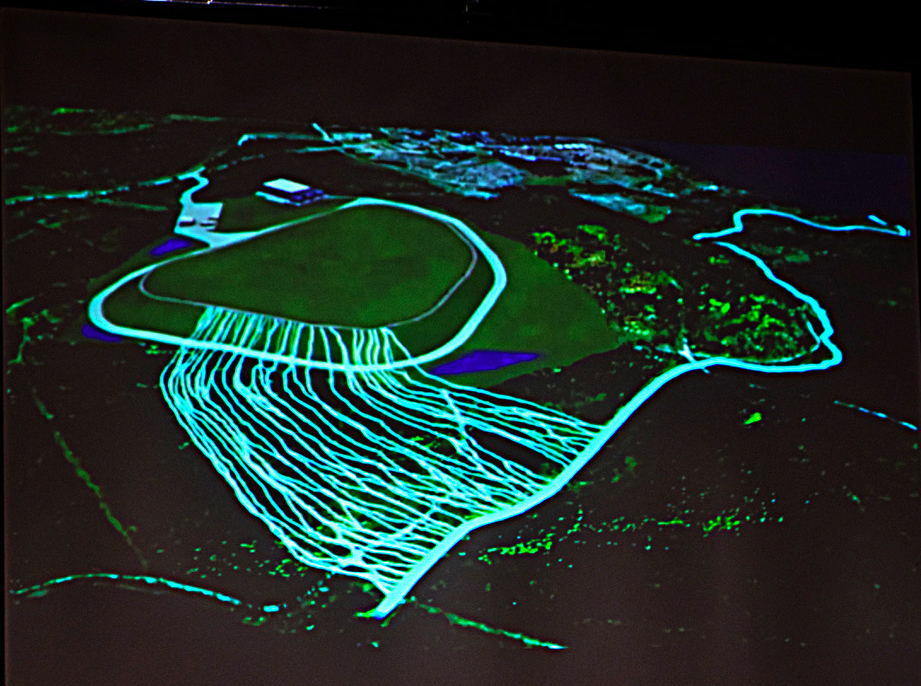
The giant dump, known as the NSDF, was recently licensed by the Canadian Nuclear Safety Commission. It would hold one million tonnes of radioactive and other hazardous waste in a very large above-ground mound beside the Ottawa River, 180 km north-west of Ottawa on the Chalk River Laboratories property. The mound is expected to leak during operation and break down due to erosion after a few hundred years.

The Chalk River Laboratories property is uniquely rich in biodiversity. As a restricted area for 80 years, there has been very little human movement through most of the 3,700-hectare site. Some forests have acquired old growth characteristics from lack of disturbance. The site is dotted with lakes and wetlands that, combined with proximity to the Ottawa River, provide habitats and feeding grounds for many species at risk and large mammals. 

The NSDF site is located on the side of a densely forested hill that is surrounded at its base by wetlands that drain into the Ottawa River approximately one kilometer away. The forest stands have old growth characteristics and provide critical habitat for endangered bats and songbirds. The forest and surrounding wetlands serve as critical habitat for endangered Blanding’s Turtles. To prepare the site for the dump, more than 10,000 mature trees would be cut down and extensive blasting would be done to remove the hillside and level the site. 

Endangered species living in the NSDF forest stands and associated wetlands include the iconic Canada Warbler and the rare Golden-winged Warbler as well as three species of bats, and Blanding’s Turtles. Ground truthing in the NSDF footprint by Kebaowek First Nation found three active bear dens, which are protected by provincial legislation, and evidence of extensive use of the site by endangered Eastern Wolves. Both bears and wolves are species of great cultural importance to Algonquin peoples.

According to Canada’s Species at Risk Act, it is illegal to destroy endangered species or their habitats without a permit. Permits are supposed to only be granted if the project proponent has carefully considered all possible alternatives and chosen the option with the least impact on endangered species.

The applicants for judicial review are asking the Federal Court to review the decision to issue the permit. They maintain there is no evidence that the applicant chose the site with the least impact on species at risk.  They suggest there is counter evidence that the applicant, Canadian Nuclear Laboratories, owned by a multinational consortium of SNC-Lavalin and two US-based engineering firms, chose the location for convenience and proximity to existing waste management areas on the CRL property, and was aware that the site was unusually rich in biodiversity but chose it anyway.

The application for judicial review was submitted to Federal Court on Wednesday, March 27, 2024.

Represented by Nicholas Pope of Hameed Law, the applicants are seeking an order quashing the decision to grant a species at risk permit for construction of the NSDF. 

Chief Lance Haymond, Kebaowek First Nation, said: “The Algonquin people have inherent rights to protect all life in the Ottawa River watershed which is our unceded ancestral territory. We would like to exercise these rights but are continually thwarted by government officials and agencies who do not understand or respect our Indigenous rights. Protecting all life is part of our Algonquin stewardship tradition. We believe it is wrong to wantonly destroy animals and their habitats for the pursuit of profit and we will not stand idly by and allow this to happen.”

Lynn Jones, Concerned Citizens of Renfrew County and Area, said: “This legal challenge is shining a spotlight on the very poor choice of location for this nuclear waste dump. Its proximity to the Ottawa River is the top concern for the many First Nations, municipalities and others who oppose the project. And now we learn that building the dump at that location would be a devastating blow to endangered wildlife. The best outcome for this judicial review would be for the permit decision to be overturned and the proponent ordered to re-do the site selection process.” 

Dr. Gordon Edwards, Canadian Coalition for Nuclear Responsibility, said: ”Canadian Nuclear Laboratories (CNL) is owned and operated by a consortium of multinational corporations, two of them Texas-based. There was no prior consultation with Indigenous or non-Indigenous people in CNL’s choosing a site years ago, so close to the Ottawa River, which provides such an important habitat for several species at risk. To pretend that the protection of these creatures played a significant role in site selection is an exercise in self-deception.”

Dr. Ole Hendrickson, Sierra Club Canada Foundation, said: ”The Minister has failed to uphold his duty to protect endangered species by issuing this permit. A key condition of granting a permit is that the proponent has looked at alternative sites and chosen the one with the least impact on endangered species. That clearly did not happen in this case. Given that CRL is a federally-owned property, the Minister should set a good example and do his utmost to protect endangered species there.”

– 30 –

Le permis autorisant la destruction d’espèces en voie de disparition sur le site du gigantesque dépôt de déchets radioactifs de la rivière des Outaouais est contesté devant la Cour fédérale

(Ottawa, le 27 mars 2024) – La Première Nation Kebaowek, Concerned Citizens of Renfrew County and Area, le Regroupement canadien pour la surveillance nucléaire et la Fondation Sierra Club Canada ont lancé une contestation judiciaire de la récente décision du ministre de l’Environnement et du Changement climatique du Canada d’accorder un permis pour les espèces en péril qui permet la destruction des chauves-souris, des oiseaux chanteurs et des tortues en voie de disparition qui vivent actuellement sur le site où un mégadépôt de déchets radioactifs sera bientôt construit.

Cette décharge géante, connue sous le nom de NSDF, a récemment été autorisée par la Commission canadienne de sûreté nucléaire. Il contiendrait un million de tonnes de déchets radioactifs et d’autres déchets dangereux dans un très grand monticule en surface au bord de la rivière des Outaouais, à 180 km au nord-ouest d’Ottawa, sur le terrain des laboratoires de Chalk River. Le monticule devrait fuir pendant l’exploitation et s’effondrer sous l’effet de l ‘érosion au bout de quelques centaines d’années.

La propriété des Laboratoires de Chalk River est particulièrement riche en biodiversité. En tant que zone d’accès restreint depuis 80 ans, la majeure partie de ce site de 3 700 hectares a été très peu fréquentée par l’homme. Certaines forêts ont acquis des caractéristiques de vieux peuplements en raison de l’absence de perturbations. Le site est parsemé de lacs et de zones humides qui, combinés à la proximité de la rivière des Outaouais, constituent des habitats et des aires d’alimentation pour de nombreuses espèces en péril et de grands mammifères.

Le site du NSDF est situé sur le flanc d’une colline densément boisée, entourée à sa base de zones humides qui se jettent dans la rivière des Outaouais, à environ un kilomètre de là. Les peuplements forestiers présentent des caractéristiques de vieux arbres et constituent un habitat essentiel pour les chauves-souris et les oiseaux chanteurs en voie de disparition. La forêt et les zones humides environnantes constituent un habitat essentiel pour les tortues mouchetées, une espèce menacée. Pour préparer le site de la décharge, plus de 10 000 arbres adultes seront abattus et d’importants travaux de dynamitage seront effectués pour déblayer le flanc de la colline et niveler le site.

Les espèces menacées qui vivent dans les peuplements forestiers du NSDF et les zones humides associées comprennent l’emblématique paruline du Canada et la rare paruline à ailes dorées, ainsi que trois espèces de chauves-souris et des tortues mouchetées. Les vérifications sur le terrain effectuées par la Première nation Kebaowek dans l’empreinte du NSDF ont permis de découvrir trois tanières d’ours actives, protégées par la législation provinciale, ainsi que des preuves de l’utilisation intensive du site par des loups de l’Est, une espèce menacée d’extinction. Les ours et les loups sont des espèces d’une grande importance culturelle pour les Algonquins.

Selon la loi canadienne sur les espèces en péril, il est illégal de détruire des espèces menacées ou leurs habitats sans permis. Les permis ne sont censés être accordés que si le promoteur du projet a soigneusement examiné toutes les alternatives possibles et choisi celle qui a le moins d’impact sur les espèces menacées.

Les demandeurs de contrôle judiciaire demandent à la Cour fédérale de réexaminer la décision de délivrer le permis. Ils soutiennent qu’il n’y a aucune preuve que le demandeur a choisi le site ayant le moins d’impact sur les espèces en péril. Ils suggèrent qu’il existe des preuves contraires que le demandeur, Canadian Nuclear Laboratories, détenu par un consortium multinational composé de SNC Lavalin et de deux sociétés d’ingénierie basées aux États-Unis, a choisi le site pour des raisons de commodité et de proximité avec les sites de déchets fuyants existants sur la propriété des LCR, et qu’il était conscient que le site était exceptionnellement riche en biodiversité, mais l’a quand même choisi.

La demande de contrôle judiciaire a été soumise à la Cour fédérale le mercredi 27 mars 2024.

Représentés par Nicholas Pope de Hameed Law, les requérants cherchent à obtenir une ordonnance annulant la décision d’accorder un permis de protection des espèces en péril pour la construction du NSDF.

Le chef Lance Haymond, de la Première nation Kebaowek, a déclaré : «Le peuple algonquin a le droit inhérent de protéger toutes les formes de vie dans le bassin versant de la rivière des Outaouais, qui est notre territoire ancestral non cédé. Nous aimerions exercer ces droits, mais nous sommes continuellement contrariés par des fonctionnaires et des agences gouvernementales qui ne comprennent pas ou ne respectent pas nos droits indigènes. La protection de toutes les formes de vie fait partie de la tradition de gestion des Algonquins. Nous pensons qu’il est répréhensible de détruire délibérément des animaux et leurs habitats à des fins lucratives et nous ne resterons pas les bras croisés face à cette situation.»

Lynn Jones, Concerned Citizens of Renfrew County and Area, a déclaré : «Cette contestation juridique met en lumière le très mauvais choix de l’emplacement de cette décharge de déchets nucléaires. Sa proximité avec la rivière des Outaouais est la principale préoccupation de nombreuses Premières nations, municipalités et autres personnes qui s’opposent au projet. Nous apprenons maintenant que la construction de la décharge à cet endroit porterait un coup dévastateur pour les espèces menacées. Le meilleur résultat de ce contrôle judiciaire serait que la décision d’autorisation soit annulée et qu’il soit ordonné au promoteur de refaire le processus de sélection du site.»

Gordon Edwards, du Regroupement pour la surveillance du nucléaire, a déclaré : «Les Laboratoires nucléaires canadiens (LNC) sont détenus et exploités par un consortium de sociétés multinationales, dont deux sont basées au Texas. Il n’y a eu aucune consultation préalable avec les populations autochtones ou non autochtones lorsque LNC a choisi un site, il y a des années, si près de la rivière des Outaouais, qui constitue un habitat si important pour plusieurs espèces en péril. Prétendre que la protection de ces créatures a joué un rôle important dans le choix du site est un exercice d’auto-illusion.»

Ole Hendrickson, Fondation Sierra Club Canada, a déclaré: « En délivrant ce permis, le ministre a manqué à son devoir de protéger les espèces menacées. Une condition essentielle à l’octroi d’un permis est que le promoteur ait examiné les sites alternatifs et choisi celui ayant le moins d’impact sur les espèces menacées. Ce n’est manifestement pas ce qui s’est passé dans le cas présent. Étant donné que le LCR est une propriété fédérale, le ministre devrait donner le bon exemple et faire tout ce qui est en son pouvoir pour protéger les espèces menacées qui s’y trouvent.»

– 30 –

FACTUM submitted to Federal Court on September 27:

Citizens’ groups ask Federal Court to review the decision to license a giant aboveground radioactive waste facility beside the Ottawa River

February 8, 2024

Update November 7, 2024: The factum for this case is available here.

le français suit

For immediate release

(Ottawa, February 8, 2024) –  Concerned Citizens of Renfrew County and Area, Ralliement contre la pollution radioactive and the Canadian Coalition for Nuclear Responsibility have launched a legal challenge to the recent decision by the Canadian Nuclear Safety Commission (CNSC) to license the construction of a giant radioactive waste mound beside the Ottawa River, 180 km north-west of Ottawa. The giant mound is known as the “Near Surface Disposal Facility” or “NSDF.”

The three groups are asking the Federal Court to review the Commission’s failure to adequately consider the following evidence:

  • Radiation doses from the NSDF (as estimated by the proponent) would exceed some limits prescribed by Canadian regulations and international standards;
  • The proponent, Canadian Nuclear Laboratories (CNL), did not provide sufficient information about the waste that would go into the NSDF thereby rendering its Safety Case unreliable;
  • A key document submitted by CNL, the “Waste Acceptance Criteria,” includes an override section that would allow CNL to dispose of waste in the NSDF that does not meet the acceptance criteria. The override section nullifies any guarantees that only acceptable waste would be put in the mound and it makes the Safety Case a fiction;
  • Waste verification processes are inadequate to ensure that waste going into the NSDF meets Waste Acceptance Criteria;
  • CNL failed to provide information about many other projects it is undertaking on the same property that are likely to contribute to cumulative environmental impacts of the radioactive waste mound; 
  • CNL proposed as a mitigation measure* to run a pipeline into Perch Lake, which would actually increase the flow of radioactive tritium into the Ottawa River, rather than decreasing it; and
  • Habitat and residences of protected species would be destroyed by site preparation and construction of the NSDF.

The application for judicial review submitted to Federal Court on Wednesday, February 7, also submits that the CNSC decision is unreasonable because the Commission did not issue a licence to prepare a site, or conduct the necessary assessment in relation to site preparation. 

“In our view, the Commission’s decision to license the giant radioactive waste mound, one kilometer from the Ottawa River, is a serious mistake,” said Lynn Jones of the Concerned Citizens of Renfrew County and Area. “The mound is designed to last only 550 years, while much of the waste that would go into it will remain hazardous and radioactive for thousands of years.”

Represented by Nicholas Pope of Hameed Law, the applicants are seeking an order quashing the decision to amend the license to allow for construction of the NSDF. 

– 30 –

* Mitigation measures are supposed to eliminate, reduce or control an adverse effect that the project would cause. 

~~~~~~

Background

Ten Things Canadians need to know about the giant radioactive waste mound coming to the Ottawa River 

Concerned Citizens of Renfrew County and Area is a citizens’ group that advocates for prevention and clean-up of radioactive pollution from nuclear facilities in the Ottawa Valley. 

The Canadian Coalition for Nuclear Responsibility is a non-profit organization that conducts education and research on issues related to nuclear energy.

Ralliement contre la pollution radioactive is an association that promotes responsible solutions for managing radioactive waste to reduce risks to the environment and to public health.

~~~~~~~~~~~~~~~~~~

Des groupes de citoyens demandent à la Cour fédérale de réviser la décision d’autoriser un dépôt de déchets radioactifs en surface près de la rivière des Outaouais.

(Ottawa, le 8 février 2024) – Concerned Citizens of Renfrew County and Area, le Ralliement contre la pollution radioactive et le Regroupement pour la surveillance du nucléaire ont demandé hier la révision judiciaire d’une décision de la Commission canadienne de sûreté nucléaire (CCSN). Celle-ci a récemment autorisé la construction d’une installation géante de gestion des déchets radioactifs près de la surface (IGDPS), tout près de la rivière des Outaouais à 180 km d’Ottawa.

Les trois groupes reprochent à la Commission de sûreté nucléaire d’avoir autorisé cette décharge radioactive sans considérer plusieurs éléments essentiels :

• Les doses de rayonnement annoncées par le promoteur de cette installation dépasseront certaines limites prescrites par la réglementation canadienne et les normes internationales ;

• Le promoteur, les Laboratoires Nucléaires Canadiens (LNC), n’a pas fourni suffisamment de renseignements sur les déchets qui seront placés dans cette installation, si bien que son dossier de sûreté n’est pas fiable ;

• Un document-clé soumis par les LNC, intitulé Les critères d’acceptation des déchets, inclut une section de dérogation qui permettra de placer dans cette IGDPS des déchets plus dangereux que ne le permettent les critères d’acceptation officiels. Cette possibilité de dérogation rend illusoire toute garantie de sécurité;

• Les processus prévus ne permettront pas de garantir que les déchets placés dans l’IGDPS sont conformes aux critères d’acceptation;

• Les LNC ont omis de fournir des informations sur plusieurs autres projets voisins dont les impacts environnementaux s’ajoutent à ceux des déchets placés dans l’IGDPS;

• Les LNC ont proposé comme mesure d’atténuation* d’installer un pipeline de déversement vers le lac Perch voisin, ce qui augmentera les rejets de tritium radioactif dans la rivière des Outaouais plutôt que de les diminuer ;

• L’habitat et les abris de plusieurs espèces protégées seront détruits par la préparation du site et la construction de l’IGDPS.

Selon cette demande de contestation judiciaire présentée à la Cour fédérale le 7 février, la décision de la CCSN est aussi déraisonnable parce que la Commission n’a pas émis de permis pour préparer l’emplacement et n’a pas procédé à l’évaluation nécessaire avant cette préparation de l’emplacement.

« À notre avis, la Commission commet une grave erreur en autorisant cette installation géante de gestion des déchets radioactifs à un kilomètre de la rivière des Outaouais», a déclaré Lynn Jones, de Concerned Citizens of Renfrew County and Area. « L’IGDPS durera à peine 550 ans alors qu’une grande partie des déchets qui y seront placés resteront dangereux et radioactifs pendant des milliers d’années. »

Les demandeurs sont représentés par Nicholas Pope de Hameed Law. Ils demandent une ordonnance qui obligera la CCSN à réévaluer sa décision de modifier le permis pour permettre la construction de l’IGDPS.

-30-

*Les mesures d’atténuation ont pour but d’éliminer, réduire ou contrôler un effet négatif du projet.

Contexte

Dix choses que les Canadiens doivent savoir sur le monticulede déchets radioactifs en bordure de la rivière des Outaouais

Concerned Citizens of Renfrew County and Area est un groupe de citoyens qui prône la prévention et l’assainissement de la pollution radioactive provenant des installations nucléaires de la vallée de l’Outaouais.

Le Regroupement pour la surveillance du nucléaire est une organisation à but non lucratif qui mène des activités d’éducation et de recherche sur les questions liées à l’énergie nucléaire.

Le Ralliement contre la pollution radioactive est une association qui promeut des solutions responsables pour la gestion des déchets radioactifs, afin de réduire les risques pour l’environnement et la santé publique.

Groups warn : radioactive waste piled in a giant mound beside the Ottawa River will remain hazardous for many millennia

February 5, 2024

Le français suit

For immediate release

Citizens’ groups from Ontario and Quebec warn that radioactive waste destined for a giant mound beside the Ottawa River must be stored underground

The groups call on the federal government to halt the project and stop all funding for construction

Ottawa, February 5, 2024 — Citizens’ groups have issued an urgent warning about waste slated for disposal in a giant radioactive waste mound one kilometre from the Ottawa River, upstream from Ottawa, Gatineau and Montreal. The groups cite nuclear experts who say the waste will remain hazardous to the public for many thousands of years and needs to be emplaced underground.

In a letter sent on February 4 to elected officials, the citizens’ groups call for the Government of Canada to halt the disposal project and stop all funding for construction. The letter cites  evidence that waste destined for the mound is heavily contaminated with very long-lived radioactive materials produced in nuclear reactors, which are capable of causing cancer, birth defects and genetic mutations in exposed populations.

The seven-storey radioactive mound is known as the “Near Surface Disposal Facility” (NSDF). It was recently licenced by the Canadian Nuclear Safety Commission (CNSC). The CNSC is widely perceived to be a captured regulator that promotes the projects it is supposed to regulate, as reported by an Expert Panel in 2017. 

If built, the mound will hold one million tons of radioactive and other hazardous waste from eight decades of operations of the Chalk River Laboratories (CRL), a highly contaminated federal nuclear research facility owned by the Government of Canada. Commercial waste and waste imported from other federal nuclear sites would also be put into the mound. 

The site for the NSDF is on the CRL property, 180 km northwest of Canada’s capital, on the Ottawa River directly across from the Province of Quebec. Studies show the mound would leak during operation and break down due to erosion after a few hundred years, contaminating the Ottawa River, the source of drinking water for millions of Canadians.

Concerned Citizens of Renfrew County and Area, the Old Fort William (Quebec) Cottagers’ Association, Ralliement contre la pollution radioactive, and the Canadian Coalition for Nuclear Responsibility have been opposing the giant radioactive waste mound since 2016. They say there is widespread ignorance about what would go in the mound due to repeated statements by the regulator and the proponent that “it’s only low level waste.”

“If I hear one more time that the mound will hold ‘only low-level’ radioactive waste including mops and shoe covers, I’m going to scream so loud they will hear me at the IAEA headquarters in Vienna,” said Johanna Echlin of the Old Fort William (Quebec) Cottagers’ Association. “People need to wake up and realize the truth that this waste is full of deadly long-lived, man-made radioactive poisons such as plutonium that will be hazardous for many thousands of years.”

The International Atomic Energy Agency (IAEA) referred to by Echlin says waste from research facilities such as Chalk River Laboratories generally belongs to the “Intermediate-level” waste class and must be kept underground, tens of metres or more below the surface.

A former senior manager in charge of “legacy” radioactive waste at Chalk River told the Canadian Nuclear Safety Commission that, in reality, the waste proposed for emplacement in the NSDF “is ‘intermediate level waste’ that requires a greater degree of containment and isolation than that provided by a near surface facility.” He pointed out the mound would be hazardous and radioactive for many thousands of years, and that radiation doses from the facility will, in the future, exceed regulatory limits.

“We believe Cabinet or Parliament has the power to reverse this decision and they need to do so as soon as possible,” said Lynn Jones of Concerned Citizens of Renfrew County and Area. “It’s clear that the only benefit from the NSDF would go to shareholders of the three multinational corporations involved, AtkinsRéalis (formerly SNC-Lavalin), Fluor and Jacobs. Everyone else would get only harm—a polluted Ottawa River, plummeting property values, increased health risks, never-ending costs to remediate the mess and a big black mark on Canada’s international reputation.”

The citizens’ groups say Canada should commit to building world class facilities for managing radioactive waste that would keep Canadians safe and provide good jobs in the nuclear industry, safely managing and containing the waste for generations to come. 

The cleanup of the Chalk River Laboratories site was originally estimated to cost $8 billion in 2015 when a multinational consortium called “Canadian National Energy Alliance”** was contracted by the Harper government to manage the Chalk River site and clean up the radioactive waste there and at other federally owned facilities. 

Since the consortium took over, the annual costs to Canadian taxpayers for the operation and cleanup at Canada’s nuclear labs have ballooned from $336 million dollars per year to over $1.5 billion per year.

-30-

**The consortium known as Canadian National Energy Alliance is comprised of AtkinsRéalis(formerly SNC-Lavalin,) which was debarred by the World Bank for 10 years and faced charges in Canada of fraud, bribery and corruption; Texas-based Fluor Corporation, which paid $4 million to resolve allegations of financial fraud related to nuclear waste cleanup work at a U.S. site; and Texas-based Jacobs Engineering, which recently acquired CH2M, an original consortium member that agreed to pay $18.5 million to settle federal criminal charges at the same nuclear cleanup site in the U.S.

Background

Ten Things Canadians need to know about the giant radioactive waste mound coming to the Ottawa River 

~~~~~~~~~~

Communiqué:

Des groupes de citoyens de l’Ontario et du Québec soutiennent que certains déchets destinés à une gigantesque décharge de déchets radioactifs, près de la rivière des Outaouais, devraient être enfouis en profondeur.

Les groupes demandent au gouvernement d’interrompre le projet et de refuser son financement.

Ottawa, le 5 février 2024 — Des groupes de citoyens ont lancé un avertissement urgent au sujet des déchets radioactifs qui seraient enfouis dans une gigantesque décharge sur une colline, à 1 km de la rivière des Outaouais en amont d’Ottawa, Gatineau et Montréal. Ces groupes citent des experts dans le domaine du nucléaire qui affirment que certains déchets seront fortement radioactifs pendant des milliers d’années et que nous devons les enfouir en profondeur pour protéger la population.

La Commission canadienne de sûreté nucléaire (CCSN) a approuvé récemment cette déchargé haute comme un édifice de sept étages, connue sous le nom d’Installation de gestion des déchets près de la surface (IGDPS).

En 2017, le rapport d’un comité d’experts a mentionné les perceptions selon lesquelles la CCSN est en relation trop étroite avec l’industrie nucléaire et qu’elle promeut des projets qu’elle devrait réglementer.

Si elle était construite, l’IGDPS contiendrait plus d’un million de tonnes de déchets radioactifs et d’autres déchets dangereux résultant de 80 ans d’exploitation des Laboratoires de Chalk River ; cette installation de recherche nucléaire contaminée appartient au gouvernement fédéral. Des déchets radioactifs commerciaux et provenant d’autres sites du gouvernement fédéral y seront placés.

L’IGDPS est sur le site des Laboratoires nucléaires canadiens (LNC), à 180 km au nord-ouest d’Ottawa, sur la rivière des Outaouais, juste en face de la province de Québec. Des études démontrent que cette décharge de déchets aura des fuites radioactives pendant son exploitation et qu’elle s’effondrera après quelques centaines d’années à cause de l’érosion. Cela contaminera la rivière des Outaouais, source d’eau potable de millions de Canadiens.

Concerned Citizens of Renfrew County and Area, l’Association des propriétaires de chalets d’Old Fort William, le Ralliement contre la pollution radioactive et le Regroupement pour la surveillance du nucléaire figurent parmi les nombreux organismes qui critiquent depuis 2016 la conception de cette décharge géante de déchets radioactifs. Selon eux, l’information est trop vague concernant les déchets destinés à l’IGDPS même si la Commission de sureté nucléaire et les Laboratoires nucléaires canadiens ont affirmé à plusieurs reprises que seulement des déchets radioactifs de faible activité y seront placés.

” Les installations de gestion des déchets près de la surface ne conviennent pas aux déchets radioactifs de moyenne activité qu’on voulait y mettre au début, “déclare Ginette Charbonneau du Ralliement contre la pollution radioactive. ” À la suite des protestations du public, les promoteurs du projet disent maintenant que l’IGDPS n’acceptera que des déchets de faible activité. Malheureusement, ce n’est pas crédible. Il est très difficile de séparer des déchets de faible activité et de moyenne activité qui ont été stockés ensemble dans des colis non marqués. Il est donc inévitable qu’il y ait encore des déchets de moyenne activité dans cette décharge en surface. C’est très dangereux “.

Johanna Echlin de l’Association des propriétaires de chalets d’Old Fort William (Québec) mentionne que l’Agence internationale de l’énergie atomique (AIEA) est l’organisme responsable de la sûreté et de la sécurité nucléaires au niveau mondial. Selon l’AIEA, les déchets hérités par les Laboratoires de Chalk River sont de “moyenne activité ” et ils devraient être enfouis à des dizaines ou des centaines de mètres sous terre.

Les groupes de citoyens citent également les déclarations de James R. Walker (Ph.D), un ancien cadre supérieur responsable des déchets radioactifs hérités des Laboratoires de Chalk River. M. Walker énonce clairement dans ses commentaires à la CCSN que certains déchets destinés à l’IGDPS sont des ” déchets de moyenne activité ” qui nécessitent plutôt un stockage souterrain. Il affirme que la décharge serait dangereusement radioactive pendant des milliers d’années et que les radiations provenant de l’installation dépasseraient les niveaux autorisés.

” Le Cabinet et le Parlement ont le pouvoir et le devoir de renverser cette décision le plus tôt possible “, déclare Lynn Jones de Concerned Citizens of Renfrew County and Area. ” Il est clair que les actionnaires d’Atkins Realis (anciennement SNC-Lavalin), de Fluor et de Jacobs seront les seuls à bénéficier du projet d’IGDPS. Tous les autres n’en tireraient que des problèmes : pollution de la rivière des Outaouais, risques sanitaires accrus, coûts de nettoyage astronomiques et une grande tache noire sur la réputation internationale du Canada “.

Dans une lettre envoyée le 5 février aux élus et aux responsables locaux, les groupes de citoyens demandent au gouvernement canadien de stopper ce projet et de couper son financement. Les études menées par le promoteur lui-même démontrent clairement que les déchets destinés à l’IGDPS sont fortement contaminés par de grandes quantités de substances radioactives de très longue durée de vie provenant des réacteurs nucléaires, expliquent-ils dans leur lettre. Ces déchets pourraient provoquer des cancers, des malformations congénitales et des mutations génétiques chez les populations exposées.

Le Canada devrait s’engager à construire des installations de gestion des déchets radioactifs de classe mondiale, afin de garantir la sécurité des Canadiens et de créer de bons emplois dans l’industrie nucléaire, tout en gérant les déchets de manière sûre pour les générations futures, disent ces groupes de citoyens.

Le coût de la dépollution du site des Laboratoires de Chalk River a été estimé à 8 milliards de dollars lorsque le site a été confié au secteur privé par le gouvernement Harper en 2015. Le consortium multinational appelé “Canadian National Energy Alliance “**, dirigé par SNC-Lavalin (aujourd’hui appelé Atkins Realis), a remporté le contrat de plusieurs milliards de dollars pour gérer et nettoyer “rapidement et à moindre coût” le site de Chalk River et d’autres sites fédéraux. Depuis que le consortium a pris le relais, les contribuables canadiens ont vu le coût d’exploitation des Laboratoires nucléaires canadiens (autrefois les Laboratoires de Chalk River) gonfler de 336 millions de dollars par an à plus de 1,5 milliard de dollars par année. 

-30 –

 **Le consortium connu sous le nom de Canadian National Energy Alliance est composé d’Atkins Realis (anciennement SNC-Lavalin), qui a été radié par la Banque mondiale pendant 10 ans et qui a fait l’objet d’accusations de fraude, de pots-de-vin et de corruption au Canada. La société texane Fluor Corporation a payé 4 millions de dollars pour mettre fin à des allégations de fraude financière liées à des travaux de nettoyage de déchets radioactifs sur un site américain ; et la société texane Jacobs Engineering, qui a récemment acquis CH2M, un membre initial du consortium, a accepté de payer 18,5 millions de dollars pour mettre fin à des accusations criminelles fédérales sur un site de nettoyage de déchets radioactifs aux États-Unis.

Contexte

Dix choses que les Canadiens doivent savoir sur le monticulede déchets radioactifs en bordure de la rivière des Outaouais

Kebaowek First Nation condemns CNSC decision to license the Chalk River nuclear waste dump and calls on the federal government to intervene

PRESS RELEASE

FOR IMMEDIATE RELEASE

NUCLEAR WASTE AT CHALK RIVER: KEBAOWEK FIRST NATION CONDEMNS CNSC DECISION AND CALLS ON THE CANADIAN GOVERNMENT

KEBAOWEK, January 9, 2024 – Despite concerns expressed by First Nations and increased support from over 140 municipalities across Canada, the Canadian Nuclear Safety Commission (CNSC) has granted the license for the Near Surface Disposal Facility (NSDF) project at Chalk River. In response, the Kebaowek First Nation strongly condemns this decision and calls on the federal government to intervene to stop this environmentally high-risk project.

“The Commission’s decision is unacceptable, notably because it goes against the rights of Indigenous peoples and environmental protection. The Canadian government must act promptly and immediately assert the suspension of the project. The Commission’s final decision is totally wrong when it states that the NSDF project will not cause significant environmental effects. While the decision states that CNL will take appropriate measures to safeguard the environment, the health, safety of individuals, and national security and to comply with national obligations, it is undeniable that the safety and health of people and the environment will be profoundly impacted for generations to come through this project, ” reacted Chief Lance Haymond of Kebaowek.

It is worth noting that the NSDF would release radioactive and hazardous materials into a nearby wetland and the Ottawa River during its operation and after its closure. The mound is expected to degrade through a process of “normal evolution”. The NSDF could also contaminate the river following earthquakes, wildfires, floods, and other extreme weather events. Not only is the Kichi Sibi sacred to the Algonquin Peoples, but the Chalk River site is also close to the sacred Algonquin sites of Oiseau Rock and Baptism Point.

In 2017, the Assembly of First Nations adopted a resolution stating that the CNSC and the Canadian government had not fulfilled their constitutional obligation to consult and accommodate First Nations regarding the NSDF. The Anishinabek Nation and the Iroquois caucus issued a joint statement on radioactive waste, asserting that “we must protect the land, water, and all living beings for future generations” and calling for no abandonment of radioactive waste, moving it away from major waterways, and eliminating the practice of importing or exporting radioactive waste.

In addition to the opposition of Algonquin First Nations to the project, over 140 municipalities in Quebec and Ontario, including Gatineau and Montreal, as well as several civil society organizations, have expressed their opposition to the NSDF plan. In 2021, the City of Ottawa adopted a resolution expressing its concern.

The Kebaowek First Nation, committed to defending the rights of Indigenous peoples and environmental preservation, expresses its eagerness to collaborate with the government and other stakeholders to ensure a careful consideration of Indigenous concerns and compliance with the obligations of the United Nations Declaration on the Rights of Indigenous Peoples (UNDRIP) in the context of this project. The First Nation maintains its categorical opposition to the establishment of a permanent NSDF on unceded Anishinabe territory, emphasizing the crucial importance of protecting Indigenous rights, the environment, and cultural heritage. Faced with a lack of trust in the CNSC and its persistent failure to uphold UNDRIP, the First Nation calls on the federal government, including the Minister of Environment and Natural Resources, to intervene and end the project.

“I want to be very clear: the Algonquin Peoples did not consent to the construction of this radioactive waste dump on our unceded territory. We believe the consultation was inadequate, to say the least, and that our Indigenous rights are threatened by this proposal. We demand the cancellation of the NSDF project. The focus should instead be on a real and successful cleanup of the site to permanently eliminate old radioactive waste,” explains Chief Haymond.

Kebaowek First Nation Chief Lance Haymond speaking at a press conference in Ottawa in June 2023

For more information: https://www.stopnuclearwaste.com/ 

To obtain the Board’s decision: https://www.cnsc-ccsn.gc.ca/eng/resources/news-room/nsdf-media-kit.cfm  

-30-

Source: 

Kebaowek First Nation

For information and interview requests: 

Mathilde Robitaille-Lefebvre 

Media Relations 

m.robitaille-lefebvre@seize03.ca 

819-852-4762

Justin Roy

Advisor 

Kebaowek First Nation 

Jroy@kebaowek.ca 

819-627-3309

Selon des groupes de citoyens, les arguments de l’autorité de réglementation nucléaire en faveur de l’autorisation d’un gigantesque monticule de déchets nucléaires sont truffés d’erreurs et d’omissions graves

le 22 février, 2022


Des groupes de citoyens de l’Ontario et du Québec ont présenté à la CCSN, l’organisme de réglementation nucléaire du Canada, une critique virulente du dossier d’autorisation d’un gigantesque monticule de déchets radioactifs le long de la rivière des Outaouais. Cette critique a été transmise à la présidente de la CCSN, Rumina Velshi, avant l’audience publique sur la demande de permis qui débute mardi le 22 février.


Si elle est approuvée, la décharge géante s’élèvera à 18 mètres de haut et contiendra un million de tonnes de déchets radioactifs et dangereux mélangés. Une partie du contenu resterait dangereusement radioactif pendant des milliers d’années; cependant, la décharge devrait se détériorer en quelques centaines d’années selon les études produites par le promoteur, les Laboratoires nucléaires canadiens, propriété d’un consortium de multinationales. Les normes de sécurité internationales interdisent l’élimination des déchets radioactifs à longue durée de vie dans les décharges.


La critique citoyenne des principaux documents d’autorisation a relevé onze failles critiques, allant du manque d’informations détaillées sur le contenu de la décharge de déchets radioactifs, comme l’exige le Règlement sur la sûreté et la réglementation nucléaires, jusqu’à de graves lacunes dans le processus de sélection du site de l’installation.


“On ne pourrait pas trouver de pire site pour ce dépotoir”, a déclaré Johanna Echlin, de l’Association des propriétaires de chalets de Old Fort William (Québec), l’un des groupes qui ont cosigné la critique des citoyens. “Le site, sur le flanc d’une colline, est entouré sur trois côtés par des zones humides qui se déversent dans la rivière des Outaouais, à un kilomètre de là. La nappe phréatique se trouve à quelques centimètres sous la surface à cet endroit et le substratum rocheux est très fracturé.”

L’emplacement de l’installation proposée préoccupe également les collectivités en aval qui tirent leur eau potable de la rivière des Outaouais, notamment Ottawa, Gatineau et Montréal. Ces trois villes font partie des 140 municipalités qui ont adopté des résolutions pour exprimer leur inquiétude au sujet de la décharge proposée.  L’Assemblée des Premières Nations a également adopté une résolution s’opposant à ce dépotoir.

Ole Hendrickson, scientifique et chercheur pour le groupe Concerned Citizens of Renfrew County and Area, a déclaré que les documents d’autorisation contenaient un certain nombre d’erreurs graves, notamment une surestimation d’un facteur 1000 de la radioactivité des gisements d’uranium voisins. “Cette surestimation grossière est utilisée par le promoteur et l’organisme de réglementation pour faire valoir que le monticule géant serait moins radioactif que les roches environnantes après quelques centaines d’années”, a déclaré Hendrickson.  “En fait, les conteneurs de déchets à haute radioactivité dans la décharge dépasseraient les niveaux dans les roches environnantes pendant des milliers d’années.”

Le Ralliement contre la pollution radioactive, basé au Québec, a contribué à un certain nombre de conclusions dans la critique. Le groupe est très préoccupé par la présence du cobalt-60 qui fournira à lui seul 98% de la radioactivité initiale du dépotoir, même si sa radioactivité diminuera rapidement par la suite. Les sources de cobalt-60 usagées nécessitent un blindage en plomb parce qu’elles émettent des rayonnements gamma intenses mettant en danger les travailleurs. La physicienne Ginette Charbonneau, porte-parole du Ralliement, affirme que seules les sources de cobalt-60 de faible activité pourraient être acceptées dans un monticule en surface et que les critères d’acceptation de ces déchets dans le dépotoir doivent être resserrés. “Il est aussi hors de question que des substances radioactives à longue durée de vie comme le plutonium soient éliminés dans une décharge”, a déclaré Mme Charbonneau. “Il s’agit tout simplement d’une proposition insensée, qui n’est absolument pas conforme aux normes internationales”, a-t-elle ajouté.


Les groupes de citoyens affirment que les arguments en faveur de l’approbation de la décharge radioactive géante, appelée installation de gestion des déchets près de la surface (IGDPS) par le promoteur, présentent de si graves lacunes que les commissaires de la CCSN ne pourraient pas prendre une décision d’autorisation judicieuse sur la base du contenu des documents. Ils ont demandé que cette critique des citoyens soit distribuée aux commissaires lors de l’audience du 22 février et que tous les défauts, erreurs et omissions soient entièrement traités avant que la Commission ne soit invitée à prendre une décision sur le permis de la décharge.

Les audiences relatives à l’autorisation de la décharge géante de déchets radioactifs se dérouleront en deux parties. La première aura lieu le 22 février.  La deuxième commencera le 31 mai, mais elle devrait durer plusieurs jours car elle inclura des présentations de communautés autochtones, de représentants municipaux, d’ONG et de membres du public. Les demandes d’intervention dans les audiences doivent être soumises par écrit à la CCSN d’ici le 11 avril 2022.  Voir l’avis d’audience publique pour plus de détails.
– 30 –

Graphique ci-dessus tiré de Radio Canada Découverte, mars 2018, montrant le débordement du monticule dans le cadre du processus de dégradation et d’érosion, décrit par le promoteur dans son rapport d’évaluation des performances.

MEDIA RELEASE: Nuclear regulator’s case to approve giant nuclear waste mound is fraught with serious errors and omissions, citizens’ groups say

OTTAWA, February 22, 2022 – Citizens’ groups from Ontario and Quebec provided Canadian Nuclear Safety Commission (CNSC) President Rumina Velshi with a searing critique of CNSC’s case to approve a giant radioactive waste mound alongside the Ottawa River in advance of a February 22nd hearing.

If approved, the giant landfill would stand 60 feet high and hold one million tonnes of mixed radioactive and hazardous wastes. Some of the contents would remain dangerously radioactive for thousands of years, but the mound itself is only expected to last a few hundred years according to studies produced by the proponent, Canadian Nuclear Laboratories, owned by a consortium of multinational corporations. International safety standards prohibit disposing of long-lived radioactive wastes in landfills.

The citizens’ critique of key licensing documents found eleven critical flaws ranging from a failure to provide detailed information about what would go into the dump, as required under the Nuclear Safety and Control Regulations, to a failure to note serious deficiencies in the siting process for the facility.

“You couldn’t find a worse site for this dump if you tried,” said Johanna Echlin of the Old Fort William (Quebec) Cottagers’ Association, one of the groups that co-authored the citizens’ critique. “The site is on the side of a hill, and is surrounded on three sides by wetlands that drain into the Ottawa River, a kilometre away. The water table is just inches under the surface at that location and the bedrock is highly fractured.” 

The site of the proposed facility is also of concern to downstream communities who take their drinking water from the Ottawa River, including Ottawa, Gatineau and Montreal. The three cities are among the more than 140 municipalities that have passed resolutions of concern about the proposed dump. The Assembly of First Nations has also passed a resolution opposing the facility.

Ole Hendrickson, a scientist and researcher for the group Concerned Citizens of Renfrew County and Area said there are a number of serious errors in the licensing documents including a 1000-fold overestimate of radioactivity in nearby uranium ore bodies. “That gross overestimate is used by the proponent and the regulator to make the case that the giant mound would be less radioactive than surrounding rocks after a few hundred years,” Hendrickson said.  “In fact, high-radioactivity waste containers in the dump would exceed levels in surrounding rocks for thousands of years.”

The Quebec-based Ralliement contre la pollution radioactive contributed a number of findings to the critique. The group is very concerned about the presence of cobalt-60, which alone will provide 98% of the initial radioactivity in the dump, even though its radioactivity will decline rapidly thereafter. Used cobalt-60 sources require lead shielding because they emit intense gamma radiation that endangers workers. 

Physicist Ginette Charbonneau, a spokeswoman for the Ralliement, says that only low-level cobalt-60 sources could be accepted in an above-ground mound and that the criteria for accepting such waste in the dump must be tightened.

“It is also out of the question that long-lived radioactive substances like plutonium be disposed of in a landfill,” Charbonneau said. “This is simply a senseless proposal, which is not in line with international standards at all,” she added.

The citizens’ groups say the case to approve the giant radioactive landfill, called the NSDF by the proponent, is so seriously flawed that CNSC Commissioners cannot make a sound licensing decision based on the contents of the documents. They have asked that the citizens’ critique be distributed to Commissioners at the hearing on Feb 22 and that all of the flaws, errors and omissions be fully addressed before the Commission is asked to make a decision on the license for the dump. 

The licensing hearings for the giant radioactive waste dump will take place in two parts. Part 1 will take place February 22.  Part 2 will start on May 31, but is expected to take several days as it will include presentations from Indigenous communities, municipal representatives, NGOs and members of the public. Requests to intervene in the hearings must be submitted in writing to the CNSC by April 11, 2022.  See Notice of Public Hearing for details.

– 30 –

Graphic above from Radio Canada Découverte, March 2018, showing the mound overflowing as part of the degradation and erosion process, described by the proponent in its Performance Assessment report.

MEDIA RELEASE: MPs and groups oppose hearings to license Canada’s first permanent radioactive waste dump

Le français suit

OTTAWA, February 16, 2022 – Members of Parliament and 50 environmental and citizen groups are opposed to the Canadian Nuclear Safety Commission (CNSC)’s forthcoming hearings to license Canada’s first permanent “disposal” facility for radioactive waste.

statement calling for suspension of the hearings is signed by three MPs: Laurel Collins, NDP environment critic; Elizabeth May, Parliamentary Leader of the Green Party of Canada; and Monique Pauzé, environment spokesperson for the Bloc Québécois. 

Union signatories of the statement include SCFP Québec, Fédération des travailleurs et travailleuses du Québec (FTQ) and Health, safety and environment committee of Unifor Québec.

Other signatories include Friends of the Earth, Canadian Association of Physicians for the Environment, Ralliement contre la pollution radioactive, National Council of Women of Canada, Ontario Clean Air Alliance, and Quebec’s Front commun pour la transition énergétique. Ottawa Valley groups include Concerned Citizens of Renfrew County and Area, Old Fort William Cottagers’ Association, Action Climat Outaouais, and Pontiac Environmental Protection, among others.

On January 31, the Kebaowek First Nation asked that the hearings be halted until a consultation framework between them and the CNSC is in place. The hearings are for authorization to build a “Near Surface Disposal Facility” for nuclear waste at Chalk River, Ontario, on unceded Algonquin Anishinaabeg lands alongside the Ottawa River.

The CNSC staff report recommends licensing the construction of the mound for 1 million cubic metres of radioactive and toxic wastes accumulated by the federal government since 1945. The CNSC has scheduled licensing hearings on February 22 and May 31. No separate environmental assessment hearing is scheduled.

The proposed facility would be an aboveground mound a kilometre from the Ottawa River, upstream from Ottawa and Montréal. 140 municipalities have opposed the project and fear contamination of drinking water and the watershed.

In 2017, the CNSC received 400 submissions responding to its environmental impact statement, the overwhelming majority of them opposed to the plan.

– 30 –

———————————————————————————————-

Des députées et des groupes s’opposent aux audiences pour autoriser la première décharge permanente de déchets radioactifs au Canada

OTTAWA, le 16 février 2022 – Des députées et 50 groupes environnementaux et citoyens s’opposent aux prochaines audiences de la Commission canadienne de sûreté nucléaire (CCSN) pour autoriser la première installation permanente de « gestion » de déchets radioactifs au Canada. 

Trois députées ont signé une déclaration appelant à la suspension des audiences : Laurel Collins, porte-parole du NPD en matière d’environnement; Elizabeth May, Chef parlementaire du Parti vert du Canada; et Monique Pauzé, porte-parole de l’environnement pour le Bloc Québécois. 

Les signataires syndicaux de la déclaration incluent le Syndicat canadien de la fonction publique (SCFP) – Québec, la Fédération des travailleurs et travailleuses du Québec (FTQ) et le Comité de santé, de sécurité et environnement d’Unifor Québec.

On retrouve, parmi les autres signataires, les Amis de la Terre, le Ralliement contre la pollution radioactive, l’Association canadienne des médecins pour l’environnement, le Conseil national des femmes du Canada, l’Ontario Clean Air Alliance et le Front commun pour la transition énergétique du Québec. Des regroupements de la vallée de l’Outaouais l’ont également signée, dont Concerned Citizens of Renfrew County and Area, Old Fort William Cottagers’ Association, Action Climat Outaouais, et Protection environnementale de Pontiac, entre autres. 

Le 31 janvier, la Première Nation de Kebaowek a demandé que les audiences soient suspendues jusqu’à ce qu’un cadre de consultation entre elle et la CCSN soit mis en place. Les audiences portent sur l’autorisation de construire une « installation de gestion des déchets près de la surface (IGDPS) » pour les déchets nucléaires à Chalk River, en Ontario, sur les terres algonquines Anishinaabeg non cédées le long de la rivière des Outaouais.

Le rapport du personnel de la CCSN recommande d’autoriser la construction du monticule pour 1 million de mètres cubes de déchets radioactifs et toxiques accumulés par le gouvernement fédéral depuis 1945. La CCSN a prévu des audiences d’autorisation les 22 février et 31 mai. Aucune audience d’évaluation environnementale distincte n’est prévue.

L’installation proposée serait un monticule hors sol situé à un kilomètre de la rivière des Outaouais, en amont d’Ottawa et de Montréal. 140 municipalités se sont opposées au projet, craignant une contamination de l’eau potable et du bassin versant.

En 2017, la CCSN a reçu 400 soumissions en réponse à son étude d’impact environnemental : la grande majorité d’entre elles s’opposent au plan.

– 30 –

Nuclear waste dump would tip $445b into South Australian ...

MEDIA RELEASE: Nuclear regulator recommends approval of giant radioactive waste dump beside the Ottawa River; citizens’ groups say report is flawed and recommendation to approve dump is irresponsible

OTTAWA, February 3, 2022 – Staff of Canada’s nuclear regulatory agency, the Canadian Nuclear Safety Commission (CNSC), have recommended approval of a controversial giant above-ground nuclear waste dump for one million tonnes of mixed radioactive and hazardous waste alongside the Ottawa River. The recommendation was contained in a licensing document and environmental assessment report released on January 25. Citizens’ groups say the document is seriously flawed and vow to fight the recommendation in licensing hearings scheduled for February 22 and May 31, 2022.

Ole Hendrickson, scientist and researcher for the group Concerned Citizens of Renfrew County and Area, said the CNSC “has failed to assess the project in an objective and scientifically credible manner.”  Hendrickson noted a number of “critical omissions in the document” that he says “make it impossible for the Commission to make a sound decision about whether or not to license the dump.”

“The recommendation to approve this dump, given that it would leak and eventually disintegrate, is reckless and irresponsible on the part of CNSC staff,” said Johanna Echlin of the Old Fort William (Quebec) Cottagers’ Association. “The CNSC is supposed to protect Canadians from radioactive pollution created by the nuclear industry, not enable it,” she added.

Some of the critical omissions in the environmental assessment report noted by citizens’ groups include the following:

  • Failure to consider future human exposures to nuclear waste packages containing plutonium and other long-lived substances that will remain dangerously radioactive for tens of thousands of years
  • No identification of the impacts of constructing a pipeline to discharge contaminated effluent into Perch Lake, which drains into the Ottawa River; presented un-ironically as a “mitigation measure”
  • Failure to seriously consider alternative sites that would avoid rapid discharge of radioactive and hazardous substances to a major water body, and avoid placing wastes in an area of high water table with risk of flooding
  • Inadequate consideration of alternative facility types that would not expose wastes to rain, wind, and snow; and that would not require unproven water treatment and “weather cover structure” technologies
  • No consideration of risks to workers from accidents involving highly-radioactive industrial cobalt-60 irradiator wastes
  • Failure to consider contamination of groundwater from the hundreds of tonnes of lead required to shield these highly-radioactive commercial wastes
  • Astonishingly, the environmental assessment report contains no references
  • The report fails to address the fact that the mound would degrade and that mixed radioactive and hazardous industrial wastes (arsenic, beryllium, mercury, benzene, dioxins, PCBs, etc.) would leak into the Ottawa River, essentially forever.

Echlin and Hendrickson point to previous studies by the dump proponent that identified many ways the mound would leak, and described the inevitable disintegration of the mound within 400 years through a process of “normal evolution.” Leakage from the dump is expected to flow into surrounding wetlands that drain into the Ottawa River less than a kilometre away, contaminating a drinking water source for millions of Canadians downstream.

(Photo above from Radio Canada Découverte, March 2018, showing the mound overflowing as part of the degradation and erosion process, described by the proponent in its Performance Assessment report.)

According to Hendrickson, “CNSC has outdone itself in promoting the dump project.  This is an object lesson in what happens when government agencies are captured by the industries they are supposed to regulate.”

The release of the environmental assessment report marks the end of a long “underground” phase of the licensing process for the giant radioactive dump, called the “NSDF” by the proponent, Canadian Nuclear Laboratories, owned by a consortium of multinational corporations that run Canada’s nuclear laboratories under a contract initiated by the Harper government in 2015.


Opportunities for public comments on the project’s environmental impacts ended in August 2017 after a flood of negative comments and concerns from First Nations communities, civil society groups, municipalities, independent scientists and individuals. 


The Assembly of First Nations, and more than 140 downstream municipalities have passed resolutions opposing the dump plan. Members of the public will have their final opportunity to submit concerns about the proposed project at the “Part 2 licensing hearing” that is scheduled to begin on May 31, 2022.  

“Interventions at that point are very unlikely to influence the Commission’s decision,” says Hendrickson, adding that “it is basically a rubber stamping process.”  A planned environmental assessment hearing that was to have preceded the licensing hearing was canceled by the CNSC.

April 11 is the deadline to apply to “intervene” inn the May 31 public hearing. Interventions can be oral or written.  Information about the intervention process is available here. If you are submitting written comments, your final intervention must be submitted with your application. If you wish to make an oral presentation at the hearing, you need to submit an outline of your presentation by April 11.

-30-

MEDIA RELEASE: Citizens’ groups say licensing hearings for the giant Chalk River nuclear waste dump beside the Ottawa River should be stopped

OTTAWA, November 10, 2021 – The recent announcement of licensing hearings in February and May 2022 for a controversial nuclear waste dump beside the Ottawa River got a strong reaction from citizens’ groups who have been fighting the plan for five years. The groups say the environmental assessment has not been properly conducted and licensing hearings should be stopped because there are so many serious flaws in the plan.

The license would authorize a giant above-ground mound (called NSDF by the proponent) for more than a million tonnes of radioactive waste beside the Ottawa River, upstream of Ottawa-Gatineau.The Chalk River site is right beside a drinking water source for millions of Canadians and underlain with porous and fractured bedrock. 

Many citizens’ groups, along with NGOs, First Nations, and more than 140 downstream municipalities are opposed to the plan. Many say it fails to meet international guidelines for keeping radioactive waste out of the biosphere. As a disposal facility, it will eventually be abandoned.

“The facility would not keep radioactive waste out of the environment,” according to Concerned Citizens of Renfrew County and Area researcher Ole Hendrickson. “The proponent’s own studies identify many ways the mound would leak, and suggest the mound would disintegrate within 400 years and its contents would flow into surrounding wetlands that drain into the Ottawa River less than a kilometre away,” he said. Hendrickson also noted that the groundwater table would be right at the base of the mound, disregarding an Ontario standard for waste disposal sites that protects aquifers. 

fact sheet produced by Concerned Citizens, based on the information prepared by the dump proponent, Canadian Nuclear Laboratories, identifies materials that would be disposed of. They include:

  • Radioactive materials such as tritium, carbon-14, strontium-90, four types of plutonium (one of the most dangerous radioactive materials if inhaled or ingested), and several tonnes of uranium and thorium. Twenty-five of 30 radionuclides listed in the reference inventory for the mound are long-lived. This suggests the dump would remain radioactive for 100,000 years. 
  • A very large quantity of cobalt-60 in disused radiation devices used in food irradiation and medical procedures. These materials would give off so much intense gamma radiation that workers would need lead shielding to avoid dangerous radiation exposures while handling them. The International Atomic Energy Agency says high-activity cobalt-60 is “intermediate-level waste” and must be stored underground.
  • Dioxins, PCBs, asbestos, mercury, and up to 13 tonnes of arsenic and 300 tonnes of lead would go into the dump. It would also contain up to 7000 tonnes of copper, 3500 tonnes of iron and 66 tonnes of aluminum, tempting scavengers to dig into the mound after closure.

“The so-called environmental assessment of this project has been a sham from day one,” says Johanna Echlin of the Old Fort William Cottagers’ Association (OFWCA) based in Sheenboro, Quebec. 

Echlin says the serious flaws in the assessment process include failure to properly consult Indigenous Peoples, failure to properly consult the public, failure to consider substantive input at the project description and scoping stage, and changing the rules in midstream to benefit the proponent. 

In an August 2020 letter to the Minister of Natural Resources, the Kebaowek First Nation and the Algonquin Anishinabeg Nation Tribal Council called for suspension of the environmental assessment, stating that “the CNSC’s approach does not even meet the Government of Canada’s modernized standards of consultation, engagement and reconciliation with First Nations.”

“The fact that dates have now been set for licensing the radioactive waste mound is a sign of failure by the Government of Canada to listen to First Nations and hundreds of intervenors in the environmental assessment. It is past time for the government to step up and stop this licensing process and prevent permanent contamination of the Ottawa River,” Echlin says.

Echlin and others characterize the Canadian Nuclear Safety Commission (CNSC), the agency responsible for the assessment and licensing of the dump project, as “a captured regulator” that acts more like a “nuclear industry cheerleader” than a protector of the public and the environment. 

Echlin added that “It’s not just us saying that the CNSC is widely seen to be a captured regulator — the Expert Panel on Environmental Assessment noted the same in its final report to the Trudeau government in 2017.” A document obtained by the Canadian Coalition for Nuclear Responsibility notes that the CNSC has never refused to grant a license in its 20-year history. 

The import of radioactive waste into the Ottawa Valley from other federal sites to be placed in the facility is a big red flag for citizens’ groups and First Nations.They say the Chalk River site is not suitable for long term storage of nuclear waste. According to a Joint Declaration from the Anishinabek Nation and Iroquois Caucus, “Rivers and lakes are the blood and the lungs of Mother Earth.  When we contaminate our waterways, we are poisoning life itself.  That is why radioactive waste must not be stored beside major water bodies for the long-term.” 

Importation of radioactive waste to the Ottawa Valley was also opposed by a City of Ottawa resolution in April 2021.

The economics of the project are also fraught with problems according to Hendrickson, whose study concluded the facility would not reduce Canada’s $8 billion nuclear waste cleanup liability and could even increase it. 

Citizens’ groups have also called into question the Government-owned Contractor-operated model for Canada’s nuclear facilities brought in by the Harper government in 2015 and renewed by the Trudeau government in 2020. Under the model, costs to the Canadian taxpayer have skyrocketed, and decisions about Canadian nuclear waste are being made by foreign nationals and corporations. The groups have called for cancellation of the contract and creation of a radioactive waste management organization in Canada, independent of the nuclear industry, similar to what exists in a number of European countries. 

–  30  –

Additional resources:

The environmental assessment registry for the giant mound (NSDF) can be found at this link: https://iaac-aeic.gc.ca/050/evaluations/proj/80122

Open Letter: To Prime Minister Trudeau and members of the federal cabinet ~ Stop the Ottawa River radioactive waste dump

Kitchissippi (Ottawa River) Summer 2021, photo by Frank Style

Media release ~ Some candidates oppose radioactive waste dump near the Ottawa River and call for a federal regional assessment


la version française suit

OTTAWA, September 16, 2021 – Community organizations opposed to the construction of a massive aboveground radioactive waste dump near the Ottawa River are finding support among some federal electoral candidates.The groups asked candidates in the 2021 federal election in 13 ridings in West Quebec, Eastern Ontario and Ottawa if they would initiate a regional assessment under the federal Impact Assessment Act to look into radioactive waste, nuclear decommissioning and the remediation of contaminated lands in the Ottawa Valley. Seven candidates from the NDP and Green Party and one Independent agreed to push for a regional assessment.

In May 2021, the City of Ottawa wrote to federal Environment Minister Jonathan Wilkinson asking for a regional assessment on nuclear waste in the Ottawa Valley, but the minister declined the request. 

Ottawa CentreGreen Party candidate Angela Keller-Herzog said: “The fact that a regional assessment has been requested by the Council of the City of Ottawa and then declined by the federal Minister of Environment and Climate Change is disturbing. These decisions will affect residents and the environment for thousands of years. I will continue to press for a comprehensive assessment.”

The groups also asked the candidates if they would oppose the current plans for a million-cubic-metre radioactive waste disposal facility at Chalk River and a reactor entombment at Rolphton, Ont., both next to the Ottawa River.

Of the 16 candidates who replied, almost three-quarters (11) said they oppose the current plans or had serious concerns. They included Greens Keller-Herzog, Jennifer Purdy (Kanata-Carleton) and Gordon Kubanek (Nepean), NDPer Konstantine Malakos (Glengarry-Prescott-Russell), independent candidate Stefan Klietsch (Renfrew-Nipissing-Pembroke), the Bloc’s Geneviève Nadeau and PPC’s Mathieu St-Jean (both in Gatineau).

Directly across the Ottawa River from the proposed waste facilities, candidates in the Quebec riding of Pontiac (where former Liberal MP Will Amos is not running) all responded, including:

·         NDP candidate Denise Giroux pledged to work tirelessly to oppose these “irresponsible” waste management plans and added she would “refuse to stand idly by, as the former MP did, while these projects forge ahead. Nearly 40 Indigenous groups, along with 6 million people downstream from these projects. . .have tried to voice their opposition to these plans.”

·         Bloc Québécois candidate Gabrielle Desjardins said her party is opposed to “any risk for Quebec of contamination with nuclear waste from projects such as the Chalk River dump, along the Ottawa River. . . .The option as proposed at Chalk River is not acceptable and is not sufficiently safe.” [Translated from French]

·         “It’s time to rethink the plan to build Canada’s first permanent nuclear waste dump less than one kilometre from the Ottawa River,” said Shaughn McArthur of the Green Party. “The near surface waste mound uses geomembranes and a cover that will disintegrate over time, whereas the waste can be dangerous for hundreds of thousands of years.”

·         Conservative candidate Michel Gauthier, said he is opposed to the nuclear waste facility at Chalk River: “This project is far from achieving the standard of social acceptability and should not go ahead until a serious study of alternative sites, far from populated regions, has been made and the population has been clearly informed.” [Translated from French]

·         Liberal candidate Sophie Chatel did not oppose the waste dump but said she would monitor the project  “extremely closely” if elected, and called for it to be “rigorously monitored to ensure that no radioactive materials leach into the Ottawa River.”

The radioactive waste facility and entombment of an old reactor are proposals of Canadian Nuclear Laboratories (CNL), which is owned by a private-sector consortium of SNC-Lavalin and two Texas corporations under contract to the federal government. The contract was signed in 2015 by the Harper government during the federal election campaign and was renewed last year by the Liberal government. 

As shown in Atomic Energy of Canada Ltd. (AECL) annual reports, contractual amounts spent by the federal government on radioactive waste management, nuclear decommissioning and contaminated sites, through the CNL contract, have tripled from $332 million in 2016 to $955 million in 2020.

The questionnaire was organized by the Council of Canadians – Ottawa Chapter, the Coalition Against Nuclear Dumps on the Ottawa River (CANDOR) and the Old Fort William Cottagers’ Association. The candidates’ full responses can be read here on the website of the Concerned Citizens of Renfrew County and Area.

– 30 –

Media contact:Eva Schacherl
Coalition Against Nuclear Dumps on the Ottawa River (CANDOR)613-316-9450candorottawa@gmail.com

Chalk River Laboratories on the Ottawa River, site of proposed giant radioactive waste mound.

Certains candidats et candidates s’opposent à la décharge de déchets radioactifs près de la rivière des Outaouais et demandent une évaluation fédérale régionale

OTTAWA, le 16 septembre 2021 – Des groupes communautaires opposés à la construction d’un immense monticule de déchets radioactifs près de la rivière des Outaouais trouvent du soutien chez certains candidats et candidates aux élections fédérales.

Les groupes ont demandé aux candidats et candidates fédéraux dans 13 circonscriptions de l’ouest du Québec, de l’est de l’Ontario et d’Ottawa s’ils entreprendraient une évaluation régionale en vertu de la Loi sur l’évaluation d’impact fédérale pour examiner les déchets radioactifs, le déclassement des installations nucléaires, et l’assainissement des terres contaminées dans la région. Sept candidats du NPD et du Parti vert et un indépendant ont accepté de faire pression pour une évaluation régionale.

En mai 2021, la Ville d’Ottawa a écrit au ministre fédéral de l’Environnement Jonathan Wilkinson pour demander une évaluation régionale des déchets nucléaires dans la vallée de l’Outaouais; le ministre a refusé la demande.

La candidate du Parti vert d’Ottawa-Centre, Angela Keller-Herzog, a déclaré : « Le fait qu’une évaluation régionale ait été demandée par le Conseil de la Ville d’Ottawa puis refusée par le ministre fédéral de l’Environnement et du Changement climatique est inquiétant. Ces décisions affecteront les résidents et l’environnement pour des milliers d’années. Je continuerai à faire pression pour une évaluation complète. »

Les groupes ont également demandé aux candidats s’ils s’opposeraient aux projets actuels d’un dépotoir nucléaire d’un million de mètres cubes à Chalk River et de mise en tombeau d’un réacteur à Rolphton, en Ontario, tous deux aux abords de la rivière des Outaouais.

Sur les 16 candidats qui ont répondu, près des trois quarts (11) ont déclaré qu’ils s’opposaient aux plans actuels ou avaient de sérieuses inquiétudes. Parmi eux, on compte les Verts Keller-Herzog, Jennifer Purdy (Kanata-Carleton) et Gordon Kubanek(Nepean), Konstantine Malakos du NPD (Glengarry-Prescott-Russell), le candidat indépendant Stefan Klietsch (Renfrew-Nipissing-Pembroke), la bloquiste Geneviève Nadeau et Mathieu St-Jean du PPC (tous deux à Gatineau).

De l’autre côté de la rivière des Outaouais, juste en face des projets proposés, les candidats et candidates de la circonscription québécoise de Pontiac (où l’ancien député libéral Will Amos ne se présente pas) ont tous répondu, notamment :

• La candidate du NPD Denise Giroux s’est engagée à travailler sans relâche pour s’opposer à ces plans de gestion de déchets « irresponsables » et a ajouté qu’elle « refuse de rester les bras croisés, comme l’a fait l’ancien député, alors que ces projets vont de l’avant. Près de 40 groupes autochtones, ainsi que 6 millions de personnes en aval de ces projets. . . ont tenté d’exprimer leur opposition à ces plans. » 

• La candidate du Bloc québécois Gabrielle Desjardins a déclaré que son parti s’oppose à « tout risque pour le Québec de contamination aux déchets nucléaires qu’impliquent des projets comme le dépotoir de Chalk River, le long de la rivière des Outaouais. . . L’option telle que proposée à Chalk River n’est pas acceptable et n’est pas suffisamment sécuritaire. »

• « Il est temps de repenser le plan de construction du premier dépotoir permanent de déchets nucléaires au Canada à moins d’un kilomètre de la rivière des Outaouais », a déclaré Shaughn McArthur du Parti vert. « Le monticule de déchets en surface utilise des géomembranes et une couverture qui se désintégreront avec le temps, alors que les déchets peuvent être dangereux pendant des centaines de milliers d’années. »

• Le candidat conservateur Michel Gauthier s’est dit opposé à l’installation de déchets nucléaires de Chalk River : « Ce projet est loin d’obtenir la norme de l’acceptabilité sociale et ne doit pas aller de l’avant tant et aussi longtemps qu’une étude sérieuse de sites alternatifs, loin des régions peuplées, n’aura été faite et que la population aura été clairement informée. »

• La candidate libérale Sophie Chatel ne s’est pas opposée au dépotoir, mais a déclaré qu’elle suivrait « de très près » le projet si elle était élue, et a demandé qu’il soit « rigoureusement surveillé pour assurer qu’aucune matière radioactive ne s’infiltre dans la rivière des Outaouais. »

Le dépotoir et la mise en tombeau d’un ancien réacteur sont des propositions des Laboratoires Nucléaires Canadiens (LNC), qui appartiennent à un consortium du secteur privé composé de SNC-Lavalin et de deux sociétés texanes sous contrat avec le gouvernement fédéral. Le contrat a été signé en 2015 par le gouvernement Harper lors de la campagne électorale fédérale et a été renouvelé l’an dernier par le gouvernement libéral.

Selon les rapports annuels d’Énergie atomique du Canada limitée (EACL), les montants dépensés par le gouvernement fédéral pour la gestion des déchets radioactifs, le déclassement nucléaire et les sites contaminés, dans le cadre du contrat des LNC, ont triplé, passant de 332 millions de dollars en 2016 à 955 millions de dollars en 2020.

Le questionnaire a été organisé par le Conseil des Canadiens – Section d’Ottawa, la Coalition contre les décharges nucléaires sur la rivière des Outaouais (CANDOR) et la Old Fort William Cottagers’ Association. Les réponses complètes des candidats se trouvent sur le site Web de Concerned Citizens of Renfrew County and Area.