Properly characterizing the radioactive wastes at Chalk River Laboratories would be the work of decades

Pushing ahead with a disposal facility, before properly characterizing the wastes is an act of very poor judgement according to an expert in waste inventory control and radioactive waste characterization.

The following submission to the CNSC for the NSDF licensing hearing was prepared by Greg Csullog, an expert on radioactive waste characterization who worked for 21 years at Atomic Energy of Canada Limited and seven years at the the International Atomic Energy Agency. He has given us permission to share his intervention here. His qualifications and experience are summarized at the start of his intervention which can be viewed below.

This information is critical to the issue of whether or not CNSC should grant approval to CNL to construct the NSDF. The bottom line is that the legacy radioactive wastes accumulated at Chalk River Labs over a period of nearly eight decades are a poorly characterized mishmash of “low” and “intermediate” level waste, and they are not suitable for disposal in the proposed NSDF.

The legacy radioactive wastes accumulated at Chalk River Laboratories over a period of nearly eight decades are a poorly characterized mishmash of “low” and “intermediate” level waste, and they are not suitable for disposal in the proposed NSDF.

Here are some key “takeaways”:

  • in Mr. Csullog’s opinion, the NSDF proponent has displayed a deep lack of knowledge of “low level waste” and “intermediate level waste” and how they must be handled
  • For the vast majority of time that radioactive wastes were generated, collected and stored at CRL, LLW and ILW were not characterized, labeled, and tracked and most were not managed separately. Simply put – a lot of LLW and ILW were stored together in unmarked packages.
  • mixing a small amount of ILW with LLW would mean the mix of LLW and ILW wastes would have to be re-classified as all ILW, just as contaminating 1000 ml of water with 1 ml of toxic water would turn drinkable water into non-drinkable water.
  • Prior to the 1990’s  wastes were not classified as would be commonly accepted today. They were placed into  storage based on where they were generated, the radiation field they emanated, and the size,  shape and weight of packages. They were NOT classified as LLW and ILW
  • CNSC would seem to have underestimated the huge effort if would take to adequately characterize stored waste, much of it a mish-mash of unsegregated, unmarked, uncharacterized, mixture of LLW and ILW.
  • CNSC should advise the NSDF project that it  would be better off considering a non-surface option for this mish-mash. 
  • bad past practices would make it extremely difficult for anyone to determine how  much LLW and ILW was stored (at CRL) and that puts any estimate like done for the JC [Joint  Convention] in the suspect category.

Here is Greg Csullog’s full intervention. Click on the link below the window if you prefer to read in your browser without downloading.

Greg Csullog also submitted details comments on the Draft Environmental Impact Statement for the NSDF. They are posted on the Impact Assessment registry at these links.

Greg Csullog (May 1, 2017)

Greg Csullog (May 29, 2017)

Six raisons d’ARRÊTER le dépotoir radioactif de Chalk River (IGDPS)

La rivière des Outaouais est une rivière du patrimoine canadien qui coule au pied de la Colline du Parlement. Sa valeur comme site naturel et comme trésor historique est inestimable. La rivière est sacrée pour le peuple algonquin, dont elle définit le territoire traditionnel.

La rivière des Outaouais est menacée par un dépotoir géant, d’une hauteur de sept étages, conçu pour abriter un million de tonnes de déchets radioactifs. Un consortium multinational (SNC-Lavalin, Fluor et Jacobs) prévoit construire ce monticule sur les terrains des Laboratoires nucléaires canadiens (LNC) près de Chalk River, en Ontario, à 150 km au nord-ouest d’Ottawa.

Les scientifiques indépendants et le public n’ont pas eu d’occasion de s’exprimer officiellement sur le projet depuis août 2017, alors que des centaines de commentaires critiques ont été soumis à la Commission canadienne de sûreté nucléaire (CCSN). La CCSN est l’« autorité responsable» en vertu de l’ancienne Loi canadienne sur l’évaluation environnementale et prévoit tenir une audience sur l’émission d’un permis cette année. Un Comité d’experts recommandait en 2017 que la CCSN ne soit pas chargée de l’évaluation environnementale des projets nucléaires. Le Comité avait aussi noté que la CCSN était largement perçue comme un « régulateur captif » des entreprises plutôt qu’un organisme indépendant.

L’Assemblée des Premières nations et plus de 140 municipalités du Québec et de l’Ontario ont adopté des résolutions s’opposant au dépotoir nucléaire de Chalk River.

Voici six raisons d’ARRÊTER ce projet:

1. Le site proposé est tout simplement inapte à recevoir un dépotoir, de quelque type qu’il soit. Le site est à moins d’un kilomètre de la rivière des Outaouais, qui forme la frontière entre l’Ontario et le Québec. La rivière fournit l’eau potable à des millions de Canadiens. Après avoir passé les LNC, elle coule entre Ottawa et Gatineau, au pied de la colline du Parlement, puis jusqu’à Montréal. Le site est exposé aux risques de tornades et de tremblements de terre; la rivière des Outaouais constitue d’ailleurs une ligne de faille géologique majeure. Le site est partiellement entouré de milieux humides et le substrat rocheux est poreux et fracturé.

2. Le monticule prévu contiendrait des centaines de matériaux radioactifs, des douzaines de produits chimiques dangereux et des tonnes de métaux lourds. Parmi les matériaux radioactifs destinés au monticule, on trouve du tritium, du carbone 14, du strontium 90, quatre types de plutonium (un des matériaux radioactifs les plus dangereux lorsqu’inhalé ou ingéré), et jusqu’à 6 tonnes d’uranium. Vingt-cinq des 30 radionucléides cités dans l’inventaire de radionucléides pour le monticule ont une longue durée de vie. Ces renseignements donnent à penser que le dépotoir demeurerait dangereusement radioactif pour quelque 100 000 ans.

La très grande quantité de cobalt 60 dans le dépotoir émettrait tellement de radiation gamma que les travailleurs devraient utiliser un blindage en plomb pour éviter une exposition dangereuse. L’Agence internationale de l’énergie atomique (AIEA) considère le cobalt 60 à haute activité comme un « déchet de moyenne activité », qui doit être stocké en profondeur.

Le dépotoir recevrait aussi des dioxines, des BPC, de l’amiante, du mercure, jusqu’à 13 tonnes d’arsenic et des centaines de tonnes de plomb. Il contiendrait aussi des milliers de tonnes de cuivre, de fer et 33 tonnes d’aluminium, des métaux qui pourront amener des voleurs à creuser dans le monticule après la fermeture du site.

3. Le monticule laisserait s’écouler des matériaux radioactifs et dangereux dans la rivière des Outaouais durant son opération et après sa fermeture. L’énoncé des incidences environnementales décrit plusieurs des façons dont le monticule pourrait laisser fuir son contenu. On prévoit que le monticule se désintégrera avec le temps, un processus qualifié d’« évolution normale ».

4. Il n’existe pas de niveau sécuritaire d’exposition aux radiations qui s’écouleraient du monticule de Chalk River dans la rivière des Outaouais. Chacun des matériaux radioactifs qui s’échapperait du site augmenterait les risques de malformations congénitales, d’altérations génétiques, de cancer et d’autres maladies chroniques. L’AIEA considère que les déchets radioactifs doivent être soigneusement stockés à l’écart de la biosphère et non dans un monticule en surface.

5. Les normes de sécurité internationales ne permettent pas d’utiliser les décharges pour l’élimination des déchets radioactifs de “faible activité”. L’AIEA considère que seuls des déchets de très faible activité peuvent être placés dans une installation en surface, comme un dépotoir. Le Canada se déroberait à ses obligations internationales comme État membre de l’AIEA et signataire d’un traité international sur les déchets nucléaires s’il autorisait ce dépotoir à obtenir sa licence.

6. Le monticule géant de Chalk River ne réduirait pas la responsabilité légale du Canada face aux déchets nucléaires, qui s’élève déjà à 8 milliards de dollars. Il pourrait au contraire l’alourdir. La remise en état de cette colline de déchets radioactifs serait très difficile. Les coûts d’assainissement pourraient dépasser ceux de la gestion des déchets s’ils n’avaient pas été mis dans le monticule.

Deadline Monday April 11 to apply to be an “intervenor” in the CNSC hearing for the giant Ottawa River nuclear waste dump

Note: If you are seeing this page for the first time and the April 11 deadline has passed, feel free to write to the CNSC to tell them what you think, and copy your Member of Parliament.

On April 1 the Algonquins of Barriere Lake joined the Kebaowek Algonquins and numerous elected officials and civil society groups in calling for a halt to the licensing hearings for the giant Chalk River/Ottawa River nuclear waste dump .

Unfortunately, the requests are falling on deaf ears as Canada has a woefully inadequate nuclear governance system that leaves the Canadian Nuclear Safety Commission free to steamroll ahead with licensing in defiance of common sense and the wishes of many Canadians and Indigenous communities. 

Please consider adding your voice to the many who are calling for a halt to the licensing of the giant, million tonne radioactive landfill, called NSDF by the proponent. You can “intervene” in the CNSC hearings that start on May 31 either by sending written comments or by making an oral presentation to the panel of the commision. Whether you choose to intervene with a written submission or an oral presentation, you need to apply by April 11.  It’s a simple process. See below for details.

How to intervene in the licensing hearings for the Chalk River/Ottawa River radioactive waste dump

The hearing is scheduled to start on May 31. It could possibly be an in-person hearing (in Pembroke) but intervening by zoom will be an option in any case.

Intervenors get 10 minutes to address the panel of CNSC commissioners.

You need to apply to intervene. The deadline to apply to intervene is April 11.

Here’s how to apply:

1. Send an email to interventions@cnsc-ccsn.gc.ca

2. Use the subject line: May 31 Public Commission Hearing – Canadian Nuclear Laboratories Near Surface Disposal Facility

3. Include your name, address and phone number.

4.Specify how you would like to intervene, either in writing or in person at the hearing.  If by writing, include your written comments in or attached to your email. If you specify that you wish to intervene orally, during the hearings, you should provide a brief summary of what you would like to say in your email; (NB Update ~ CNSC is asking for more detail from oral intervenors. They are asking for a paragraph on each point that you with to cover in your oral intervention.) you will have an opportunity closer to the hearing to provide a slide deck if you wish to use one.

5. Please cc your Member of Parliament on your request to intervene.

There is a ton of substantive material on why the case to approve the giant dump makes no sense whatsoever. If you would like to help highlight some of this information in an oral intervention, please get in touch.

More info:

Call for intervenors ~ have your say on the Chalk River radioactive waste mound at the public hearings that start on May 31

Six Reasons to Stop the Ottawa River Radioactive Waste Dump

Critical Flaws, Errors and Omissions in CNSC staff’s case to approve the Chalk River Mound

Défauts, erreurs et omissions critiques dans le dossier d’approbation du monticule de Chalk River 

Nuclear regulator’s case to approve giant nuclear waste mound is fraught with serious errors and omissions, citizens’ groups say   

Selon des groupes de citoyens, les arguments de l’autorité de réglementation nucléaire en faveur de l’autorisation d’un gigantesque monticule de déchets nucléaires sont truffés d’erreurs et d’omissions graves

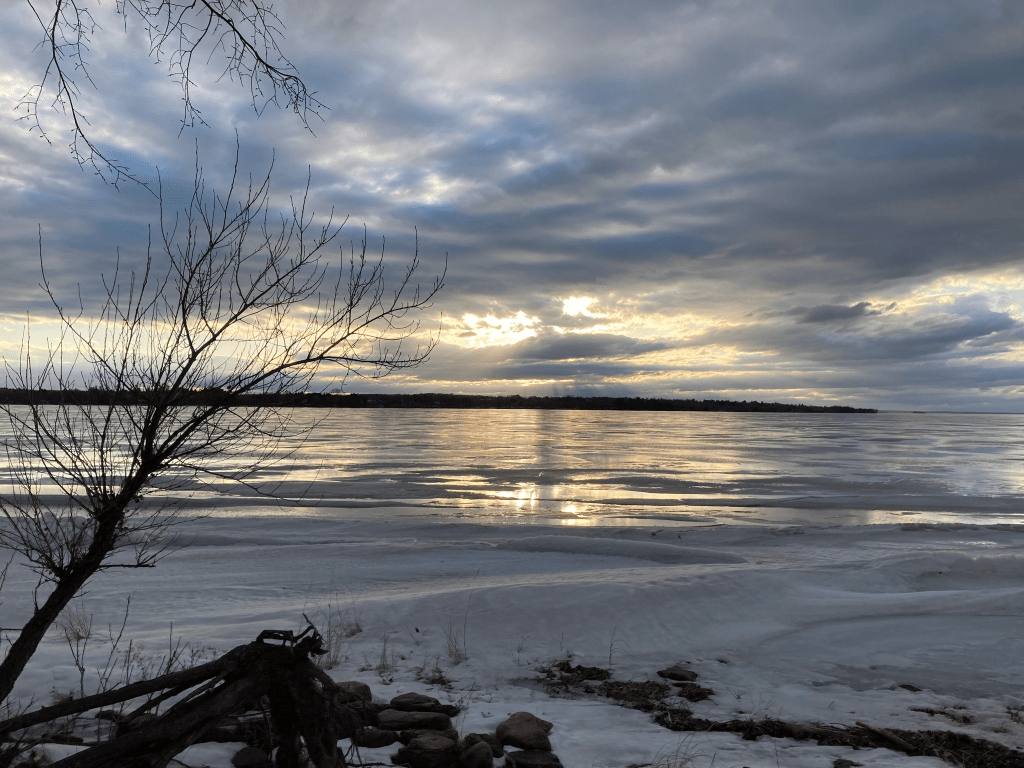
Photo below of the Ottawa River (Kitchissippi) taken on April 1, from Morrison Island Quebec looking north-west toward Chalk River.

Call for intervenors ~ have your say on the Chalk River radioactive waste mound at the public hearings that start on May 31

Note: If you are seeing this page for the first time and the April 11 deadline has passed, feel free to write to the CNSC to tell them what you think, and copy your Member of Parliament.

On May 31st the final licensing hearing for giant Chalk River radioactive waste mound will begin. The Commission will hear interentions (10 minute presentations) from First Nations, NGOs, municipal representatives, citizens’ groups and others.

This will be the final opportunity for the public to comment on this flawed proposal that will endanger the Ottawa River when this mound leaks and disintegrates, which the proponent’s own studies show is inevitable. There are many good reasons to stop this dump. For a simple summary of six of the most compelling see this post.

You do not need to have any scientific or technical expertise to intervene. Your intervention/submission/letter can be short or more substantial. Some of the most effective interventions in past hearings have involved singing and/or strong visual images. You can present a slide show that could include a short video. Passionate pleas for common sense are good too! Let’s press the CNSC to uphold its mandate to protect the environment and current and future generations of Canadians.

Contact us if you would like more guidance than is contained in this post.

Please send a copy of your intervention to your Member of Parliament.

April 11 is the deadline to request to intervene 

Your request must include:

  • Your written submission to be presented to the Commission
  • Whether you wish to intervene with your written submission only or if you would also like to make an oral presentation during the hearings (oral interventions are RECOMMENDED as they have more impact on the commissioners; they can be any length under 10 minutes)
  • Your name, address and telephone number

To Send: two options ~ send by email or use on-line form (link just below):

1.  Send via email to CNSC:interventions@cnsc-ccsn.gc.ca

To identify your request, write in the subject line and as a heading:

May 31 Public Commission Hearing – Canadian Nuclear Laboratories Near Surface Disposal Facility

OR

2.  Use on-line CNSC Request Form

Date: May 31     Licensee: Canadian Nuclear Laboratories (CNL)

Subject: Public Commission Hearing – Near Surface Disposal Facility

http://www.nuclearsafety.gc.ca/eng/the-commission/intervention/

What to expect: The Commission Registry will acknowledge receipt of your request to intervene and will later confirm if your intervention has been accepted by the Commission.

Your intervention will be given a Commission member document (CMD) reference number and will be added to the public record. Submissions will be publicly available on the CNSC website.

Reference material to possibly inspire your intervention:

Six Reasons to Stop the Ottawa River Radioactive Waste Dump

Critical Flaws, Errors and Omissions in CNSC staff’s case to approve the Chalk River Mound

Défauts, erreurs et omissions critiques dans le dossier d’approbation du monticule de Chalk River 

Nuclear regulator’s case to approve giant nuclear waste mound is fraught with serious errors and omissions, citizens’ groups say   

Selon des groupes de citoyens, les arguments de l’autorité de réglementation nucléaire en faveur de l’autorisation d’un gigantesque monticule de déchets nucléaires sont truffés d’erreurs et d’omissions graves

Media Release: February 16, 2022 ~ MPs and groups oppose hearings to license Canada’s first permanent radioactive waste dump. The media release in English and in French.

The statement referred to in the media release was sent to Ms. Rumina Velshi, CNSC President, and to the federal ministers of Environment, Natural Resources, Indigenous Services and Crown Indigenous Relations. 

OPEN LETTER To Prime Minister Justin Trudeau and members of the federal cabinet ~ Stop the Chalk River radioactive waste dump

LETTRE OUVERTE au premier ministre Justin Trudeau et au Conseil des ministres fédéral ~ ARRÊTEZ le dépotoir radioactif de Chalk River

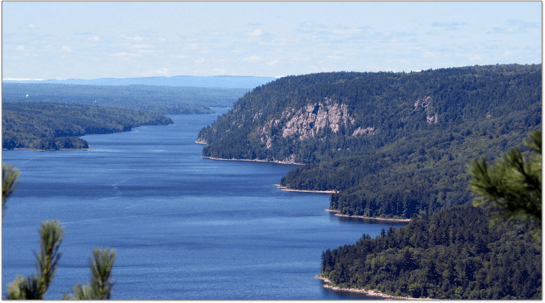
Photo above of Kitchissippi (the Ottawa River) taken on March 17, 2022.