Why is so little Chalk River waste suitable for near surface disposal?
Extensive research work at the Chalk River Laboratories on nuclear reactor fuels, and in the early days, on materials for nuclear weapons, produced waste with large quantities of long-lived alpha emitters. This waste is difficult to manage and can even become increasingly radioactive over time.
According to the International Atomic Energy Agency, because of the presence of long-lived alpha emitters, waste from nuclear research facilities is generally classified as intermediate level, and even in some cases, as high level. This waste cannot be put in a near surface disposal facility because its radioactivity will not decay to harmless levels during the period that the facility remains under institutional control.
Alpha emitters decay by throwing off an alpha particle, the equivalent of a helium nucleus, with two protons and two neutrons. The external penetrating power of an alpha particle is low, but alpha emitters have extremely serious health effects if ingested or inhaled. They can lodge in your lungs and cause cancer.
Research at Chalk River and all other nuclear laboratories is ultimately based on three long-lived alpha emitters — thorium-232, uranium-235, and uranium-238. These are the “naturally occurring” or “primordial” radionuclides. They were created by large stars and then incorporated into the Earth and the solar system when they formed some 4.5 billion years ago. The waste inventory proposed by Canadian Nuclear Laboratories for the Near Surface Disposal Facility (NSDF) includes over six tons each of thorium-232 and uranium-238.
Each “natural” alpha emitter initiates a decay chain with roughly a dozen radioactive isotopes of other elements such as radium, radon, and polonium. These elements also occur naturally, but in much smaller amounts because of their more rapid decay.
When a radioactive element releases an alpha particle, the atomic weight of the product goes down by four. Uranium-238 decays to uranium-234, with a 245,000-year half-life. Uranium-234 decays to thorium-230, with a 75,000-year half-life. Thorium-230 decays to radium-226, with a 1,600-year half-life. Shorter half-lives mean greater initial radioactivity. Radium-226 decays to radon-222, with a 4-day half-life. Radon-222, a gas, builds up in the basements of houses built over uranium-rich rocks. When it is inhaled it decays into polonium-218, a highly toxic, cancer-causing substance with a 3-day half-life. “Naturally occurring” alpha emitters are clearly harmful.
Hazards increase when uranium and thorium are mined and concentrated from ores and used in their pure form. Marie Curie, who spent much of her career isolating radium and polonium from uranium, died of radiation-induced leukemia at age 66. She was buried in a lead-lined tomb because her corpse emitted so much radiation.
When thorium-232, uranium-235, and uranium-238 are irradiated in a reactor, as at Chalk River, they absorb neutrons and produce significant quantities of new, man-made, long-lived alpha-emitters. Irradiated uranium-238 absorbs a neutron and temporarily forms uranium-239. Uranium-239 transmutes to neptunium-239, which quickly transmutes to long-lived plutonium-239, with a half-life of 24,000 years.
Plutonium-239 is “fissile” – it can readily support a chain reaction. It is what the early Chalk River researchers produced for the manufacture of U.S. nuclear weapons, by separating the plutonium from irradiated reactor fuel. They also used the separated plutonium to make “mixed oxide” (MOX) reactor fuel, mixing it with fresh uranium.
Thorium-232, when put in a nuclear reactor, will absorb a neutron and transmute to uranium-233, with a half-life of 160,000 years. Uranium-233 also can support a chain reaction, so it can be used in atomic bombs and reactor fuels as well. Chalk River researchers did a lot of work to separate uranium-233 from irradiated thorium-232.
All reactor fuel contains uranium-235. It is the only naturally occurring isotope that readily undergoes fission and can sustain a chain reaction. But not all uranium-235 atoms undergo fission in a nuclear reactor. Instead they can absorb either one or two neutrons and form yet two more very long-lived, man-made alpha-emitters, uranium-236 (half-life of 23.4 million years) and neptunium-237 (half-life of 2.14 million years).
Nuclear engineers don’t like uranium-236 because it acts as a “neutron poison”, absorbing neutrons instead of undergoing fission. The longer that uranium-235 fuel remains in a reactor, the more uranium-236 and neptunium-237 are produced.
Uranium-236 is certainly a part of the Chalk River waste. It is the longest-lived of all the man-made alpha emitters, but for some reason it was omitted from the NSDF inventory.
As noted above, thorium-232, uranium-235, and uranium-238 are the start of three naturally occurring decay chains. A fourth decay chain starts with man-made neptunium-237 and ends with thallium-205 (the element before lead in the periodic table). Neptunium and its “progeny” have all decayed away during Earth’s 4.5-billion-year history, but production of neptunium-237 in nuclear reactors (and uranium-233 by thorium-232 irradiation) has “resurrected” this hitherto extinct fourth decay chain.
Americium-241, found in significant quantities in Chalk River waste, is another starting point for the man-made nepturium-237 decay chain. Nuclear reactors have also greatly augmented the amounts of radionuclides in the uranium-235 decay chain by producing plutonium-239, and in the thorium-232 decay chain by producing uranium-236.
Early research done at Chalk River to extract (or “reprocess”) plutonium-239 and uranium-233 from irradiated fuel and irradiated thorium targets has created a legacy of buildings (e.g., the Plutonium Recovery Laboratory) and soils (e.g., the Thorium Pit) that are contaminated with long-lived alpha emitters. Reprocessing was dangerous and caused several accidents. The resulting contamination has never been cleaned up.
Until 2018, highly enriched uranium-235 targets were irradiated in the NRU reactor at Chalk River, followed by dissolving the targets in nitric acid and extracting the fission product molybdenum-99, a “medical isotope”. After extraction of “moly-99”, the other fission products, and the long-lived alpha emitters uranium-236 and neptunium-237 (produced when uranium-235 atoms absorb neutrons instead of undergoing fission), remain in the medical isotope waste. This waste resembles high-level spent fuel waste and represents one of Chalk River’s most dangerous legacies.
Fuel reprocessing, medical isotope production, and other research activities at Chalk River have produced very significant amounts of waste containing long-lived alpha emitters. This waste is unsuitable for near-surface disposal. Much of it is mixed with shorter-lived fission products and cannot be separated from them. This mixed waste should not be put in the NSDF.
Detecting alpha emitters in mixed waste is expensive and challenging. Putting inadequately characterized waste in the NSDF would invalidate its safety case.
Unfortunately, the NSDF Project lacks adequate waste characterization procedures. If the project is allowed to proceed, workers and future Ottawa valley residents could be exposed to unknown quantities of long-lived alpha emitters and suffer the serious health effects associated with them.
Please subscribe to the National Observer using this link, to support the excellent investigative journalism of Natasha Bulowski on the Chalk River nuclear waste.
Former employee at Atomic Energy of Canada Limited Kerry Burns (centre right, with a beard and spectacles) at AECL’s Whiteshell Laboratories in Manitoba in 1979. Photo submitted by Kerry Burns
Approval of a nuclear waste disposal site near the Ottawa River hinged on a promise that only low-level radioactive waste would be accepted. But former nuclear industry employees and experts warn some waste slated for disposal contains unacceptably high levels of long-lived radioactive material.
The “near-surface disposal facility” at Chalk River Laboratories (CRL) will store up to one million cubic metres of current and future low-level radioactive waste inside a shallow mound about one kilometre from the river, which provides drinking water to millions of people in the region. But former employees who spent decades working at the labs in waste management and analysis say previous waste-handling practices were inadequate, imprecise and not up to modern standards. Different levels of radioactive material were mixed together, making it unacceptable to bury in the mound.
“Anything pre-2000 is anybody’s guess what the hell they have on their hands,” said Gregory Csullog, a retired waste inventory specialist and former longtime employee of Atomic Energy of Canada Limited (AECL), the Crown corporation that ran the federal government’s nuclear facilities before the Harper government privatized it in 2015.
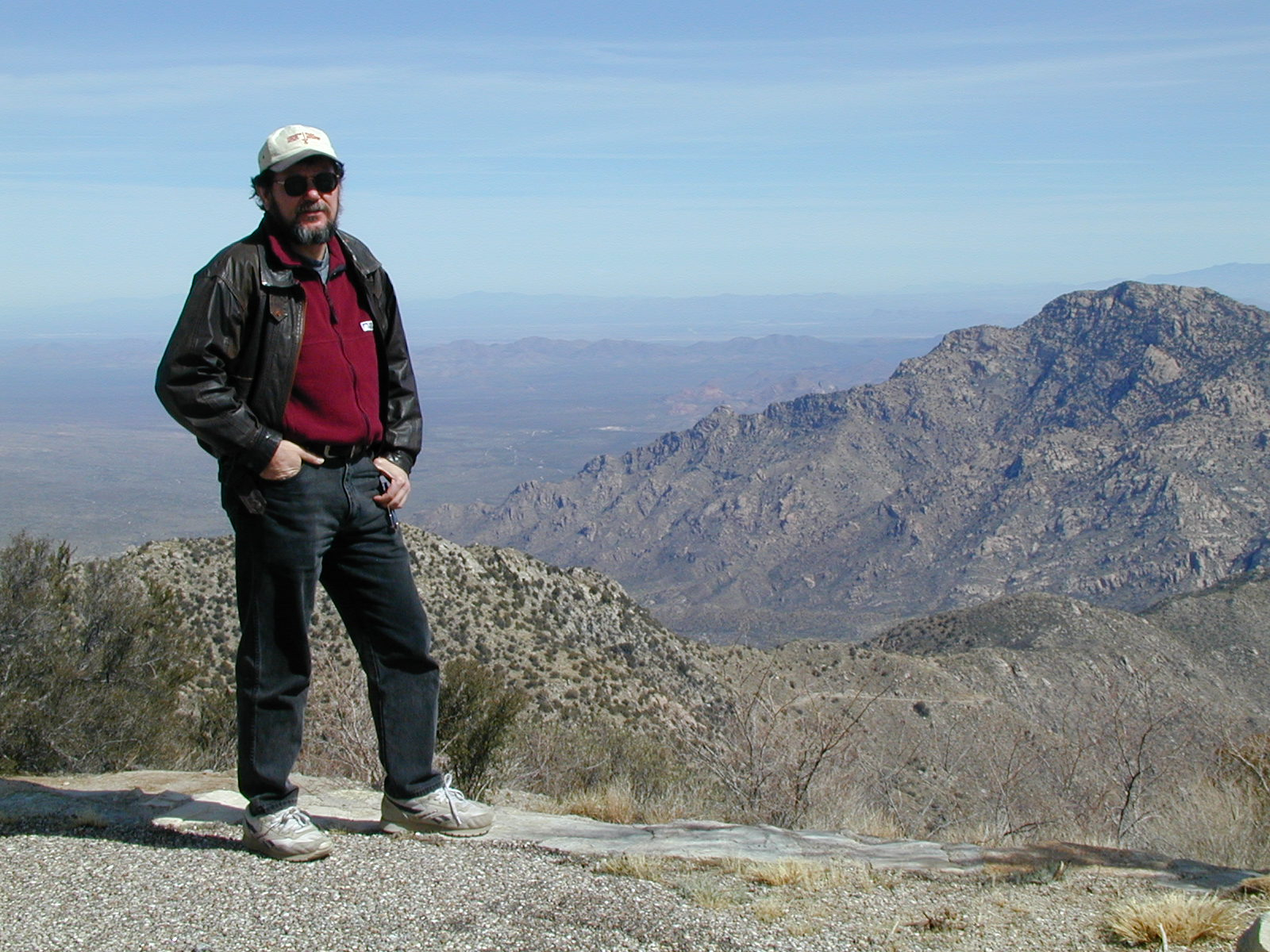
Gregory Csullog pictured at the Yucca Mountain nuclear waste repository in 2001 while employed with the International Atomic Energy Agency. Photo submitted by Gregory Csullog
Csullog described the waste during this earlier time as an unidentifiable “mishmash” of intermediate- and low-level radioactivity because there were inadequate systems to properly label, characterize, store and track what was produced at Chalk River or shipped there from other labs. “Literally, there were no rules,” said Csullog, who was hired in 1982 to develop waste identification and tracking systems.
International safety standards state low-level radioactive waste is suitable for disposal in various facilities, ranging from near the surface to 30 metres underground, depending primarily on how long it remains radioactive. High-level waste, like used fuel rods, must be buried hundreds to thousands of metres underground in stable rock formations and remain there, effectively forever. Intermediate-level waste is somewhere in the middle and should be buried tens to hundreds of metres underground, not in near-surface disposal facilities, according to the International Atomic Energy Agency (IAEA).
Radioactive waste is recognized by many health authorities as cancer-causing and its longevity makes disposal a thorny issue. Even short-lived radioactive waste typically takes hundreds of years to decay to extremely low levels and some radioactive isotopes like tritium found in the waste — a byproduct of nuclear reactors — are especially hard to remove from water.
What people are reading
Canadian Nuclear Laboratories (CNL) originally wanted its near-surface disposal facility to take intermediate- and low-level waste when it first proposed the project in 2016. Backlash was swift and concerned groups, including Deep River town council and multiple experts, argued it would transgress international standards to put intermediate-level waste in that type of facility. In 2017, CNL changed its proposal and promised to only accept low-level waste. The announcement quelled the Deep River town council’s concern, but some citizen groups, scientists, former employees and many Algonquin Nations aren’t buying it.
CNL says its waste acceptance criteria will ensure all the waste will be low-level and comply with international and Canadian standards. Eighty seven per cent of the waste will be loose soil and debris from environmental remediation and decommissioned buildings. The other 13 per cent “will have sufficiently high radionuclide content to require use of packaging” in containers, drums or steel boxes in the disposal facility, according to CNL.
Approval of a nuclear waste disposal site near the Ottawa River hinged on a promise that only low-level radioactive waste would be accepted. #ChalkRiverLabs
However, project opponents note that between 2016 and 2019, about 90 per cent of the intermediate-level waste inventory at federal sites was reclassified as low-level, according to data from AECL and a statement from CNL. The timing of the reclassification raised the alarm for critics, who took it to mean intermediate-level waste was inappropriately categorized as low-level so it could be stored in the Chalk River disposal facility. CNL said the 2016 estimate was based on overly “conservative assumptions” and the waste was reclassified after some legacy waste was retrieved, examined and found to be low-level.
The disposal facility will also accept waste generated over the next two decades and some shipments from hospitals and universities.
The history of Chalk River Laboratories
To fully understand the nuclear waste problem, you first have to know the history of Chalk River Lab’s operations and accidents, according to Mahdi Khelfaoui, professor of the history of energy, science and technology at the University of Quebec at Trois-Rivières and author of multiple articles on the nuclear industry and its history in Canada.
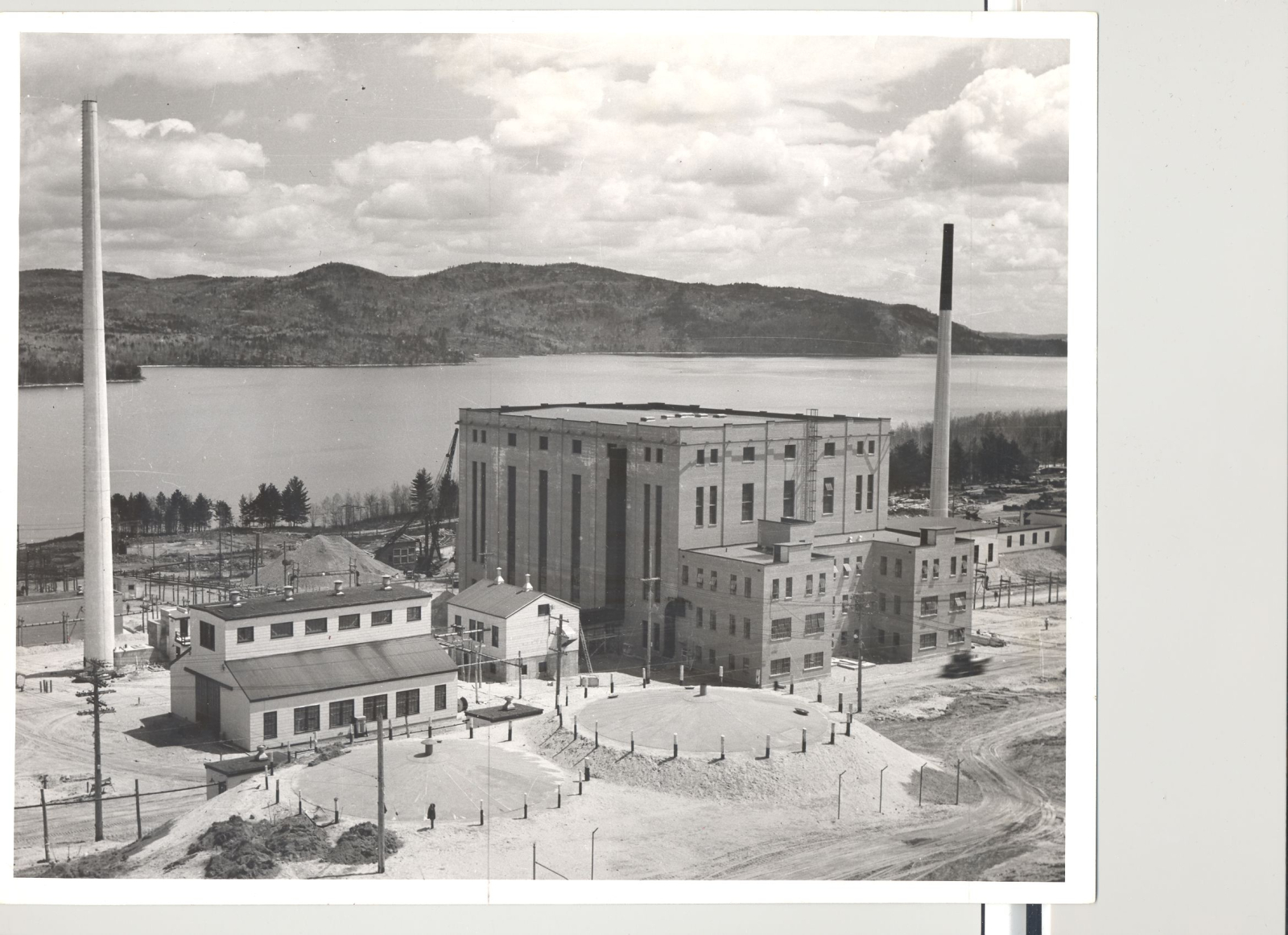
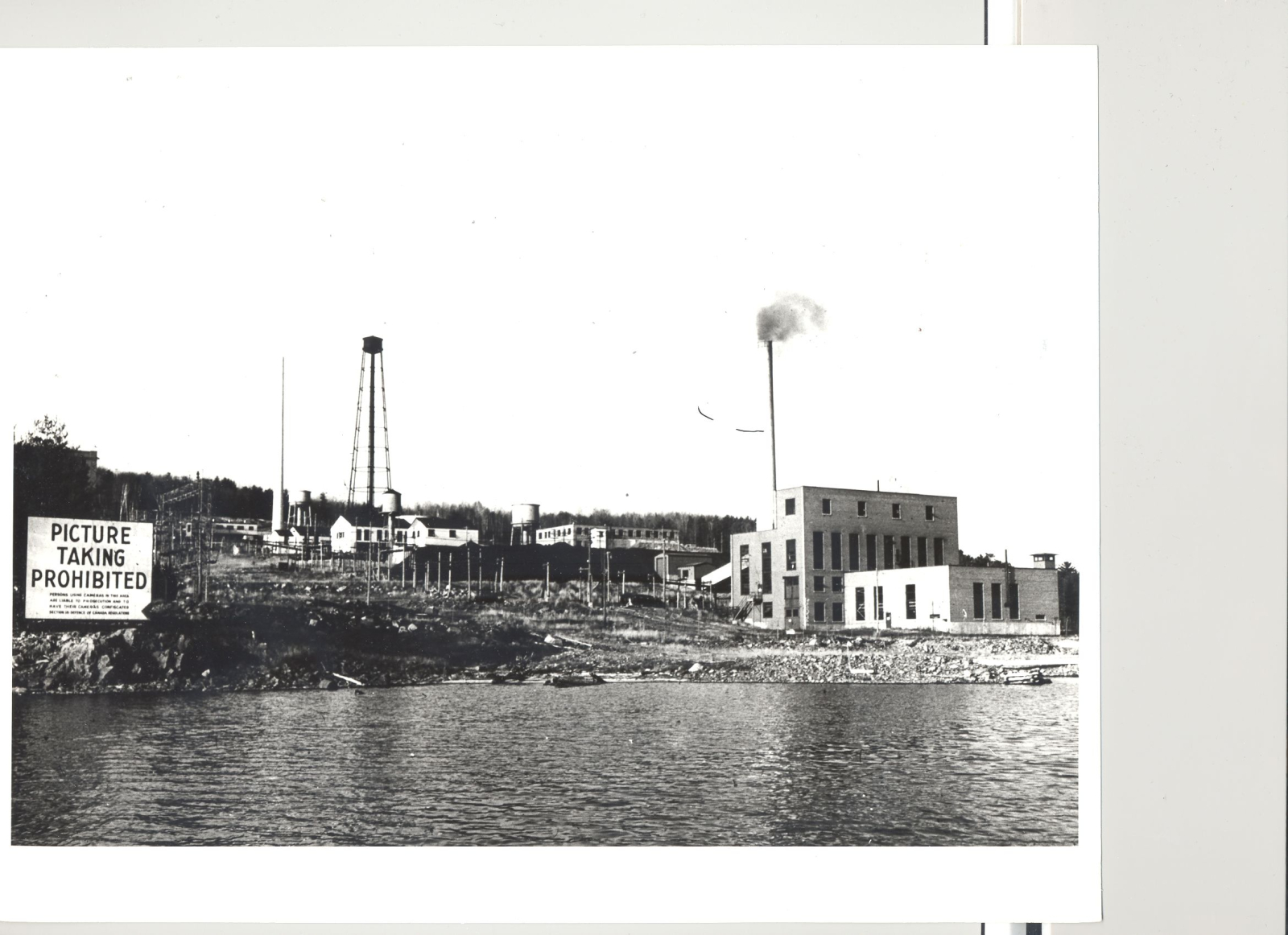
Chalk River Laboratories photographed in 1945. Photo from the National Research Council Canada archives
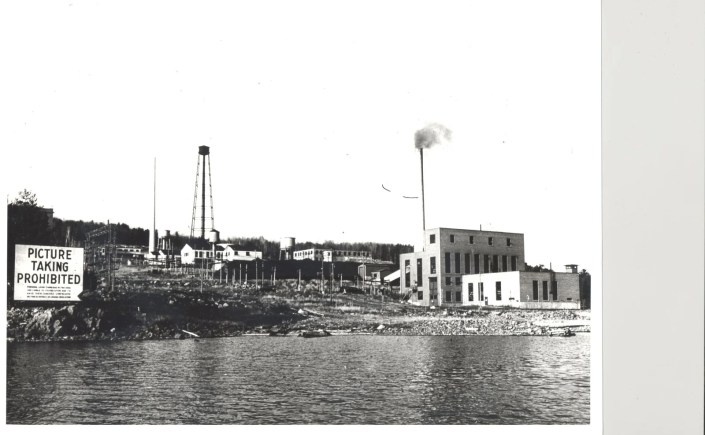
Chalk River is Canada’s biggest research facility. Built in 1944, it became home to the world’s first recorded nuclear reactor core meltdown in December 1952, followed by another incident in 1958. The 1952 accident was ranked a five on the International Atomic Energy Agency’s scale of one to seven; Chernobyl was a seven.
The partial reactor meltdown spewed radioactive material into the air and environment. During the year-long cleanup, highly radioactive debris and fuel rods were buried in a sandy area near the Ottawa River and millions of litres of contaminated water were dumped into ditches less than two kilometres from the river.
In this day and age, burying wooden boxes of fuel rods in shallow holes would be unthinkable, said Khelfaoui.
“At the time, the radioactive waste issue was almost synonymous with protecting the [commercial] interests of the nuclear industry,” said Khelfaoui. Public involvement in waste management policy was “nonexistent” before the end of the 1990s, he said.
Keeping accurate information on waste over time is a challenge and there have been inventory discrepancies at Chalk River, he added.
For example, the fuel rods buried in a “rudimentary” fashion after the 1952 meltdown were dug up and moved to safer storage in 2007, said Khelfaoui. AECL expected to find 19 fuel rods and cans in the boxes, but there were actually 32.
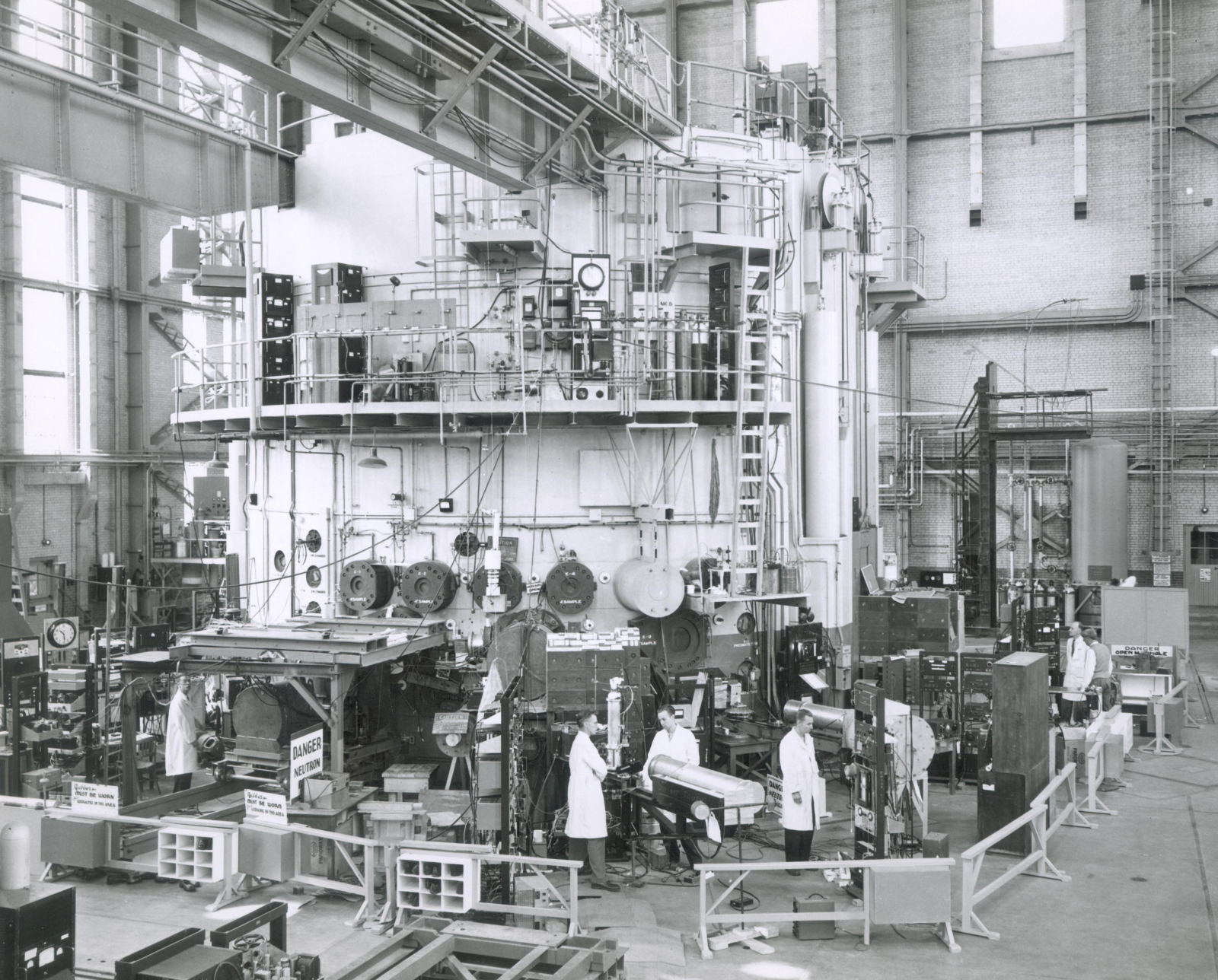
Over 75 years, Chalk River Laboratories developed CANDU reactors, did nuclear weapons research, supplied the United States’ nuclear weapons program with plutonium and uranium, and at one time was the world’s largest supplier of medical isotopes used to diagnose and treat cancers.
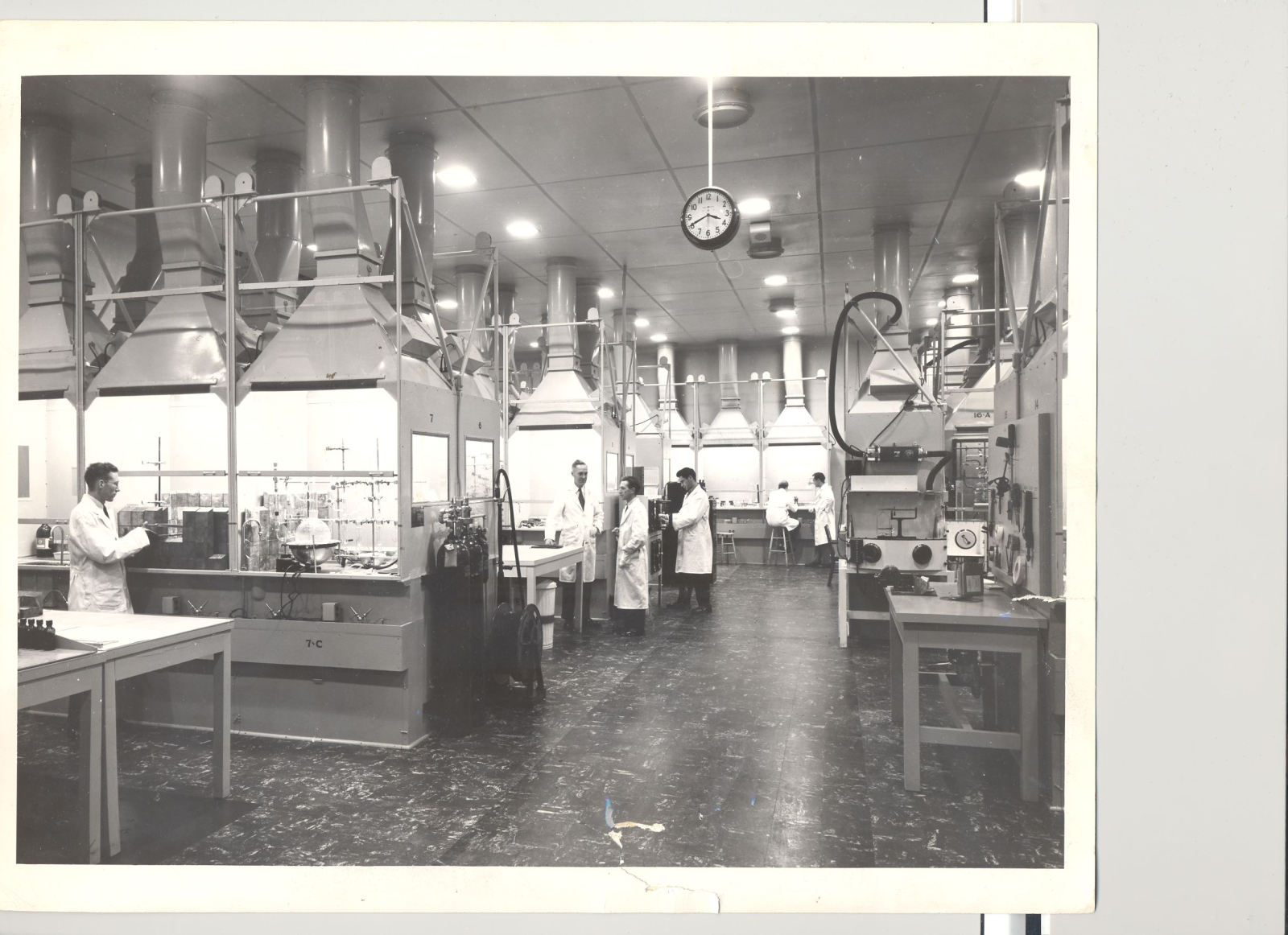
Chalk River Labs’ isotope separation laboratory in 1948. For 60 years, Chalk River Labs produced medical isotopes used to treat and diagnose diseases like cancer. Photo from the National Research Council Canada archives
Inherent inventory issues
Until the mid-1990s, waste wasn’t even categorized as intermediate, low or high-level, said Csullog, who worked at AECL back when the Crown corporation still ran day-to-day operations at Chalk River Laboratories. Much of it was stored together in what he described as a “mishmash of unsegregated, unmarked, uncharacterized mixture of low- and intermediate-level waste.”
“This mixing and lack of identification would make all these wastes unsuitable for the near-surface disposal facility,” said Csullog.
His main concern is the packaged legacy waste, which includes contaminated protective gear, old mops, rags, tools and lab equipment from former operations. For example, some of this equipment was used to clean up highly radioactive water that leaked out of the site’s two nuclear reactors, said Csullog.
A historic photo of the National Research Experimental Reactor (NRX). NRX began operation in 1947 as Canada’s first large-scale research reactor and played a major role in developing the CANDU reactor. It was used to test fuels and materials and for nuclear physics research in support of the Canadian nuclear power program, according to the Canadian Nuclear Safety Commission. NRX was shut down on Jan. 29, 1992. Photo courtesy of Canadian Nuclear Laboratories
During his 21 years at AECL’s Chalk River Laboratories, Csullog developed programs to label and track all the radioactive waste created or shipped to the site. He later wrote the International Atomic Energy Agency’s guidelines on waste inventory record-keeping systems.
Developing these programs for AECL posed a challenge because many of the logbooks he was given to transcribe at the outset of his work in 1982 had precious little information on where the waste came from, how it was created or its radionuclide content. Csullog described the information in these historical records as “meaningless.” Until the mid-’90s, there weren’t even waste package labels to link waste to the correct paperwork, which also hindered his work, said Csullog.
“We didn’t track it. You can’t throw it all together and say, ‘We’ll use historical information.’ It’s irrelevant,” said Csullog.
In an email statement to Canada’s National Observer, CNL said the radioactivity of the legacy waste packages is based on records from its waste database. “CNL recognizes there are gaps” in this data and said no waste will be placed in the facility based only on historic information. Data on older legacy waste data will be reassessed and “modern analysis techniques” used to ensure there is “enough information on the waste” to make certain it meets the acceptance criteria.
The majority of packaged waste now in storage was generated pre-1995 and there is enough information to classify it as low-level waste “within a reasonable certainty,” a CNL representative told the Canadian Nuclear Safety Commission (CNSC) during the licensing process. All waste generators have to submit documents detailing the properties of the waste and then it’s up to CNL to verify the waste matches the documentation before it goes into the disposal facility.
Even after Csullog’s waste identification and tracking program was implemented in the mid-’90s, some waste with higher radioactivity was still compacted with really low-level material when it should have been kept separate, said Csullog.This was done so the radiation emitted by each bale was limited enough for people to handle and move them but in hindsight, was a mistake, he said. At this period in time, the industry was on a learning curve when it came to waste management, said Csullog.
It takes a “very, very small amount of a contaminant that’s long-lived” to make low-level waste transition to intermediate, Csullog emphasized.
By the time Csullog left the Crown corporation in 1999, his final iteration of a waste inventory database was being used for package labelling, validation, inspection and compliance monitoring. While it was a vast improvement on past practices, the program still relied on estimates of waste characteristics and only helped keep tabs on newly created wastes — not the pre-2000’s waste Csullog says is unacceptable for the facility. Estimates are not a substitute for the more involved process of characterization,a process to verify the specific type and concentrations of radionuclides,said Csullog, but it helps identify which waste should be a priority and make a plan to verify its characteristics. Radionuclides are radioactive atoms.
To safely manage, dispose and store waste, it must first be characterized so you know how long the radionuclides take to decay and can then accurately classify waste as low or intermediate level based on their disposal requirements, said Kerry Burns, an expert on radioactive waste characterization methods who worked at AECL for 25 years and the IAEA for eight years.
In either case, Csullog said when he returned to AECL in 2006 after a stint working for the IAEA, his program that estimated waste characteristics and tracked them had been “abandoned.” The outstanding question in Csullog’s mind is what has been done to take its place.
In a detailed submission to the CNSC, Csullog outlined the many problems with waste identification and inventory systems during his time at AECL and the persistent lack of data to verify the radionuclide content of this older waste.
Csullog emphasized he is not against the disposal facility as a whole. He is against CNL putting this particular legacy waste into it. Instead, CNL should put this legacy waste into a deeper facility designed for intermediate-level waste since it will have to dispose of other intermediate-level waste anyway, he said.
A majority of the waste planned for disposal in the near-surface facility is soil and debris from decommissioned buildings. Most of the buildings decommissioned so far were administrative and likely had little contamination and CNL could feasibly have enough information on the radioactive properties, said Csullog. But the site’s wide range of research and development activities exposed lab equipment and some buildings to many different radioactive materials. For example, some labs separated plutonium for the U.S. weapons program, said Burns.
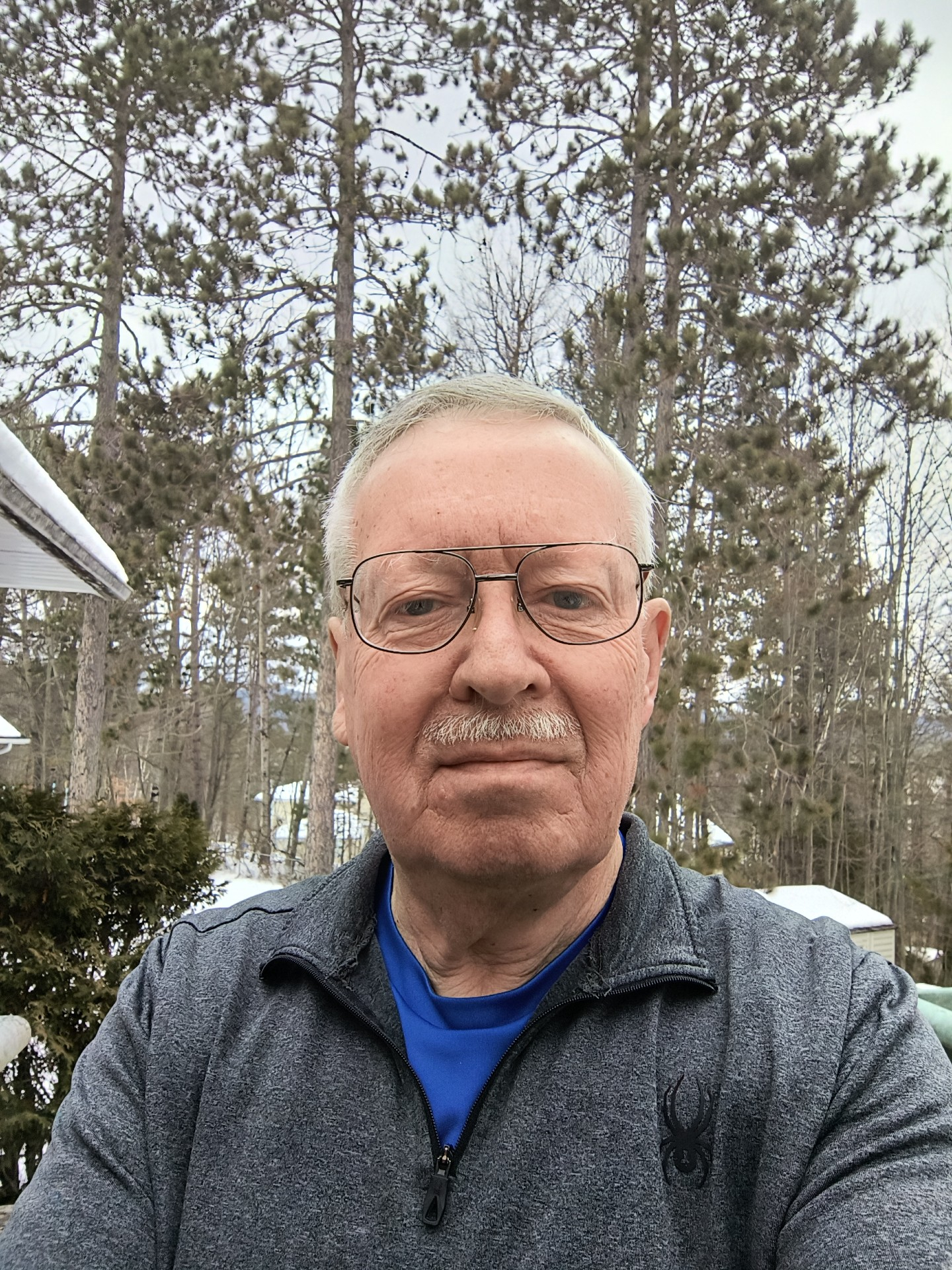
Kerry Burns, longtime AECL employee and radioactive waste characterization expert, outside his home in 2024. Photo submitted by Kerry Burns
Because of the site’s wide-ranging activities, it is unknown exactly what concentrations of radionuclides are in the legacy waste, said Burns.
The radionuclides typically encountered at Chalk River Labs have half-lives ranging from seconds to tens of thousands of years and can give off three different types of radiation. Low-level waste should decay to extremely low levels within roughly 300 years. As radionuclides decay, some of them turn into other radionuclides with different properties, which is vital to know when you’re planning how to store waste, said Burns.
Some controlled activities — like operating a nuclear power plant — produce waste with fairly predictable types and amounts of radionuclides. As long as these predictable waste streams are kept separate, you can often measure, sample and analyze it, said Burns, who spent years at AECL developing radiochemical analysis methods to determine exact properties of waste, and authored multiple articles on these methods.
But these methods only work if the waste is consistent, monitored carefully over time and kept separate from other waste streams, said Burns.
“I am afraid that the legacy and decommissioning wastes at CNL fall into the category of a dog’s breakfast,” said Burns. To know exactly how dangerous and long-lived the materials going into the facility truly are, a detailed analysis of each package and container would be required, said Burns.
According to CNL’s waste acceptance criteria, radiochemical analysis is not part of its minimum verification requirements, though it may be done as an additional verification measure.
Canada’s National Observer asked CNL which waste streams, if any, have had their radionuclide content confirmed using radiochemical analysis.
CNL said radiochemical analysis and background information are used to create “fingerprints” for waste streams based on what background information and past data exist on the waste.
“Some fingerprints have been established, while others are still in development,” said CNL. The company gave no specifics on which waste streams were examined using radiochemical analysis.
All waste will have “sufficient characterization data” to confirm it can be placed in the near-surface disposal facility, according to CNL.
Radiochemical analysis is “prohibitively expensive” and “extremely time-consuming” but is the only way to determine the inventory of long-lived, hard-to-detect radionuclides in thiswaste, said Burns. This chemical analysis becomes even more challenging when waste from different operations is mixed together, as Csullog and Burns said was the case for a great deal of waste pre-2000. If a sample isn’t representative of the whole waste stream, the results won’t reflect everything in it, said Burns.
Canada’s National Observer asked CNL if it has a budget or cost estimate for radiochemical analysis and which wastes will require this analysis. CNL declined to answer.
CNL is responsible for ensuring waste meets its acceptance criteria.CNL is owned by a consortium of private companies (including AtkinsRealis, formerly SNC-Lavalin). AECL receives federal funding and contracts CNL to manage and run the federal sites, including Chalk River.
Minimum requirements for verification include inspecting waste package labels and providing documents on the waste profile and management plan. CNL’s waste acceptance criteria doesn’t specify how often verification takes place. CNL declined to explain how frequently it would verify waste.
Chalk River Laboratories photographed from the Ottawa River in 1945. It was constructed in 1944. Photo from the National Research Council Canada archives
Csullog and Burns can only speak to the waste management practices from their time at Chalk River. Burns’ team at AECL used radiochemical analysis paired with another group’s measurements to characterize the mixed waste that was compacted into bales. These bales are on the lower end of radioactivity compared to other operations waste and the characterization data showed even those are unsuitable for the disposal facility, said Csullog.
CNL could have adequate systems and practices in place to characterize and track waste being generated today, they say, though neither is convinced based on the company’s submissions to the CNSC. But proper waste management today doesn’t change the fact that the Chalk River site is dealing with waste from an era when far less was known about the importance of handling radioactive waste, said Csullog.
“It was a good place to work … but when it came to waste management, it was always sort of the lowest priority,” said Burns, referring to AECL back in his day. “You’re dealing with a research site where people get rewarded for publishing papers, for doing innovative research, not for handling wastes and putting it in storage.”
Natasha Bulowski / Local Journalism Initiative / Canada’s National Observer
Citizens’ groups from Ontario and Quebec warn that radioactive waste destined for a giant mound beside the Ottawa River must be stored underground
The groups call on the federal government to halt the project and stop all funding for construction
Ottawa, February 5, 2024 — Citizens’ groups have issued an urgent warning about waste slated for disposal in a giant radioactive waste mound one kilometre from the Ottawa River, upstream from Ottawa, Gatineau and Montreal. The groups cite nuclear experts who say the waste will remain hazardous to the public for many thousands of years and needs to be emplaced underground.
In a letter sent on February 4 to elected officials, the citizens’ groups call for the Government of Canada to halt the disposal project and stop all funding for construction. The letter cites evidence that waste destined for the mound is heavily contaminated with very long-lived radioactive materials produced in nuclear reactors, which are capable of causing cancer, birth defects and genetic mutations in exposed populations.
The seven-storey radioactive mound is known as the “Near Surface Disposal Facility” (NSDF). It was recently licenced by the Canadian Nuclear Safety Commission (CNSC). The CNSC is widely perceived to be a captured regulator that promotes the projects it is supposed to regulate, as reported by an Expert Panel in 2017.
If built, the mound will hold one million tons of radioactive and other hazardous waste from eight decades of operations of the Chalk River Laboratories (CRL), a highly contaminated federal nuclear research facility owned by the Government of Canada. Commercial waste and waste imported from other federal nuclear sites would also be put into the mound.
The site for the NSDF is on the CRL property, 180 km northwest of Canada’s capital, on the Ottawa River directly across from the Province of Quebec. Studies show the mound would leak during operation and break down due to erosion after a few hundred years, contaminating the Ottawa River, the source of drinking water for millions of Canadians.
Concerned Citizens of Renfrew County and Area, the Old Fort William (Quebec) Cottagers’ Association, Ralliement contre la pollution radioactive, and the Canadian Coalition for Nuclear Responsibility have been opposing the giant radioactive waste mound since 2016. They say there is widespread ignorance about what would go in the mound due to repeated statements by the regulator and the proponent that “it’s only low level waste.”
“If I hear one more time that the mound will hold ‘only low-level’ radioactive waste including mops and shoe covers, I’m going to scream so loud they will hear me at the IAEA headquarters in Vienna,” said Johanna Echlin of the Old Fort William (Quebec) Cottagers’ Association. “People need to wake up and realize the truth that this waste is full of deadly long-lived, man-made radioactive poisons such as plutonium that will be hazardous for many thousands of years.”
The International Atomic Energy Agency (IAEA) referred to by Echlin says waste from research facilities such as Chalk River Laboratories generally belongs to the “Intermediate-level” waste class and must be kept underground, tens of metres or more below the surface.
A former senior manager in charge of “legacy” radioactive waste at Chalk River told the Canadian Nuclear Safety Commission that, in reality, the waste proposed for emplacement in the NSDF “is ‘intermediate level waste’ that requires a greater degree of containment and isolation than that provided by a near surface facility.” He pointed out the mound would be hazardous and radioactive for many thousands of years, and that radiation doses from the facility will, in the future, exceed regulatory limits.
“We believe Cabinet or Parliament has the power to reverse this decision and they need to do so as soon as possible,” said Lynn Jones of Concerned Citizens of Renfrew County and Area. “It’s clear that the only benefit from the NSDF would go to shareholders of the three multinational corporations involved, AtkinsRéalis (formerly SNC-Lavalin), Fluor and Jacobs. Everyone else would get only harm—a polluted Ottawa River, plummeting property values, increased health risks, never-ending costs to remediate the mess and a big black mark on Canada’s international reputation.”
The citizens’ groups say Canada should commit to building world class facilities for managing radioactive waste that would keep Canadians safe and provide good jobs in the nuclear industry, safely managing and containing the waste for generations to come.
The cleanup of the Chalk River Laboratories site was originally estimated to cost $8 billion in 2015 when a multinational consortium called “Canadian National Energy Alliance”** was contracted by the Harper government to manage the Chalk River site and clean up the radioactive waste there and at other federally owned facilities.
Since the consortium took over, the annual costs to Canadian taxpayers for the operation and cleanup at Canada’s nuclear labs have ballooned from $336 million dollars per year to over $1.5 billion per year.
-30-
**The consortium known as Canadian National Energy Alliance is comprised of AtkinsRéalis(formerly SNC-Lavalin,) which was debarred by the World Bank for 10 years and faced charges in Canada of fraud, bribery and corruption; Texas-based Fluor Corporation, which paid $4 million to resolve allegations of financial fraud related to nuclear waste cleanup work at a U.S. site; and Texas-based Jacobs Engineering, which recently acquired CH2M, an original consortium member that agreed to pay $18.5 million to settle federal criminal charges at the same nuclear cleanup site in the U.S.
Des groupes de citoyens de l’Ontario et du Québec soutiennent que certains déchets destinés à une gigantesque décharge de déchets radioactifs, près de la rivière des Outaouais, devraient être enfouis en profondeur.
Les groupes demandent au gouvernement d’interrompre le projet et de refuser son financement.
Ottawa, le 5 février 2024 — Des groupes de citoyens ont lancé un avertissement urgent au sujet des déchets radioactifs qui seraient enfouis dans une gigantesque décharge sur une colline, à 1 km de la rivière des Outaouais en amont d’Ottawa, Gatineau et Montréal. Ces groupes citent des experts dans le domaine du nucléaire qui affirment que certains déchets seront fortement radioactifs pendant des milliers d’années et que nous devons les enfouir en profondeur pour protéger la population.
La Commission canadienne de sûreté nucléaire (CCSN) a approuvé récemment cette déchargé haute comme un édifice de sept étages, connue sous le nom d’Installation de gestion des déchets près de la surface (IGDPS).
L’IGDPS est sur le site des Laboratoires nucléaires canadiens (LNC), à 180 km au nord-ouest d’Ottawa, sur la rivière des Outaouais, juste en face de la province de Québec. Des études démontrent que cette décharge de déchets aura des fuites radioactives pendant son exploitation et qu’elle s’effondrera après quelques centaines d’années à cause de l’érosion. Cela contaminera la rivière des Outaouais, source d’eau potable de millions de Canadiens.
Concerned Citizens of Renfrew County and Area, l’Association des propriétaires de chalets d’Old Fort William, le Ralliement contre la pollution radioactive et le Regroupement pour la surveillance du nucléaire figurent parmi les nombreux organismes qui critiquent depuis 2016 la conception de cette décharge géante de déchets radioactifs. Selon eux, l’information est trop vague concernant les déchets destinés à l’IGDPS même si la Commission de sureté nucléaire et les Laboratoires nucléaires canadiens ont affirmé à plusieurs reprises que seulement des déchets radioactifs de faible activité y seront placés.
” Les installations de gestion des déchets près de la surface ne conviennent pas aux déchets radioactifs de moyenne activité qu’on voulait y mettre au début, “déclare Ginette Charbonneau du Ralliement contre la pollution radioactive. ” À la suite des protestations du public, les promoteurs du projet disent maintenant que l’IGDPS n’acceptera que des déchets de faible activité. Malheureusement, ce n’est pas crédible. Il est très difficile de séparer des déchets de faible activité et de moyenne activité qui ont été stockés ensemble dans des colis non marqués. Il est donc inévitable qu’il y ait encore des déchets de moyenne activité dans cette décharge en surface. C’est très dangereux “.
Johanna Echlin de l’Association des propriétaires de chalets d’Old Fort William (Québec) mentionne que l’Agence internationale de l’énergie atomique (AIEA) est l’organisme responsable de la sûreté et de la sécurité nucléaires au niveau mondial. Selon l’AIEA, les déchets hérités par les Laboratoires de Chalk River sont de “moyenne activité ” et ils devraient être enfouis à des dizaines ou des centaines de mètres sous terre.
Les groupes de citoyens citent également les déclarations de James R. Walker (Ph.D), un ancien cadre supérieur responsable des déchets radioactifs hérités des Laboratoires de Chalk River. M. Walker énonce clairement dans ses commentaires à la CCSN que certains déchets destinés à l’IGDPS sont des ” déchets de moyenne activité ” qui nécessitent plutôt un stockage souterrain. Il affirme que la décharge serait dangereusement radioactive pendant des milliers d’années et que les radiations provenant de l’installation dépasseraient les niveaux autorisés.
” Le Cabinet et le Parlement ont le pouvoir et le devoir de renverser cette décision le plus tôt possible “, déclare Lynn Jones de Concerned Citizens of Renfrew County and Area. ” Il est clair que les actionnaires d’Atkins Realis (anciennement SNC-Lavalin), de Fluor et de Jacobs seront les seuls à bénéficier du projet d’IGDPS. Tous les autres n’en tireraient que des problèmes : pollution de la rivière des Outaouais, risques sanitaires accrus, coûts de nettoyage astronomiques et une grande tache noire sur la réputation internationale du Canada “.
Dans une lettre envoyée le 5 février aux élus et aux responsables locaux, les groupes de citoyens demandent au gouvernement canadien de stopper ce projet et de couper son financement. Les études menées par le promoteur lui-même démontrent clairement que les déchets destinés à l’IGDPS sont fortement contaminés par de grandes quantités de substances radioactives de très longue durée de vie provenant des réacteurs nucléaires, expliquent-ils dans leur lettre. Ces déchets pourraient provoquer des cancers, des malformations congénitales et des mutations génétiques chez les populations exposées.
Le Canada devrait s’engager à construire des installations de gestion des déchets radioactifs de classe mondiale, afin de garantir la sécurité des Canadiens et de créer de bons emplois dans l’industrie nucléaire, tout en gérant les déchets de manière sûre pour les générations futures, disent ces groupes de citoyens.
Le coût de la dépollution du site des Laboratoires de Chalk River a été estimé à 8 milliards de dollars lorsque le site a été confié au secteur privé par le gouvernement Harper en 2015. Le consortium multinational appelé “Canadian National Energy Alliance “**, dirigé par SNC-Lavalin (aujourd’hui appelé Atkins Realis), a remporté le contrat de plusieurs milliards de dollars pour gérer et nettoyer “rapidement et à moindre coût” le site de Chalk River et d’autres sites fédéraux. Depuis que le consortium a pris le relais, les contribuables canadiens ont vu le coût d’exploitation des Laboratoires nucléaires canadiens (autrefois les Laboratoires de Chalk River) gonfler de 336 millions de dollars par an à plus de 1,5 milliard de dollars par année.
-30 –
**Le consortium connu sous le nom de Canadian National Energy Alliance est composé d’Atkins Realis (anciennement SNC-Lavalin), qui a été radié par la Banque mondiale pendant 10 ans et qui a fait l’objet d’accusations de fraude, de pots-de-vin et de corruption au Canada. La société texane Fluor Corporation a payé 4 millions de dollars pour mettre fin à des allégations de fraude financière liées à des travaux de nettoyage de déchets radioactifs sur un site américain ; et la société texane Jacobs Engineering, qui a récemment acquis CH2M, un membre initial du consortium, a accepté de payer 18,5 millions de dollars pour mettre fin à des accusations criminelles fédérales sur un site de nettoyage de déchets radioactifs aux États-Unis.
Ottawa River radioactive waste dump ~ license approved by the CNSC
January 13, 2024
Dear Friends
Yesterday afternoon Canada’s captured nuclear regulator, the CNSC, announced its approval of the license to build the giant above-ground radioactive waste mound beside the Ottawa River, aka the NSDF. See below a few links to good coverage of reactions to the announcement.
There was never any doubt that the CNSC would approve the license. The surprise is how long it took them to do so — seven and a half years! That is a testament to the incredible opposition that mobilized to fight the ill-conceived plan. In a David and Goliath battle, opponents effectively derailed the original plan of the CNSC and the consortium to have shovels in the ground six years ago, in January 2018. That is an accomplishment worth celebrating!
The battle is not over. It will move to the courts now. And along with our allies, we will continue to push for an international ARTEMIS review of the proposal. On that note, thank you to everyone who signed and shared House of Commons e-Petition 4676; the petition just closed for signatures today having been signed by well over 3000 Canadians in just 30 days. A meeting with MP Sophie Chatel about how to move the request for an ARTEMIS review forward will take place soon. Other next steps are in the works and we will keep you posted about them as the plans crystalize.
We are very grateful to our Algonquin brothers and sisters for their strong stand against irresponsible nuclear waste projects in their unceded territory. We look forward to continuing to work with them toward an ultimate victory at some point down the road.
This seems a good time to share the inspiring words of Algonquin Elder Claudette Commanda, delivered during a press conference at 50 Sussex Drive on August 10, 2023. The press conference can be viewed at this link and Claudette’s statement begins at 13 minutes. Here is some of what she said that day, to rousing applause:
“This nuclear waste facility will damage the water and we all know that.
Conscientious people are rising. We must rise together, we are all in that medicine wheel. No matter our colour, our creed or our title, we are all related in the human family and we must stand together
We have a responsibility to our brothers the animals, to our sisters the animals. To the water life and to the land.
We cannot stop the thunder.
We cannot stop the rain from falling.
We cannot stop the lightning from shining
We cannot stop the rivers from flowing
But together as human beings, as brothers and sisters, we can certainly stop the nuclear waste facility from coming here on the Ottawa River.Meegwetch”
Thank you everyone for your ongoing interest and support. Please feel free to forward this message to anyone you think might be interested. Good overviews for people new to the issue are here and here.
On August 10, 2023, the Canadian Nuclear Safety Commission held a precedent-setting final licensing hearing for a giant above-ground radioactive waste dump beside the Ottawa River upstream of Ottawa-Gatineau and Montreal at Chalk River, Ontario.
Delegations from three Algonquin First Nations – Kebaowek, Kitigan Zibi and Barriere Lake – gathered at 50 Sussex Drive to make their final presentations in-person to community members, non-Indigenous allies and a handful of elected officials, in defiance of a Canadian Nuclear Safety Commission (CNSC) decree that the hearing would be virtual only. The CNSC presided over the hearing by Zoom.
While the hearing was taking place, an unprecedented storm hit the venue with huge amounts of rain, thunder, hail and wind that blew over the chairs on the outdoor covered terrace where the overflow crowd was watching the proceedings. Despite the ferocious storm, Algonquin Elders kept a ceremonial sacred fire burning throughout.
If approved, the giant dump, called a “near-surface disposal facility” (NSDF) by the proponent, would hold one million tonnes of radioactive and hazardous waste in an above-ground mound on the property of Chalk River Laboratories, a heavily contaminated federal nuclear facility established on stolen Algonquin land in 1944 to produce plutonium for US nuclear weapons. Chalk River Laboratories is a huge environmental liability for the Government of Canada, with an estimated cleanup cost in the billions of dollars.
The dump proponent is a multinational consortium comprised of SNC-Lavalin, and two Texas-based multinationals, Fluor and Jacobs. The consortium was contracted by the Harper government in 2015 to quickly and cheaply reduce the enormous federal legacy nuclear waste liability. Perversely, costs to Canadian taxpayers for managing Canada’s federal legacy radioactive wastes ballooned to more than 1 billion dollars per year after privatization.
The August 10 hearing was precedent-setting in two ways. If approved, the NSDF would be the first ever facility for permanent disposal of nuclear reactor waste in Canada. Secondly, the decision whether or not to license the facility is an important test of Canada’s commitment to the United Nations Declaration on the Rights of Indigenous Peoples, which forbids storage of radioactive waste on the land of Indigenous Peoples without their free, prior and informed consent. Ten of the eleven Algonquin First Nations whose people have lived in the Ottawa Valley since time immemorial say they do not consent to the NSDF on their unceded territory.
Many of the wastes proposed for disposal in the NSDF will be hazardous and radioactive for thousands to millions of years, according to Canada’s foremost expert on the federal legacy radioactive wastes and how best to manage them, Dr. JR Walker. Dr. Walker has clearly stated that wastes proposed for the NSDF do not qualify as low level waste but are in fact“intermediate level” radioactive waste that should be disposed of tens to hundreds of meters below the ground surface. He also notes that the proposal is non-compliant with International Safety Standards.
The site for the proposed “NSDF” is on the side of a hill surrounded by wetlands that drain into the Ottawa River – less than one kilometre away. The proponent’s environmental impact statement documents many ways the dump could leak during operation and after closure. Three isotopes of plutonium are included in the long list of radionuclides that would be discharged into the Ottawa River in “treated effluent” from the dump. The mound is expected to degrade and erode and eventually disintegrate due to “natural evolution.”
Most people believe it is wrong to deliberately discharge radioactive materials into a major drinking water source such as the Ottawa River, since there is no safe level of exposure to these man-made poisons. Every accidental and deliberate discharge increases risks of cancer, birth defects and genetic damage in the populations exposed.
The Assembly of First Nations and more than 140 downstream municipalities – including Ottawa, Gatineau and Montreal – have passed resolutions of concern about the NSDF proposal.
Despite the many serious shortcomings and strong opposition, the Canadian Nuclear Safety Commission staff have never wavered in their support for the dump. It appears they never “got the memo” back in 2000, when the organization’s mandate changed under new legislation from a role that included promotion of the nuclear industry, to a mandate strictly focused on protecting Canadians and the environment.
The August 10 hearing was presided over by only one Commissioner – along with the CNSC President. Both of their CVs tout long service and allegiance to the nuclear industry. The two officials askednot one single question of the First Nation intervenor teams, who were clearly shocked by the lack of interest in the information they had gone to such great lengths to gather and share. A member of the team asked, “Well, can we ask you some questions?” to which the President curtly replied, “That’s not our process.”
Canada’s seriously deficient nuclear governance regime has been described previously in the Hill Times here and here. Nuclear governance in Canada relies heavily on the Canadian Nuclear Safety Commission for almost all aspects of nuclear industry oversight. The CNSC is widely perceived to be a “captured regulator” that promotes the projects it is supposed to regulate.
It is clear that our seriously deficient nuclear governance regime has enabled the NSDF — a grotesque mockery of a responsible radioactive waste management facility— to be proposed and taken seriously in Canada. A CNSC decision to approve the license for the NSDF is expected soon.
The powerful storm that pounded 50 Sussex Drive while testimony was being heard in the Algonquin language about greed and heedless destruction of the environment, underlined the serious decision being contemplated. There is no question that a record-breaking storm like that one, hitting the NSDF during its 50-year long filling stage – while wastes are exposed to the elements, could readily cause large spills of radioactive poisons and other hazardous materials into the Ottawa River.
It’s long past time that the government woke up and dealt with this environmental catastrophe in the making, a serious problem that will only grow steadily worse the longer it is ignored.
Lynn Jones is a retired public health program manager now with Concerned Citizens of Renfrew County and Area, a non-governmental organization that has been working for the clean-up and prevention of radioactive pollution from the nuclear industry in the Ottawa Valley for over 40 years. She is based in Ottawa.
Image below is a simulation of the bathtub effect from the Decouverte documentary “Chalk River Heritage.”
Natural Resources Canada recently announced the release of a new federal radioactive waste policy. It was three years in the making and was only undertaken because of pressure from civil society groups and criticism from an international peer review team who visited Canada in September 2019 under the auspices of the International Atomic Energy Agency (IAEA).
In our view, the new radioactive waste policy is a failure on several counts. For example:
It fails to include a requirement to keep radioactive waste out of the biosphere;
It fails to incorporate input from thousands of Canadians who participated in good faith in the review process. For example, the policy does not include a prohibition on plutonium extraction and it also fails to address calls from citizens and NGOs from across Canada for an independent authority to oversee nuclear waste management and decommissioning;
It fails to address serious problems identified by the IAEA in 2019; eg. the IAEA explicitly said defunct nuclear reactors should not be entombed in place except in extreme circumstances, yet the new policy allows for this and enables projects to abandon reactors beside the Ottawa and Winnipeg Rivers to move forward;
It fails to require that “free prior and informed consent” be obtained before radioactive waste is stored or disposed of on lands or territories of Indigenous Peoples as laid out in Article 29(2) of the UN Declaration on the Rights of Indigenous Peoples. In 2021, Canada affirmed the UNDeclaration as a universal international human rights instrument with application in Canadian law. However a proposed giant radioactive waste mound alongside the Ottawa River in unceded Algonquin traditional territory is close to approval and would violate this principle. The new policy will do nothing to stop this. The final licensing hearing is scheduled for June 27.
Canada’s new radioactive waste policy appears to provide the nuclear industry with exactly what it wanted – license to abandon radioactive waste quickly and cheaply – and to afford Canadians with little protection from radioactive wastes that will remain hazardous for thousands of years.
Our letter of March 2021 to the Hill Times noted that Canada’s nuclear governance regime is inadequate, consisting of one captured, pro-industry regulator, the Canadian Nuclear Safety Commission, and one pro-nuclear government department, Natural Resources Canada. Other OECD countries have much more robust nuclear governance regimes that include checks and balances, and multiple, multidisciplinary oversight committees and councils, often including high ranking officials such as the President in the case of France. A detailed review of shortcomings in Canada’s nuclear governance was provided to the Auditor General in 2019 in the form of Petition 427 from our respective citizens’ groups, Concerned Citizens of Renfrew County and Area and Concerned Citizens of Manitoba and colleagues in Quebec.
We should not be surprised that Canada’s new radioactive waste policy is a failure, as it is the product of a sorely deficient nuclear governance regime.
In 2021 we asked who would fix Canada’s nuclear governance gaps. Now we must also ask “Who will correct the serious deficiencies in Canada’s new radioactive waste policy?” If these problems are not corrected, the nuclear industry in Canada will proceed to implement bargain basement nuclear waste projects that are out of step with international safety standards. This will lead to permanent radioactive contamination of major Canadian water bodies including the Ottawa and Winnipeg Rivers.
Lynn Jones, MHSc Ottawa, Ont., Concerned Citizens of Renfrew County and Area
Canada’s $16 billion nuclear waste legacy is in danger of being abandoned in substandard facilities and allowed to leak into our rivers and drinking water. Instead, let’s use our expertise to turn Canada into a world leader in the cleanup and safe storage of radioactive waste.
WORLD-CLASS NUCLEAR WASTE CLEANUP would protect health, drinking water, property values and peace of mind.
What do experts say is needed?
The International Atomic Energy Agency says that radioactive waste facilities must be carefully sited and waste placed below ground to keep radioactive materials out of air and water and protect current and future generations. The IAEA says that siting is a fundamentally important activity in the disposal of radioactive waste. Location of a disposal facility in a “stable geological formation” provides protection from processes such as erosion and glaciation. It says that nuclear reactor entombment should only be used in the case of a “severe accident”, such as a meltdown.
Retired AECL scientists say that IAEA guidance must be followed, that Canada has an obligation to follow the guidelines as a signatory to the Joint Convention on the Safety of Radioactive Waste Management.
First Nations, in a Joint Declaration, endorsed by resolution at the Assembly of First Nations, say that nuclear waste should be managed according to five principles: 1) no abandonment, 2) monitored and retrievable storage 3) better containment, more packaging, 2) away from drinking water and major water bodies and 5) no unnecessary transport (exports and imports)
The Canadian Coalition for Nuclear Responsibility says radioactive waste should be carefully managed in monitored and retrievable condition so that repairs to packaging can be made as needed, to keep the contents out of the biosphere, our air, soil and drinking water. The CCNR suggests that a “rolling stewardship” strategy whereby each generation teaches each subsequent generation how to look after the wastes and keep them out of the biosphere.
Some countries such as Finland have made good progress building facilities to keep radioactive waste out of the biosphere. Finland puts low- and intermediate-level radioactive wastes produced by its four nuclear reactors in bedrock geological facilities 100 meters deep. It has over 25 years of experience with these facilities. They will also house the radioactive remains of the reactors when they are shut down and dismantled.
WORLD-CLASS NUCLEAR WASTE CLEANUP would bring money into the Ottawa Valley economy and support good careers for generations of valley residents.
WORLD-CLASS NUCLEAR WASTE CLEANUP would involve:
Thoroughly characterizing all wastes
Establishing an impeccable record-keeping system for use by current and future generations.
Careful packaging and labelling of the wastes. Repairing packages when they fail and improving them if safer packaging materials become available.
Regional mapping to locate a site with stable bedrock
Construction and operation of an in ground or underground storage facility. Materials that will be radioactive and hazardous for thousands of years cannot be safely stored on the surface.
While waiting for all of the above steps to be completed, wastes should be stored in above ground monitored and reinforced (and shielded if necessary) concrete warehouses; such facilities were pioneered by Atomic Energy of Canada Limited in the 1990s.
WORLD-CLASS NUCLEAR WASTE STORAGE FACILITIES would protect the Ottawa River and future generations.
April 14, 2022 (Updated May 13, 2022, and November 1, 2023)
The site for the proposed Chalk River NSDF is on the side of a steep forested hill, the base of which is surrounded by wetlands that drain into the Ottawa River less than one kilometer away. This proposed location is of deep concern for many critics of the proposal, including Algonquin First Nations, 150+ Quebec and Ontario municipalities, and many citizens’ groups and NGOs.
The choice of such an unsuitable site for the NSDF can be traced back to an inadequate siting process that failed to meet international safety standards and recommendations produced by the International Atomic Energy Agency, of which Canada is a member state.
IAEA Safety Guide SSG-29, Appendix 1, Siting of Near Surface Disposal Facilities, says siting is a “fundamentally important activity in the disposal of radioactive waste.” (Ref: https://www-pub.iaea.org/MTCD/publications/PDF/Pub1637_web.pdf, p. 83)
SSG-29 says the first two stages in the siting process are a “conceptual and planning stage,” during which “projected waste volumes and activities should be quantified,” and an “area survey stage,” involving “regional mapping or investigation.”
The NSDF facility type and site were selected without quantifying volumes and activities of federal wastes awaiting disposal, and without a regional investigation, thus skipping the first two stages identified in the IAEA Safety Guide.
Proximity to contaminated structures being demolished at the Chalk River Laboratories — not safety or environmental protection — appears to have been the priority is choosing the site of the NSDF. No serious consideration was given to sites other than those on AECL’s 3700-ha Chalk River property,
Proximity to contaminated structures being demolished at the Chalk River Laboratories — not safety or environmental protection — appears to have been the priority is choosing the site of the NSDF.
Alternative sites should be sought to avoid rapid discharge of radioactive and hazardous substances to a major water body and to avoid placing wastes in an area with a high water table (Ref: CMD 22-H7, Section 3.2, Design Options Evaluation).
Flat, sandy portions of the 30,770-ha Department of National Defence Garrison Petawawa property, adjacent to the Chalk River Laboratories, would accommodate a larger, less expensive, and safer in-ground concrete vault facility. Vegetation was removed from extensive portions of this property to create a parachute training zone for the Canadian Airborne Regiment, which was disbanded in 1995.
A regional investigation of crown land for geological formations suitable for a shallow rock cavern facility should also be conducted.
IAEA Safety Requirement SSR-5, Disposal of Radioactive Waste, indicates that an in-ground concrete vault or a shallow rock cavern could contain a wider range of waste types than an above ground, landfill-type facility such as the NSDF. (Ref: https://www-pub.iaea.org/MTCD/Publications/PDF/Pub1449_web.pdf)
The southern portion of the site chosen for the NSDF is underlain by a feature categorized in 1994 as a ““high-probability” fracture zone,” ten meters wide and over a kilometer long – a potential groundwater flow pathway with “permeability values several orders of magnitude greater than bulk rock mass.” (Ref: https://www.iaac-aeic.gc.ca/050/evaluations/document/139596, p.5-109).This feature should have eliminated the proposed site from further consideration.
Original site selection criteria announced by the proponent would have excluded any site with more than a 10% slope. This criterion was changed to 25% to allow CNL’s desired site (Ref: Near Surface Disposal Facility Site Selection Report 232-10300-TN-001 Revision 2. Oct. 2016). In fact, the proposed NSDF site was rejected as a site for VERY LOW LEVEL RADIOACTIVE WASTE due to its slope and exposed bedrock, back in the days before privatization of the the Chalk River Laboratories.
Site selection criteria were also supposed to exclude known or proposed critical habitats for species listed under the Federal Species at Risk Act (SARA) or by the Committee on the Status of Endangered Wildlife in Canada (COSEWIC).” However, construction of the NSDF would destroy 30 hectares of mature and semi-mature forest (including endangered Black Ash trees) that provides high-quality maternity roosting habitat for three endangered bat species (Little Brown Myotis, Northern Myotis and Tri-colored Bat) and nesting habitat for five at-risk bird species (Canada Warbler, Golden-winged Warbler, Wood Thrush, Eastern Wood Pewee, Whip-poor-will). It would also have adverse impacts on the at-risk Eastern (Algonquin) Wolf, a keystone species because of its predation on moose and deer, and on at-risk aquatic species such as the Blanding’s Turtle.
The proposed NSDF site is on a hillside, over fractured rock, with a high water table, surrounded on three sides by wetlands that drain into Perch Lake 50 metres from the base of the hill. Perch Creek flows from Perch Lake into the Ottawa River, one kilometre away. The entire Chalk River Laboratories property — with its proximity to the Ottawa River, high groundwater table, uneven terrain, and fractured bedrock — is a very poor location for permanent radioactive waste disposal.
OTTAWA, February 22, 2022 – Citizens’ groups from Ontario and Quebec provided Canadian Nuclear Safety Commission (CNSC) President Rumina Velshi with a searing critique of CNSC’s case to approve a giant radioactive waste mound alongside the Ottawa River in advance of a February 22nd hearing.
If approved, the giant landfill would stand 60 feet high and hold one million tonnes of mixed radioactive and hazardous wastes. Some of the contents would remain dangerously radioactive for thousands of years, but the mound itself is only expected to last a few hundred years according to studies produced by the proponent, Canadian Nuclear Laboratories, owned by a consortium of multinational corporations. International safety standards prohibit disposing of long-lived radioactive wastes in landfills.
The citizens’ critique of key licensing documents found eleven critical flaws ranging from a failure to provide detailed information about what would go into the dump, as required under the Nuclear Safety and Control Regulations, to a failure to note serious deficiencies in the siting process for the facility.
“You couldn’t find a worse site for this dump if you tried,” said Johanna Echlin of the Old Fort William (Quebec) Cottagers’ Association, one of the groups that co-authored the citizens’ critique. “The site is on the side of a hill, and is surrounded on three sides by wetlands that drain into the Ottawa River, a kilometre away. The water table is just inches under the surface at that location and the bedrock is highly fractured.”
The site of the proposed facility is also of concern to downstream communities who take their drinking water from the Ottawa River, including Ottawa, Gatineau and Montreal. The three cities are among the more than 140 municipalities that have passed resolutions of concern about the proposed dump. The Assembly of First Nations has also passed a resolution opposing the facility.
Ole Hendrickson, a scientist and researcher for the group Concerned Citizens of Renfrew County and Area said there are a number of serious errors in the licensing documents including a 1000-fold overestimate of radioactivity in nearby uranium ore bodies. “That gross overestimate is used by the proponent and the regulator to make the case that the giant mound would be less radioactive than surrounding rocks after a few hundred years,” Hendrickson said. “In fact, high-radioactivity waste containers in the dump would exceed levels in surrounding rocks for thousands of years.”
The Quebec-based Ralliement contre la pollution radioactive contributed a number of findings to the critique. The group is very concerned about the presence of cobalt-60, which alone will provide 98% of the initial radioactivity in the dump, even though its radioactivity will decline rapidly thereafter. Used cobalt-60 sources require lead shielding because they emit intense gamma radiation that endangers workers.
Physicist Ginette Charbonneau, a spokeswoman for the Ralliement, says that only low-level cobalt-60 sources could be accepted in an above-ground mound and that the criteria for accepting such waste in the dump must be tightened.
“It is also out of the question that long-lived radioactive substances like plutonium be disposed of in a landfill,” Charbonneau said. “This is simply a senseless proposal, which is not in line with international standards at all,” she added.
The citizens’ groups say the case to approve the giant radioactive landfill, called the NSDF by the proponent, is so seriously flawed that CNSC Commissioners cannot make a sound licensing decision based on the contents of the documents. They have asked that the citizens’ critique be distributed to Commissioners at the hearing on Feb 22 and that all of the flaws, errors and omissions be fully addressed before the Commission is asked to make a decision on the license for the dump.
The licensing hearings for the giant radioactive waste dump will take place in two parts. Part 1 will take place February 22. Part 2 will start on May 31, but is expected to take several days as it will include presentations from Indigenous communities, municipal representatives, NGOs and members of the public. Requests to intervene in the hearings must be submitted in writing to the CNSC by April 11, 2022. See Notice of Public Hearing for details.
– 30 –
Graphic above from Radio Canada Découverte, March 2018, showing the mound overflowing as part of the degradation and erosion process, described by the proponent in its Performance Assessment report.
La Commission canadienne de sûreté nucléaire (CCSN) a commis une erreur massive dans un document qu’elle a préparé pour une audience du 22 février pour autoriser un monticule géant de déchets radioactifs près de la rivière des Outaouais, à 180 km en amont de la capitale du Canada.
La présentation de la CCSN (diapositive 23) montre la radioactivité du monticule tombant sous la radioactivité des roches environnantes entre 10 et 100 ans après la fermeture de l’installation fédérale de gestion des déchets.
Mais la bande grise montrant la radioactivité des roches de la région est fausse – environ 1 000 fois trop élevée.
« C’est très inquiétant, car la Commission est le seul organisme au Canada à superviser l’industrie nucléaire et à contrôler la sécurité de ses activités », a déclaré Ole Hendrickson, PhD, scientifique et chercheur pour Concerned Citizens of Renfrew County and Area. “Les colis dans le monticule seront plus radioactifs que la grande majorité des échantillons de minerai, même dans 10 000 ans.”
La CCSN utilise la « gamme de radioactivité dans les roches » erronée pour conclure que le dépotoir de déchets radioactifs ne poserait pas de risque important à long terme pour la santé du public et recommande d’autoriser sa construction.
L’organisme de réglementation nucléaire du Canada a passé quatre ans à évaluer la proposition pour une « installation de gestion des déchets près de la surface (IGDPS)» des Laboratoires Nucléaires Canadiens (LNC), mais n’a pas réussi à détecter l’erreur de plusieurs ordres de grandeur.
Le monticule comprendra des déchets emballés à vie longue avec jusqu’à 10 000 000 de Becquerels par kilogramme de radioactivité. Cela signifie que 10 millions d’atomes se désintègrent – émettant une rafale de rayonnement – chaque seconde par kilo. Le dépotoir contiendrait plus d’un million de tonnes de déchets.
Dans sa proposition, les LNC ont également calculé une « dose d’ingestion » et ont conclu qu’il serait plus sécuritaire de manger des déchets dans le monticule que de manger du minerai d’uranium local, environ dix ans après la fermeture du dépotoir.
La diapositive de la CCSN fait référence à un rapport de 1981 de la Commission géologique de l’Ontario. Même l’échantillon le plus radioactif du rapport serait beaucoup moins radioactif que la bande grise prétendant montrer une « gamme de radioactivité dans les roches » dans la région de Pembroke-Renfrew. Cet échantillon aberrant (avec 1100 ppm d’uranium) a été trouvé près du lac Merchands, à 100 km de Chalk River.
Le rapport a analysé 74 échantillons et en a trouvé 67 avec de faibles niveaux, de 1 à 100 parties par million, d’uranium.
L’erreur apparaît d’abord dans le dossier de sureté préparé par le promoteur du monticule. Les Laboratoires Nucléaires Canadiens (LNC) sont une société privée engagée par le gouvernement fédéral en 2015 pour exploiter des installations nucléaires appartenant à la société d’État fédérale Énergie atomique du Canada limitée (EACL). Le dossier de sûreté est le principal document utilisé par la CCSN pour prendre une décision de permis.
Hendrickson a ajouté : « La répétition de l’erreur massive des LNC soulève des doutes majeurs quant à la crédibilité de l’évaluation par la CCSN des risques du projet. »



 Thoroughly characterizing all wastes
  Regional mapping to locate a site with stable bedrock
  Construction and operation of an in ground or underground storage facility. Materials that will be radioactive and hazardous for thousands of years cannot be safely stored on the surface.
 While waiting for all of the above steps to be completed, wastes should be stored in above ground monitored and reinforced (and shielded if necessary) concrete warehouses; such facilities were pioneered by Atomic Energy of Canada Limited in the 1990s.


 Concerned Citizens of Renfrew County and Area