Ten things Canadians need to know about the giant radioactive waste mound coming to the Ottawa River

February 4, 2024   (voir la version française ici)

The Ottawa River is a Canadian Heritage River that flows past Parliament Hill. It has untold value as a beautiful natural and historical treasure. The river is sacred for the Algonquin People whose traditional territory it defines.

~~~

The Canadian Nuclear Safety Commission (CNSC) recently approved a construction license for a seven-storey radioactive mound beside the Ottawa River on the property of Chalk River Laboratories, a highly contaminated federal nuclear research facility 180 km north-west of Ottawa. The giant radioactive mound is known as the “Near Surface Disposal Facility’ or “NSDF.” It was approved by the CNSC on January 8, 2024. The CNSC is widely perceived to be a captured regulator that promotes the projects it is supposed to regulate, as reported by an Expert Panel in 2017. 

1. The site is less than one km from the Ottawa River

  • The NSDF site was chosen for proximity to existing leaking waste sites at Chalk River; it is on the side of a hill, partly surrounded by wetlands that drain into the Ottawa River less than one kilometre away.
  • The site is tornado and earthquake prone; the Ottawa River is a major fault line.
  • Underlying bedrock at the site is porous and fractured and the groundwater table is very close to the surface

2. The enormous mound would hold one million tons of radioactive and other hazardous waste

  • The NSDF would rise up to seven storeys in height and cover an area the size of 70 NHL hockey rinks 
  • Waste destined for the mound has accumulated over eight decades of operation at Chalk River Laboratories; waste is also being imported for emplacement in the mound.
  • It would contain dozens of radioactive and hazardous materials and tonnes of heavy metals. Radioactive materials destined for the dump include tritium, carbon-14, strontium-90, four types of plutonium (one of the most dangerous  radioactive materials if inhaled or ingested), and up to 6.3 tonnes of uranium. 
  • Cobalt-60 and Cesium-137 sources in the dump would give off so much intense gamma radiation that workers must use lead shielding to avoid dangerous radiation exposures. The International Atomic Energy Agency says these are “intermediate-level waste” and require emplacement underground .
  • Dioxin, PCBs, asbestos, mercury, up to 13 tonnes of arsenic and hundreds of tonnes of lead would go into the dump. It would also contain thousands of tonnes of copper and iron, tempting scavengers to dig into the mound after closure. (more details on contents of mound here)

3. Algonquin First Nations and the Assembly of First Nations are opposed to the NSDF

  • The people of the Algonquin Nation have lived in the Ottawa River watershed since time immemorial; they never signed a treaty with the Crown or Government of Canada.
  • The United Nations Declaration on the Rights of Indigenous Peoples states that “no storage or disposal of hazardous materials shall take place in the lands or territories of indigenous peoples without their free, prior and informed consent.”
  • Chiefs representing 10 of 11 Algonquin First Nations spoke out against the NSDF at a press conference in Ottawa on June 20, 2023.
  • At the final licensing hearing on August 10, 2023, Kebaowek, Algonquins of Barriere Lake and Kitigan Zibi Anishinabeg First Nations clearly stated they do not consent to construction of the NSDF on their unceded territory 
  • The Assembly of First Nations passed resolutions opposing the NSDF in 2018 and 2023

4. Drinking water for millions of Canadians is threatened by the dump

  • The NSDF site is partly surrounded by wetlands that drain through Perch Lake into the Ottawa River, which is the drinking water source for millions of Canadians downstream including Ottawa, Gatineau and parts of Montreal 
  • The mound is expected to leak during operation and break down due to erosion
  • Studies predict several types of leakage will occur during filling and after closure of the facility
  • The wastewater plant for the NSDF would discharge contaminated water containing large quantities of tritium (radioactive hydrogen) and smaller quantities of many other radioactive substances such as plutonium; these discharges would enter the Ottawa River. 
  • The proponent’s Performance Assessment study suggests the mound will break down after its predicted design life of 550 years and contents will be released to the environment and Ottawa River.

5. There is no safe level of exposure to the radiation that would leak into the Ottawa River from the mound

  • All of the escaping radioactive materials would increase risks of birth defects, genetic damage, cancer and other chronic diseases. The International Atomic Energy Agency says radioactive wastes must be isolated from the biosphere.

6. Experts say the wastes will remain radioactive and hazardous for thousands of years 

  • The International Atomic Energy Agency (IAEA) says wastes like those produced by Chalk River Laboratories, where the federal government operated nuclear reactors and carried out nuclear experiments for eight decades, are likely to be “intermediate-level” and in some cases even “high-level,” requiring emplacement tens of meters or more underground.
  • A former senior manager in charge of legacy radioactive wastes at Chalk River Laboratories says the waste proposed for the facility is “intermediate level” and requires underground emplacement. He says the mound would be hazardous and radioactive for many thousands of years, and that radiation doses from the facility would exceed allowable levels. 
  • Twenty-five out of the 31 radionuclides listed in the reference inventory for the mound are long-lived with half-lives from thousands to millions of years. (See also licensed inventory)
  • The radioactive waste will outlive the facility for many thousands of years.

7. More than 140 municipalities in Quebec and Ontario are opposed to the NSDF

  • More than 140 municipalities, including Pontiac County, Ottawa, Gatineau and Montreal have passed resolutions of opposition or serious concern about the proposed project.
  • The City of Ottawa resolution specifically asked for imports of waste to the Ottawa Valley to be stopped; the request was disregarded by the consortium

8. Canadian taxpayers are paying but a multinational consortium is calling the shots

  • Chalk River Laboratories is owned by the Government of Canada.Cleanup of the site was originally estimated to cost $8 billion in 2015 when a multinational consortium called “Canadian National Energy Alliance” was contracted by the Harper government to manage the Chalk River site and clean up the radioactive waste there and at other federally owned facilities. 
  • Since the consortium took over, costs to Canadian taxpayers for the operation and cleanup at Canada’s nuclear labs have ballooned from $336 million dollars per year to over $1.5 billion per year.
  • Current members in the consortium are: AtkinsRéalis (formerly SNC-Lavalin,) which was debarred by the World Bank for 10 years and faced charges in Canada of fraud, bribery and corruption; Texas-based Fluor Corporation, which paid $4 million to resolve allegations of financial fraud related to nuclear waste cleanup work at a U.S. site; and Texas-based Jacobs Engineering, which recently acquired CH2M, an original consortium member that agreed to pay $18.5 million to settle federal criminal charges at a nuclear cleanup site in the U.S.

9. Construction of the NSDF would destroy critical habitat for protected species. 

  • The NSDF site is very rich in biodiversity due to the fact that it has been fenced off to humans for 80 years. Proximity to the Ottawa River and Perch Lake make it a good feeding ground for larger mammals. 
  • Wetlands that partly surround the NSDF site provide habitat for endangered Blanding’s Turtles.
  • The mature forest on the site hosts three endangered bat species, and several at-risk migratory birds, including Golden-Winged Warblers, Canada Warblers, and Whip-poor-wills
  • Indigenous led research revealed a healthy population of threatened Eastern Wolves extensively using the site; the Indigenous researchers also found three active dens of Black Bears, protected under Ontario’s Fish and Wildlife Conservation Act.
  • In January 2024, Kebaowek First Nation wrote to the Minister of Environment and Climate Change Canada asking for the permit to clearcut the site to be denied.

10. The waste needs to be cleaned up but there are better ways to do so.

  • An ARTEMIS peer review coordinated by the International Atomic Energy Agency could provide valuable information to the Government of Canada about the best practices for managing wastes like those at Chalk River.
  • In December 2023, more than 3000 Canadians signed House of Commons ePetition 4676 asking for an ARTEMIS review
  • Canada should commit to building world class facilities for managing radioactive waste that would keep Canadians safe and provide good jobs in the nuclear industry, safely managing and containing the waste for generations to come. 
  • World class facilities would include provision for careful packaging, labeling and emplacement in an underground facility; the wastes would be retrievable so future generations could monitor and repackage them as needed.

Federal government action to halt the NSDF project is urgently needed. An IAEA ARTEMIS review would identify a better way to proceed.

Ask your member of parliament to support an ARTEMIS review of the NSDF project. See the letter sent to all MPs and Senators on Feb 4, 2024 for more details.

Update May 9, 2024~ Three Judicial Reviews of decisions to license the NSDF and provide a permit to destroy species at risk on the site are underway in the Federal Court of Canada.

NSDF Licensed Inventory

January 30, 2024

from the Waste Acceptance Criteria https://www.cnl.ca/wp-content/uploads/2021/03/Near-Surface-Disposal-Facility-Waste-Acceptance-Criteria-Rev-4_EN.pdf

An intervenor in the CNSC licensing hearings for the NSDF license amendment, Dr. JR Walker, included this table in his final submission in 2023. The table includes half-lives and as can be seen below, more than half of them (21 out of 31) have half-lives longer than the 550 year design life of the facility.

Ole Hendrickson and Frank Greening provided this information on half-lives, mass and number of radioactive atoms for each isotope in the NSDF licensed inventory:

Here is a screen shot from the Excel file. Only the top eight short lived radionuclides in the table have half-lives less than the 550 year design life of the NSDF.

The table shows that long lived isotopes comprise more than 99.9% of the mass of radionuclides and the number of radioactive atoms licensed for emplacement in the NSDF.

New evidence that radiation risks are greater than currently acknowledged, from the International Nuclear Workers Study

January 29, 2024

This is an excerpt from the final submission by the Canadian Environmental Law Association to the Canadian Nuclear Safety Commission on the application to construct the Near Surface Disposal Facility at Chalk River, Ontario

Another issue not discussed in the EIS is the new evidence that radiation risks are greater than
currently acknowledged. This new evidence is from the International Nuclear Workers’ Study
(INWORKS) which comprises a number of meta studies of nuclear workers in the US, UK and
France. These meta studies are very large (>300,000 participants) which lends considerable
authority to their findings.

In more detail, in late 2015 and in subsequent years, the INWORKS studies examined associations
between low dose-rate radiation and leukemia/lymphoma76, solid cancers77, and circulatory disease.

Their radiation risk estimates were higher than current risk estimates. For example, in
the solid cancer study, the observed increase was 0.47/0.32 = 1.47, ie a 47% increase – a significant
amount. But for leukemia the increase was much greater. The more recent study on leukemia risks
(Leurad et al, 2021) found the increase in point estimates was 5.8 fold or 580%. This large increase
was driven mainly by the 11-fold increase in chronic myelogenous leukemia80 (“CML”) in older
workers81. The study on cardiovascular risks somewhat surprisingly reported brand new risks of
heart disease and strokes. These new risks and increased risks are not taken into account in official
risk estimates by regulatory agencies including the CNSC but they should be.


The INWORKS radiation studies remain pertinent as to whether a license should be given to CNL
for a number of other reasons, as follows. They:


a. provide strong evidence of a dose-response relationship between cumulative, chronic,
low-dose, exposures to radiation and leukemia.
b. confirm that radiation risks exist even at very low dose rates (average = 1·1 mGy per
year).
c. observe risks at low dose rates rather than extrapolating them from high dose rates. (eg as
in the LSS study of Japanese bomb survivors)
d. found that risks do not depend on dose rate thus contradicting the ICRP’s use of a Dose
and Dose Rate Effectiveness Factor (DDREF) (which acts to reduce by half its published
radiation risks).
e. found radiogenic leukemia risks decline linearly with dose, contradicting earlier studies
suggesting a lower, linear-quadratic relationship for leukemia.
f. strengthen the Linear No-Threshold (LNT) model of radiogenic risks, as it now applies to
leukemias as well as to solid cancers.
g. found no evidence of a threshold below which no effects are seen, and
h. found a trend of increasing risk of solid cancer by attained age.

Because the INWORK findings are far-reaching in their implications, it is necessary to doublecheck their findings. This was carried out by recent exhaustive review (Hauptmann et al, 2020) of the INWORKS studies which examined possible sources of bias82 and confounding83. It concluded
that these epidemiological studies directly support the conclusion of increased cancer risks from
low doses of ionising radiation, with little evidence of bias and confounding. This is similar to the
findings of yet another study84 which also reviewed the INWORKS studies using specialist
statistical and epidemiological methods to look for evidence of bias. It found none.

References are available in the original CELA submission:

https://api.cnsc-ccsn.gc.ca/dms/digital-medias/cmd22-h7-104.pdf/object?subscription-key=3ff0910c6c54489abc34bc5b7d773be0


Evidence is accumulating that wastes proposed for disposal in the NSDF are “Intermediate Level”

January 22. 2024

See also~ National Observer: Waste headed for Ontario site is a radioactive ‘mishmash’: nuclear industry veterans

An NSDF media kit on the website of the Canadian Nuclear Safety Commission states that

“Canadian Nuclear Laboratories (CNL) has been authorized to construct an engineered facility, called a near surface disposal facility (NSDF), to dispose of low-level radioactive waste at the Chalk River Laboratories (CRL) site in Deep River, Ontario. Low-level radioactive waste includes contaminated building materials, soils, and operational equipment (for example, protective shoe covers, clothing, rags, mops, equipment and tools).” (emphasis added)

On page 88 of the transcript of the final licensing hearing for the NSDF on August 10, 2023, Meggan Vickerd, CNL deputy vice-president of Integrated Waste Services is quoted as saying this:

“It is important to restate that only low-level radioactive waste from Canadian sources will be accepted. This waste consists of building demolition debris from current decommissioning activities at the Chalk River Laboratories site, legacy wastes and associated impacted soils, as well as general waste items such as mops and rags generated from our ongoing operations.” (emphasis added)

In Paragraph 39 of its Record of Decision for the NSDF license approval, the Canadian Nuclear Safety Commission states: “The NSDF will contain only LLW.”

The statements above that the NSDF would only contain low-level waste do not stand up to scrutiny. The use of examples like “mops and rags and shoe covers” is misleading.

Consider that:

Much of the legacy waste at the Chalk River Labs site was created during plutonium production for the US nuclear weapons program and other activities involving “post-fission” radioactive waste ie. waste produced in a nuclear reactor. This post-fission waste includes very long-lived radioactive materials that are difficult to manage. Some of this waste can actually become more radioactive over time due to the complex decay chains of long-lived alpha emitters.

According to the  International Atomic Energy Agency, waste from research facilities such as Chalk River Laboratories generally belongs to the “Intermediate-level” waste class and must be kept underground, tens of metres or more below the surface.

Twenty-five out of the 31 radionuclides listed in the reference inventory for the mound are long-lived with half-lives from thousands to millions of years.

A former senior manager at AECL told the CNSC that the waste would not decay to unconditional clearance levels for thousands of years. The design life of the facility is only 550 years. He also said that “the emplaced material is intermediate level radioactive waste that should not be emplaced in a near surface facility because it requires a greater degree of containment and isolation than that provided by near surface disposal.” (emphasis added) (more info)

It is becoming increasingly clear that long-lived radioactive materials that predominate in the NSDF licensed inventory, would outlive the facility by thousands of years.

Background

During the public comment period on the Environmental Impact Statement for the NSDF in 2017, many groups and individuals expressed concern about intermediate level waste being placed in an above ground mound.

The Town of Deep River and its then mayor Joan Lougheed were among those concerned about intermediate level waste being put into the NSDF. Mayor Lougheed was quoted in a 2017 Globe and Mail article, “Ontario town slams proposal for nuclear-waste facility,” as saying the town had concerns about the intermediate-level radioactive material that requires isolation and containment for more than several hundred years.

Shortly after the Globe and Mail article was published, CNL publicly announced that it would not put intermediate level waste in the mound. However CNL’s final Environmental Impact Statement says, “It is not practical, technical, or economical, to separate the long-lived radionuclides from the waste streams…”  

According to the Canadian Environmental Law Association, most of the radionuclides in the proposed inventory for the NSDF have half-lives longer than 10,000 years, and their proposed quantities are very large.

According to the former director of Safety Engineering and Licensing at AECL and former Champion of the Nuclear Legacy Liabilities project, in his April 6, 2022 submission to the CNSC:

“The waste acceptance criteria are insufficiently protective for the material permitted to be emplaced in the proposed Engineered Containment Mound to qualify as low level waste — the radionuclides do not decay to an acceptable level during the time that institutional controls can be relied upon. Consequently, the emplaced material is intermediate level radioactive waste that should not be emplaced in a near surface facility because it requires a greater degree of containment and isolation than that provided by near surface disposal.” (emphasis added)

and

CNL’s proposal is not a disposal facility for low level radioactive waste:
Proposal is an Engineered Containment Mound comprising a large and unverified quantity of intermediate-level waste;  (Slide 12)

Press release from Algonquins of Barriere Lake~ License Decision for Radioactive Waste Facility: An Act of Disregard Against Indigenous Lands and Rights

FOR IMMEDIATE MEDIA RELEASE- JANUARY 11, 2024


Statement from Chief Casey Ratt and Council Mitchikanibikok Inik

“License Decision for Radioactive Waste Facility: An Act of Disregard Against
Indigenous Lands and Rights”


Re: CNSC Licence Decision to Construct the NSDF at Chalk River

We, the Algonquins of Barriere Lake, Mitchikanibikok Inik, categorically oppose the decision made by the Canadian Nuclear Safety Commission (CNSC) on January 8, 2024. This decision authorizes the Canadian Nuclear Laboratories (CNL) to construct the Near Surface Disposal Facility (NSDF) at Chalk River, Ontario.

This approval, which sanctions the establishment of a nuclear waste facility on the Kichi Sibi River—our ancestral lands—is an egregious violation of our Indigenous law, Ona’ken’age’win. This law, the original Anishinaabeg Earth law, is the spiritual and legal foundation of our people. The CNSC’s decision is nothing less than an assault on our ancestral homelands and sacred sites.


We want to clarify that at no point did we consent to this project or the CNSC’s assessment process. Despite our best efforts, Mitchikanibikok Inik was not given a meaningful opportunity to influence the consultation rules or assessment procedures.


It is clear from the CNSC’s decision that Canada’s nuclear regulator is prepared to disregard federal and international laws designed to protect our Indigenous rights, the environment, endangered species, and the future safety of communities along the Ottawa River. This violation is seemingly committed to favor the Canadian Nuclear Laboratories, a company with a vested financial interest in the nuclear sector at Chalk River.

We will not stand idle in the face of these assaults. Alongside our fellow Algonquin communities and allies, we are readying ourselves to fight back   legally against any reckless decisions made by the CNSC.


Now more than ever, it is crucial that our Ona’ken’age’win law is upheld and respected. We call on Canada to intervene, retract this approval, and halt any further issuance of permits until there is a commitment to develop an environmental assessment strategy aligned with its international legal obligations as outlined in the United Nations Declaration on the Rights of Indigenous Peoples. We will not rest until our rights are respected and the biodiversity of the Kichi Sibi lands and waters, which have been sustainably  managed for millennia under our laws and practices, are protected.

Contact: Chief Casey Ratt
rattcasey@gmail.com
819.441.8002
http://www.stopnuclearwaste.com

Letter to CCRCA members and friends

Ottawa River radioactive waste dump ~ license approved by the CNSC

January 13, 2024

Dear Friends

Yesterday afternoon Canada’s captured nuclear regulator, the CNSC, announced its approval of the license to build the giant above-ground radioactive waste mound beside the Ottawa River, aka the NSDF. See below a few links to good coverage of reactions to the announcement. 

There was never any doubt that the CNSC would approve the license. The surprise is how long it took them to do so — seven and a half years! That is a testament to the incredible opposition that mobilized to fight the ill-conceived plan. In a David and Goliath battle, opponents effectively derailed the original plan of the CNSC and the consortium to have shovels in the ground six years ago, in January 2018. That is an accomplishment worth celebrating!

The battle is not over. It will move to the courts now. And along with our allies, we will continue to push for an international ARTEMIS review of the proposal. On that note, thank you to everyone who signed and shared House of Commons e-Petition 4676; the petition just closed for signatures today having been signed by well over 3000 Canadians in just 30 days. A meeting with MP Sophie Chatel about how to move the request for an ARTEMIS review forward will take place soon. Other next steps are in the works and we will keep you posted about them as the plans crystalize. 

We are very grateful to our Algonquin brothers and sisters for their strong stand against irresponsible nuclear waste projects in their unceded territory. We look forward to continuing to work with them toward an ultimate victory at some point down the road. 🙂

This seems a good time to share the inspiring words of Algonquin Elder Claudette Commanda, delivered during a press conference at 50 Sussex Drive on August 10, 2023. The press conference can be viewed at this link and Claudette’s statement begins at 13 minutes. Here is some of what she said that day, to rousing applause:

“This nuclear waste facility will damage the water and we all know that. 

Conscientious people are rising. We must rise together, we are all in that medicine wheel. No matter our colour, our creed or our title, we are all related in the human family and we must stand together

We have a responsibility to our brothers the animals, to our sisters the animals. To the water life and to the land.

We cannot stop the thunder.

We cannot stop the rain from falling.

We cannot stop the lightning from shining

We cannot stop the rivers from flowing

But together as human beings, as brothers and sisters, we can certainly stop the nuclear waste facility from coming here on the Ottawa River.Meegwetch”

Thank you everyone for your ongoing interest and support. Please feel free to forward this message to anyone you think might be interested. Good overviews for people new to the issue are here and here. 

Best wishes,

Lynn

concernedcitizens.net

Facebook https://www.facebook.com/RadWasteAlert

https://twitter.com/RadWasteAlert

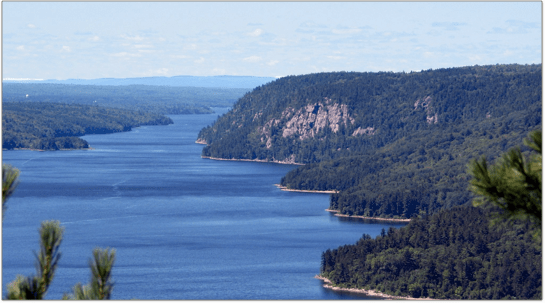
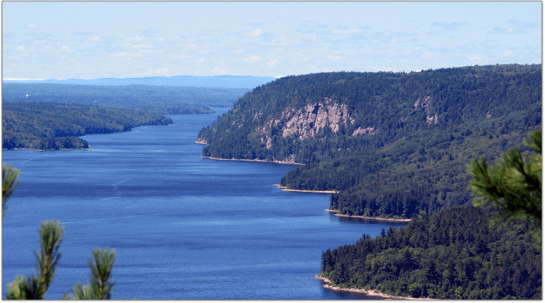
Photo above of Kitchi Sibi on November 15, 2023, by Bev Moses

Radioactive waste site in Chalk River a go (National Observer, Natasha Bulowski)

Déchets nucléaires à Chalk River : « aucune surprise » pour Dylan Whiteduck, (Radio Canada)

Une installation de déchets nucléaires autorisée à Chalk River | Radio-Canada (Julien David-Pelletier, Radio Canada)

Kebaowek First Nation condemns CNSC decision to license the Chalk River nuclear waste dump and calls on the federal government to intervene

La Presse: Projet de site d’enfouissement de déchets nucléaires de Chalk River « L’endroit est mauvais et la méthode est mauvaise »

le 24 nov. 2023

https://www.lapresse.ca/actualites/2023-11-24/projet-de-site-d-enfouissement-de-dechets-nucleaires-de-chalk-river/l-endroit-est-mauvais-et-la-methode-est-mauvaise.php?sharing=true

Projet de site d’enfouissement de déchets nucléaires de Chalk River « L’endroit est mauvais et la méthode est mauvaise »

Un projet de site d’enfouissement de déchets nucléaires près de la rivière des Outaouais doit être rejeté en raison des risques environnementaux qu’il représente et parce que la procédure d’autorisation est entachée par un conflit d’intérêts, plaident différentes nations autochtones.

Jean-Thomas Léveillé – La Presse

Publié le 24 nov. 2023

L’aménagement d’une « installation de gestion des déchets près de la surface » (IGDPS) – soit un site d’enfouissement de déchets nucléaires – aux Laboratoires de Chalk River, du côté ontarien de la rivière, fait l’objet d’une demande d’autorisation étudiée depuis 2016 par la Commission canadienne de sûreté nucléaire (CCSN). Elle doit rendre sa décision dans les prochaines semaines.

Le site d’enfouissement projeté recevrait des déchets radioactifs de faible activité pendant au moins 50 ans dans la municipalité de Deep River, voisine de Chalk River, en Ontario, à un kilomètre de la rivière des Outaouais, à proximité d’un milieu humide.

Il consisterait en un monticule artificiel, d’une hauteur équivalente à un édifice de cinq étages, composé de différentes cellules de stockage et doté de systèmes de collecte du lixiviat, de détection des fuites et de surveillance de l’environnement.

Cette conception est « essentiellement la même » que celle de n’importe quel site d’enfouissement de déchets domestiques dangereux au Canada, alors que des déchets radioactifs exigent un niveau de protection « beaucoup plus strict », s’étonne l’avocate Theresa A. McClenaghan, directrice générale de l’Association canadienne du droit de l’environnement.

« On ne mettrait jamais, jamais, jamais un site d’enfouissement dans une zone humide, et jamais si près d’une rivière importante. […] C’est absolument épouvantable, on ne peut pas le croire. »

 Theresa A. McClenaghan, directrice générale de l’Association canadienne du droit de l’environnement

En cas de fuite, de la matière radioactive pourrait donc pénétrer dans la zone humide et atteindre la rivière des Outaouais, indique Mme McClenaghan, prévenant que les conséquences pourraient être décuplées en cas d’évènement météorologique extrême.

Dans ce monticule artificiel, « il y aurait de la place pour un million de tonnes de déchets radioactifs », qui le demeureraient pendant des siècles, s’indigne Justin Roy, membre du conseil de bande et conseiller en développement économique de la Première Nation de Kebaowek, au Québec, qui fait partie de la dizaine de communautés algonquines s’opposant au projet.

La rivière des Outaouais, que les Premières Nations appellent Kichi Sibi, est d’une grande importance spirituelle et culturelle pour elles, notamment en raison de la présence de sites sacrés.

Les villes de Gatineau et de la Communauté métropolitaine de Montréal s’opposent aussi au projet, soulignant que la rivière des Outaouais et le fleuve Saint-Laurent, dans lequel elle se jette, sont la source d’eau potable de millions de personnes, en aval du site de Chalk River.

Impacts potentiels « pas banals du tout »

Les impacts sur la santé d’une éventuelle fuite « ne sont pas banals du tout », s’inquiète le docteur Éric Notebaert, vice-président de l’Association québécoise des médecins pour l’environnement et professeur à la faculté de médecine de l’Université de Montréal.

« Toute exposition au rayonnement ionisant, même faible, a des risques, surtout s’il s’agit d’une exposition chronique », explique-t-il. Il se dit aussi préoccupé par l’eau tritiée, « de l’eau radioactive », générée à Chalk River.

Sa pénétration rapide dans l’ADN, démontrée par des études sur les animaux, « peut induire des cancers, des malformations congénitales, des morts in utero », dit le Dr Notebaert, dont l’organisation s’oppose aussi au projet.

« L’endroit est mauvais et la méthode de confinement est mauvaise. Il va tôt ou tard y avoir un ruissellement dans la rivière et dans le fleuve. Ça, c’est fort inquiétant. »

Les Laboratoires nucléaires canadiens soutiennent de leur côté que leur projet permettra un stockage sûr des déchets grâce à une membrane de fond d’une épaisseur d’un mètre et demi, une couverture de deux mètres d’épaisseur, une surveillance du site et la possibilité d’effectuer des réparations au besoin.

Apparence de conflit d’intérêts

L’un des deux commissaires chargés d’étudier la demande d’autorisation du projet, Marcel Lacroix, a déjà travaillé aux Laboratoires de Chalk River, indique sa biographie sur le site internet de la CCSN. Il est titulaire d’un doctorat en génie nucléaire, professeur à l’Université de Sherbrooke et consultant en ingénierie. La seconde commissaire a, quant à elle, terminé son mandat.

Les Premières Nations de Kebaowek et Kitigan Zibi y voient « un gros problème », dit Justin Roy. Il espère que la Commission étudiera objectivement le projet.

« La CCSN n’a jamais dit non à un projet, pas une fois. Chaque fois qu’un projet a été soumis, la CCSN l’a approuvé. »

 Justin Roy, Première Nation de Kebaowek

La CCSN « est très proche de l’industrie qu’elle réglemente », affirme l’avocate Theresa A. McClenaghan.

« Il faut se demander si le régulateur est suffisamment indépendant lorsqu’il y a en son sein trop de personnes issues de l’industrie réglementée », dit-elle, estimant que cela alimente la perception de partialité ou de manque d’indépendance de la Commission.

La Commission assure de son côté que le processus d’évaluation est impartial.

« Il n’y a aucun conflit d’intérêts. Les commissaires sont nommés par le gouverneur en conseil, c’est-à-dire la gouverneure générale, sur l’avis du Cabinet », a répondu par courriel un porte-parole de l’organisme, Braeson Holland, après avoir refusé la demande d’entrevue de La Presse.

« Les commissaires s’engagent à respecter les normes d’éthique les plus élevées et les lignes directrices les plus rigoureuses concernant les conflits d’intérêts », a-t-il ajouté, soulignant la vaste expertise de Marcel Lacroix.

Sollicité pour cet article, Marcel Lacroix n’a pas rappelé La Presse.

Droits bafoués

Les Premières Nations déplorent que le projet ait pu avancer sans leur consentement libre, préalable et éclairé, une notion pourtant enchâssée dans la législation canadienne, et accusent la CCSN de ne pas les avoir consultées convenablement.

Les chefs de trois communautés algonquines ont été entendus lors de l’audience finale de la Commission, en août, mais ils n’ont pas été autorisés à poser des questions au promoteur du projet, déplore Justin Roy.

Les Premières Nations n’excluent pas de saisir les tribunaux pour contester une éventuelle autorisation du projet par la Commission.

Elles ont aussi lancé une pétition parrainée par le Bloc québécois réclamant que le gouvernement fédéral soumette à un examen de l’Agence internationale de l’énergie atomique les projets de déclassement de réacteurs nucléaires et d’élimination permanente des déchets, comme celui de Chalk River, et que la Commission sursoie à sa décision dans ce dossier tant que leurs droits n’auront pas été respectés.

EN SAVOIR PLUS

1945

Début des activités des Laboratoires de Chalk River, qui ont notamment permis le développement du réacteur nucléaire CANDU

SOURCE : COMMISSION CANADIENNE DE SÛRETÉ NUCLÉAIRE

1952

Les Laboratoires de Chalk River sont le théâtre du premier accident nucléaire au monde, le 12 décembre. Un second surviendra en 1958.

SOURCE : SANTÉ CANADA

Chalk River nuclear waste site project “The place is wrong and the method is wrong”.