نهر أوتاوا هو نهر تراثي كندي يتدفق عبر تل البرلمان. وله قيمة لا توصف ككنز طبيعي وتاريخي جميل. فالنهر مقدس بالنسبة لشعب ألغونكوين الذي يحدد أراضيه التقليدية.
~~~
وافقت اللجنة الكندية للأمان النووي (CNSC) مؤخرًا على ترخيص بناء كومة مشعة مكونة من سبعة طوابق بجانب نهر أوتاوا على أرض تابعة لمختبرات نهر الطباشير، وهي منشأة أبحاث نووية فيدرالية شديدة التلوث على بعد 180 كم شمال غرب أوتاوا. تُعرف الكومة المشعة العملاقة باسم “مرفق التخلص من المواد المشعة القريبة من السطح” أو “NSDF”. وقد تمت الموافقة عليه من قبل اللجنة الوطنية للأمن النووي في 8 يناير 2024. ويُنظر على نطاق واسع إلى اللجنة الوطنية للأمن السيبراني على أنها جهة تنظيمية أسيرة تروج للمشاريع التي من المفترض أن تنظمها، كما ذكرت لجنة خبراء في عام 2017.
يقع الموقع على بعد أقل من كيلومتر واحد من نهر أوتاوا تم اختيار موقع مرفق الدفاع الوطني لقربه من مواقع النفايات المتسربة الحالية في نهر تشالك؛ فهو يقع على جانب تل، وتحيط به جزئياً الأراضي الرطبة التي تصب في نهر أوتاوا على بعد أقل من كيلومتر واحد. الموقع معرض للأعاصير والزلازل؛ فنهر أوتاوا هو خط صدع رئيسي. الصخور الأساسية في الموقع مسامية ومتصدعة ومنسوب المياه الجوفية قريب جداً من السطح.
وستحتوي الكومة الضخمة على مليون طن من النفايات المشعة وغيرها من النفايات الخطرة11 وسيرتفع المرفق الوطني للنفايات المشعة إلى سبعة طوابق ويغطي مساحة تعادل مساحة 70 حلبة هوكي في دوري الهوكي الوطني. وقد تراكمت النفايات المخصصة للتل على مدى ثمانية عقود من العمل في مختبرات نهر الطباشير؛ كما يتم استيراد النفايات لوضعها في التل. وستحتوي على عشرات المواد المشعة والخطرة وأطنان من المعادن الثقيلة. وتشمل المواد المشعة الموجهة إلى مكب النفايات التريتيوم، والكربون-14، والسترونتيوم-90، وأربعة أنواع من البلوتونيوم (أحد أخطر المواد المشعة إذا تم استنشاقه أو ابتلاعه)، وما يصل إلى 6.3 طن من اليورانيوم. وستطلق مصادر الكوبالت-60 والسيزيوم-137 في المكب الكثير من أشعة غاما الشديدة لدرجة أن العمال يجب أن يستخدموا واقيات من الرصاص لتجنب التعرض للإشعاع الخطير. وتقول الوكالة الدولية للطاقة الذرية إن هذه “نفايات من المستوى المتوسط” وتتطلب وضعها تحت الأرض. كما أن الديوكسين ومركبات ثنائي الفينيل متعدد الكلور والأسبستوس والزئبق وما يصل إلى 13 طناً من الزرنيخ ومئات الأطنان من الرصاص ستدخل في مكب النفايات. كما أنها ستحتوي على آلاف الأطنان من النحاس والحديد، مما يغري الزبالين بالحفر في الكومة بعد الإغلاق.
تعارض الأمم الأولى لأمة ألغونكوين وجمعية الأمم الأولى الصندوق الوطني للتنمية الريفية. عاش شعب أمة ألغونكوين في مستجمع مياه نهر أوتاوا منذ زمن سحيق؛ ولم يوقعوا أبدًا معاهدة مع التاج أو حكومة كندا. وينص إعلان الأمم المتحدة بشأن حقوق الشعوب الأصلية على أنه “لا يجوز تخزين المواد الخطرة أو التخلص منها في أراضي أو أقاليم الشعوب الأصلية دون موافقتها الحرة والمسبقة والمستنيرة”. تحدث الزعماء الذين يمثلون 10 من أصل 11 أمة من أمم ألغونكوين الأولى ضد الصندوق الوطني للتنمية المستدامة في مؤتمر صحفي في أوتاوا في 20 يونيو 2023. وفي جلسة الاستماع النهائية لمنح التراخيص في 10 أغسطس 2023، صرحت الأمم الأولى كيباويك وأمم ألغونكوين في بحيرة باريير وكيتيغان زيبي أنيشينابيج الأولى بوضوح أنهم لا يوافقون على بناء الصندوق الوطني للتنمية الزراعية على أراضيهم غير المتنازل عنها أقرت جمعية الأمم الأولى قرارات تعارض بناء الصندوق الوطني للتنمية الريفية في عامي 2018 و2023
مياه الشرب لملايين الكنديين مهددة بسبب مكب النفايات يحيط بموقع مكب نفايات نيو ساوث ويلز جزء من الأراضي الرطبة التي تصب عبر بحيرة بيرش في نهر أوتاوا، وهو مصدر مياه الشرب لملايين الكنديين في اتجاه مجرى النهر بما في ذلك أوتاوا وغاتينو وأجزاء من مونتريال من المتوقع أن تتسرب الكومة أثناء التشغيل وتنهار بسبب التآكل تتوقع الدراسات حدوث عدة أنواع من التسرب أثناء الملء وبعد إغلاق المنشأة ستقوم محطة الصرف الصحي لمياه الصرف الصحي لمرفق التخلص من النفايات النووية بتصريف المياه الملوثة التي تحتوي على كميات كبيرة من التريتيوم (الهيدروجين المشع) وكميات أقل من العديد من المواد المشعة الأخرى مثل البلوتونيوم؛ وستدخل هذه التصريفات إلى نهر أوتاوا. وتشير دراسة تقييم الأداء التي أجراها المؤيد إلى أن الكومة سوف تتحلل بعد عمرها التصميمي المتوقع البالغ 550 سنة وستنطلق محتوياتها إلى البيئة ونهر أوتاوا.
لا يوجد مستوى آمن للتعرض للإشعاع الذي قد يتسرب إلى نهر أوتاوا من الكومة ستزيد جميع المواد المشعة المتسربة من مخاطر العيوب الخلقية والأضرار الوراثية والسرطان والأمراض المزمنة الأخرى. وتقول الوكالة الدولية للطاقة الذرية إنه يجب عزل النفايات المشعة عن المحيط الحيوي.
ويقول الخبراء إن النفايات ستبقى مشعة وخطرة لآلاف السنين تقول الوكالة الدولية للطاقة الذرية (IAEA) إن نفايات مثل تلك التي أنتجتها مختبرات تشالك ريفر، حيث قامت الحكومة الفيدرالية بتشغيل مفاعلات نووية وأجرت تجارب نووية لمدة ثمانية عقود، من المرجح أن تكون “متوسطة المستوى” وفي بعض الحالات “عالية المستوى”، مما يتطلب وضع عشرات الأمتار أو أكثر تحت الأرض. يقول مدير كبير سابق مسؤول عن النفايات المشعة القديمة في مختبرات نهر الطباشير إن النفايات المقترحة للمنشأة “متوسطة المستوى” وتتطلب وضعاً تحت الأرض. ويقول إن الكومة ستكون خطرة ومشعة لعدة آلاف من السنين، وأن الجرعات الإشعاعية من المنشأة ستتجاوز المستويات المسموح بها. خمسة وعشرون من أصل 31 نويداً مشعاً مدرجة في قائمة الجرد المرجعية للتل هي نويدات مشعة طويلة العمر مع أنصاف أعمار تتراوح بين آلاف وملايين السنين. (انظر أيضًا قائمة الجرد المرخصة) ستعمر النفايات المشعة أكثر من المنشأة لعدة آلاف من السنين.
أكثر من 140 بلدية في كيبيك وأونتاريو تعارض مشروع NSDF أصدرت أكثر من 140 بلدية، بما في ذلك مقاطعة بونتياك وأوتاوا وغاتينو ومونتريال، قرارات معارضة أو قلق شديد بشأن المشروع المقترح. طلب قرار مدينة أوتاوا على وجه التحديد وقف واردات النفايات إلى وادي أوتاوا؛ وقد تجاهل الكونسورتيوم هذا الطلب
دافعو الضرائب الكنديون يدفعون ولكن اتحاد شركات متعدد الجنسيات هو من يدير الأمور تعود ملكية مختبرات تشالك ريفر إلى الحكومة الكندية، وقُدرت تكلفة تنظيف الموقع في الأصل بثمانية مليارات دولار في عام 2015 عندما تعاقدت حكومة هاربر مع اتحاد متعدد الجنسيات يسمى “التحالف الوطني الكندي للطاقة” لإدارة موقع تشالك ريفر وتنظيف النفايات المشعة هناك وفي المرافق الأخرى المملوكة للحكومة الفيدرالية. ومنذ أن تولى الكونسورتيوم هذه المهمة، تضخمت التكاليف التي يتحملها دافعو الضرائب الكنديون لتشغيل وتنظيف المختبرات النووية الكندية من 336 مليون دولار سنوياً إلى أكثر من 1.5 مليار دولار سنوياً. الأعضاء الحاليون في الكونسورتيوم هم شركة AtkinsRéalis (المعروفة سابقًا باسم SNC-Lavalin)، التي تم حظرها من قبل البنك الدولي لمدة 10 سنوات وواجهت اتهامات في كندا بالاحتيال والرشوة والفساد؛ وشركة Fluor Corporation ومقرها تكساس، التي دفعت 4 ملايين دولار لتسوية مزاعم الاحتيال المالي المتعلقة بأعمال تنظيف النفايات النووية في موقع في الولايات المتحدة؛ وشركة Jacobs Engineering ومقرها تكساس، التي استحوذت مؤخرًا على شركة CH2M، وهي عضو أصلي في الكونسورتيوم وافقت على دفع 18.5 مليون دولار لتسوية اتهامات جنائية فيدرالية في موقع تنظيف نووي في الولايات المتحدة.
سيؤدي بناء الصندوق الوطني للتنمية الريفية إلى تدمير الموائل الحرجة للأنواع المحمية. ويعد موقع الحديقة الوطنية للثروة الحيوانية غنياً جداً بالتنوع البيولوجي نظراً لكونه مُسيّجاً أمام البشر منذ 80 عاماً. كما أن قربه من نهر أوتاوا وبحيرة بيرش يجعله أرضاً جيدة لتغذية الثدييات الكبيرة. وتوفر الأراضي الرطبة التي تحيط جزئياً بموقع الصندوق الوطني للثروة الحيوانية والنباتية موطنًا لسلاحف بلاندينج المهددة بالانقراض. وتستضيف الغابة الناضجة في الموقع ثلاثة أنواع من الخفافيش المهددة بالانقراض، والعديد من الطيور المهاجرة المعرضة للخطر، بما في ذلك طائر الوالبرز الذهبي المجنح والوالز الكندي والويلات السوطية كشفت الأبحاث التي قادها السكان الأصليون عن وجود مجموعة سليمة من الذئاب الشرقية المهددة بالانقراض تستخدم الموقع على نطاق واسع؛ كما وجد الباحثون من السكان الأصليين ثلاثة أوكار نشطة للدببة السوداء، المحمية بموجب قانون أونتاريو لحماية الأسماك والحياة البرية. في يناير 2024، كتبت أمة كيباويك الأولى إلى وزير البيئة وتغير المناخ الكندي تطلب رفض التصريح بقطع الأشجار في الموقع.
يجب تنظيف النفايات ولكن هناك طرق أفضل للقيام بذلك. يمكن أن يوفر استعراض الأقران ARTEMIS الذي تنسقه الوكالة الدولية للطاقة الذرية معلومات قيمة للحكومة الكندية حول أفضل الممارسات لإدارة نفايات مثل تلك الموجودة في نهر الطباشير. في ديسمبر 2023، وقّع أكثر من 3000 كندي على العريضة الإلكترونية لمجلس العموم الكندي رقم 4676 التي تطالب بإجراء مراجعة ARTEMIS يجب على كندا أن تلتزم ببناء مرافق عالمية المستوى لإدارة النفايات المشعة التي من شأنها أن تحافظ على سلامة الكنديين وتوفر وظائف جيدة في الصناعة النووية، وإدارة النفايات واحتوائها بأمان للأجيال القادمة. ومن شأن المرافق ذات المستوى العالمي أن تتضمن أحكاماً للتغليف الدقيق، ووضع العلامات ووضعها في مرفق تحت الأرض؛ وستكون النفايات قابلة للاسترجاع حتى تتمكن الأجيال القادمة من مراقبتها وإعادة تغليفها حسب الحاجة.
~~~
هناك حاجة ماسة إلى اتخاذ إجراء حكومي اتحادي لوقف مشروع الصندوق الوطني للتنمية الزراعية. ومن شأن مراجعة ARTEMIS للوكالة الدولية للطاقة الذرية أن تحدد طريقة أفضل للمضي قدمًا. اطلب من عضوك في البرلمان دعم مراجعة ARTEMIS لمشروع الصندوق الوطني للتنمية النووية.
Canada is unique among OECD countries in giving its national regulatory agency sole responsibility for decisions about nuclear waste disposal projects. This is unacceptable to Canadians.
The Near Surface Disposal Facility (NSDF) is a proposed disposal facility for radioactive waste at the federally owned Chalk River Laboratories site. The NSDF project was approved by the Canadian Nuclear Safety Commission (CNSC) on January 9, 2024.
On February 16, 2024, Mme Monique Pauzé (Repentigny, BQ) asked the following question in the House of Commons:
“Given that there is no social licence for the Chalk River Project, will the minister reverse the decision?”
The feds are the ones are jeopardizing Quebec’s drinking water with a nuclear dump. Will the government stop hiding and say no to Chalk River?
Marc Serré, Parliamentary Secretary to the Minister of Natural Resources, replied:
“The government is not the one deciding on these projects. Canadians do not want politicians to decide on these projects.”
Canadians want to know that there are experts who will study the decision and carry out consultations. Canadians have made it clear that they do not want politicians making this decision.
However, radioactive waste experts who worked at the Chalk River Laboratories and studied the NSDF project in detail warn that it is unsafe.
Indigenous and non-Indigenous Canadians want elected officials and the Government of Canada to be accountable for decisions on the NSDF and other nuclear waste disposal projects.
On January 29,2024, MP Sophie Chatel (Pontiac, Liberal Party) presented e-petition 4676 to the House of Commons. Signed by 3127 Canadians, it calls on the Government of Canada to order the CNSC to make no decision on licensing of a radioactive waste disposal facility unless Canada’s obligations under the United Nations Declaration on the Rights of Indigenous Peoples (UNDRIP) are met.
On February 14, 2024, the Kebaowek First Nation, along with the Bloc Québécois, organized a press conference to demand that the Government of Canada put an end to the Near Surface Disposal Facility Project. The press conference was attended by leaders of several other Algonquin First Nations who have never ceded the land on which the NSDF would be built. Nor have these nations given their free, prior and informed consent to the project, as required by article 29, paragraph 2, of the UNDRIP.
The CNSC is an unelected body that is not accountable to the electorate. It has neither the expertise nor the mandate to determine whether the NSDF has met UNDRIP requirements and obtained the necessary social license from Canadians. From a strictly technical point of view, the regulator is faced with a very difficult problem: How to ensure the safety of human beings and the environment for the next ten millennia?
It is the Government of Canada, not the CNSC, that must comply with the UNDRIP. The CNSC is not qualified to implement UNDRIP. The UNDRIP action plan does not apply to the CNSC. The assessment and authorization of a radioactive waste site should not be entrusted to a body that is not accountable to Indigenous peoples or to the public.
CNSC impact assessment (IA) processes lack public trust. A 2017 Expert Panel Report, Building Common Ground: A New Vision for Impact Assessment in Canada, said:
“To restore public trust and confidence in assessment processes, the conduct of IAs must respect the principles of being transparent, inclusive, informed and meaningful. Any authority given the mandate to conduct federal assessments should be aligned with these principles…”
After the creation of the Impact Assessment Agency of Canada in 2019, assessments done by the National Energy Board (NEB) were transferred to the Agency. However, the CNSC continues to act as a “responsible authority” (RA) that conducts its own assessments for projects that it regulates, such as the NSDF.
In 2017, the Expert Panel noted several concerns about assessments conducted by the CNSC (and the NEB):
…there is a perception of a lack of independence and neutrality because of their close relationship with the industries they regulate. For example, participants noted the cross mobility of personnel between these regulators and their regulated industries and voiced concerns that these RAs promote the projects they are tasked with regulating.
CNSC’s sole authority to assess and license nuclear waste disposal projects has resulted in the absence of social licence for the NSDF project, as Mme Pauzé observed.
On this matter, the Expert Panel’s report seems almost prophetic:
Public trust and confidence is crucial to all parties. Without it, an assessment approval will lack the social acceptance necessary to facilitate project development. While some would likely favour the NEB and CNSC for the assessment of projects in their particular industries, the erosion of public trust in the current assessment process has created a belief among many interests that the outcomes are illegitimate. This, in turn, has led some to believe that outcomes are pre-ordained and that there is no use in participating in the review process because views will not be taken into account. The consequence of this is a higher likelihood of protests and court challenges, longer timeframes to get to decisions and less certainty that the decision will actually be realized – in short, the absence of social license.
In all OECD countries except Canada, decisions on the disposal of radioactive waste are the responsibility of government agencies, and in many cases, more than one. Canada is the only country to give its regulator, the CNSC, sole and final decision-making authority in this area, according to the document “The Regulatory Infrastructure in NEA Member Countries,” published by the OECD Nuclear Energy Agency (NEA).
In the U.S. and U.K., environment agencies are given decision-making power in respect of nuclear waste disposal. In the case of the NSDF, it appears that Environment and Climate Change Canada has decision-making power because of the requirement for a permit to destroy habitat for species at risk.
The government could ask the International Atomic Energy Agency (IAEA) to carry out an ARTEMIS review. ARTEMIS reviews are carried out by competent peers, available to all IAEA member states. An ARTEMIS review could provide the Government of Canada with valuable advice on how to manage its legacy radioactive waste.
We have the following three requests:
No disposal of radioactive waste until Canada has met its UNDRIP obligations;
No permits to destroy habitat for species at risk at the NSDF site; and
An international ARTEMIS review of long-term management of the Government of Canada’s radioactive waste.
Yours sincerely,
Ginette Charbonneau, Ralliement contre la pollution radioactive
Gordon Edwards, Canadian Coalition for Nuclear Responsibility
Ole Hendrickson, Concerned Citizens of Renfrew County and Area
—————————
Le 21 février 2024
Messieurs les Ministres Guilbeault et Wilkinson,
Le Canada est le seul pays de l’OCDE qui confie à la CCSN, son agence nationale de réglementation, la responsabilité exclusive des décisions relatives aux projets d’élimination des déchets radioactifs. Cette situation est inacceptable pour les Canadiens.
Le Projet d’installation de gestion des déchets près de la surface (IGDPS) est un projet d’élimination permanente de déchets radioactifs sur le site des Laboratoires nucléaires de Chalk River, propriété du gouvernement fédéral. Le projet a été approuvé par la Commission canadienne de sûreté nucléaire (CCSN) le 9 janvier 2024.
Le 16 février 2024, Mme Monique Pauzé (Repentigny, Bloc Québécois) a posé les questions suivantes à la Chambre des communes :
Puisqu’il n’y a pas d’acceptabilité sociale pour le projet de Chalk River, est-ce que le ministre va annuler cette décision?
C’est le fédéral qui met en péril l’eau potable des Québécois avec un dépotoir nucléaire. Le gouvernement va-t-il cesser de se cacher et dire non au projet de Chalk River?
Marc Serré, secrétaire parlementaire du ministre des Ressources naturelles, a répondu :
Ce n’est pas le gouvernement qui décide de ces projets. Les Canadiens ne veulent pas que les politiciens décident de ces projets.
Les Canadiens veulent savoir que ce sont des experts qui vont étudier la décision et qui vont faire les consultations. Les Canadiens sont clairs: ils ne veulent pas que ce soient des politiciens qui prennent cette décision.
Cependant, des experts en déchets radioactifs qui ont travaillé aux Laboratoires de Chalk River et qui ont étudié en détail le projet d’IGDPS concluent qu’il n’est pas sécuritaire.
Tous les Canadiens, autochtones et non autochtones, veulent que les élus et le gouvernement du Canada soient responsables des décisions sur l’IGPDS et sur les autres projets d’élimination de déchets radioactifs.
Le 29 janvier 2024, la députée Sophie Chatel (Pontiac, Parti Libéral) a présenté la pétition 4676 à la Chambre des communes. Elle était signée par 3127 Canadiens qui demandent au gouvernement d’ordonner que la CCSN n’autorise aucune installation de stockage de déchets radioactifs sans que le Canada n’ait respecté la Déclaration des Nations Unies sur les droits des peuples autochtones (DNUDPA).
Le 14 février 2024, la Première nation Kebaowek a organisé avec le Bloc Québécois une conférence de presse pour demander que le gouvernement du Canada mette fin au Projet d’installation de gestion des déchets près de la surface. Cette conférence de presse s’est tenue en présence des dirigeants de plusieurs autres Premières nations algonquines qui n’ont jamais cédé leur territoire sur lequel l’IGDPS serait érigée. Ces nations n’ont pas donné non plus leur consentement libre, préalable et éclairé au projet, contrairement à ce que demande l’article 29, paragraphe 2, de la DNUDPA.
La CCSN est un organisme non élu et qui n’est pas responsable devant l’électorat. Elle n’a ni l’expertise ni le mandat pour déterminer si l’IGDPS a satisfait aux exigences de la DNUDPA et a obtenu l’acceptabilité sociale nécessaire de la part des Canadiens. Même d’un point de vue strictement technique, l’autorité de réglementation est confrontée à un problème très difficile : Comment assurer la sécurité des êtres humains et de l’environnement pour les dix prochains millénaires?
C’est le gouvernement du Canada, et non la CCSN, qui doit se conformer à la DNUDPA. La CCSN n’est pas qualifiée pour appliquer la DNUDPA. Le plan d’action de la DNUDPA ne la concerne pas. On ne doit pas confier l’évaluation et l’autorisation d’un site de déchets radioactifs à un organisme qui n’a aucun compte à rendre aux peuples autochtones, ni au grand public.
Les évaluations d’impact environnemental de la CCSN n’ont pas la confiance du public. La Rapport du Comité d’experts, Bâtir un terrain d’entente : une nouvelle vision pour l’évaluation des impacts au Canada, concluait :
Afin de restaurer la confiance du public, les évaluations d’impact doivent être transparentes, inclusives, éclairées et significatives. Toute autorité qui reçoit mandat de mener des évaluations fédérales devrait respecter ces principes…
Depuis la création de l’Agence d’évaluation d’impact du Canada en 2019, celle-ci assume toutes les évaluations qui relevaient auparavant de l’Office national de l’énergie (ONE). Par contre, la CCSN continue d’être une “autorité responsable” qui effectue ses propres évaluations sur les projets qu’elle réglemente, dont le projet d’IGDPS.
En 2017, le groupe d’experts a relevé plusieurs préoccupations envers les évaluations de la CCSN (et de l’ONE) :
…on perçoit un manque d’indépendance et de neutralité à cause de leur étroite relation avec les industries qu’ils réglementent. Des participants ont noté par exemple la mobilité du personnel entre ces organismes de réglementation et le secteur industriel qu’ils règlementent. Ils sont inquiets quand ils voient ces organismes faire la promotion des projets qu’ils doivent réglementer.
Le fait que la CCSN soit seule pour évaluer et autoriser les projets d’élimination des déchets radioactifs enlève toute acceptabilité sociale au projet IGDPS, souligne Mme Pauzé.
À cet égard, le rapport du groupe d’experts semble prophétique :
La confiance du public est cruciale. Sans elle, aucune approbation ne recevra l’appui social requis pour que le projet se réalise. Plusieurs secteurs industriels préfèrent que leurs projets soient évalués par l’ONE et par la CCSN mais cela entraîne une telle perte de confiance du public que les conclusions de ces évaluations ne semblent plus légitimes. Certains croient que les résultats sont déterminés d’avance et qu’il est inutile de participer au processus d’évaluation puisque leurs points de vue ne seront pas pris en compte. Cela entraîne des risques accrus de protestations, de contestations judiciaires, de procédures qui s’éternisent et cela mène à douter de la mise en œuvre des décisions. Bref, absence d’acceptabilité sociale.
Dans tous les pays de l’OCDE, sauf au Canada, les décisions sur l’élimination des déchets radioactifs relèvent des organismes gouvernementaux et même de plusieurs organismes bien souvent. Le Canada est le seul pays qui donne à la CCSN un pouvoir de décision unique et final dans ce domaine, révèle le document “The Regulatory Infrastructure in NEA Member Countries,” publié par l’Agence de l’OCDE pour l’énergie nucléaire (NEA).
Aux États-Unis et au Royaume-Uni, les ministères de l’environnement ont un pouvoir décisionnel sur l’élimination des déchets nucléaires. Dans le cas de l’IGDPS, il semble qu’Environnement et Changement climatique Canada pourrait aussi avoir un vrai pouvoir de décision puisque ce ministère doit autoriser toute destruction de l’habitat des espèces en péril.
Le gouvernement pourrait demander à l’Agence internationale de l’énergie atomique (AIEA) de procéder à un examen ARTEMIS. Les examens ARTEMIS sont effectués par des pairs compétents, disponibles pour tous les États membres de l’AIEA. Un examen ARTEMIS pourrait fournir au gouvernement du Canada des conseils précieux sur la manière de gérer ses déchets radioactifs hérités.
Nous formulons les trois demandes suivantes:
Aucune élimination de déchets radioactifs tant que le Canada n’aura pas satisfait à ses obligations au titre de l’UNDRIP ;
Aucun permis de détruire l’habitat des espèces en péril sur le site de l’IGPDS ; et
Tenue d’un examen international ARTEMIS sur la gestion à long terme des déchets radioactifs du gouvernement du Canada.
Nous vous prions d’agréer l’expression de nos sentiments distingués,
Ginette Charbonneau, Ralliement contre la pollution radioactive
Gordon Edwards, Regroupement pour la surveillance du nucléaire
Ole Hendrickson, Citoyens inquiets du comté de Renfrew et de sa région
Chalk River Laboratories is owned by the Government of Canada. Cleanup of the site was originally estimated to cost $8 billion in 2015 when a multinational consortium called “Canadian National Energy Alliance” was contracted by the Harper government to manage the Chalk River site and clean up the radioactive waste there and at other federally owned facilities.
Since the consortium took over, costs to Canadian taxpayers for the operation and cleanup at Canada’s nuclear labs have ballooned from $336 million dollars per year to over $1.5 billion per year.
Current members in the consortium are: AtkinsRéalis (formerly SNC-Lavalin,) which was debarred by the World Bank for 10 years and faced charges in Canada of fraud, bribery and corruption; Texas-based Fluor Corporation, which paid $4 million to resolve allegations of financial fraud related to nuclear waste cleanup work at a U.S. site; and Texas-based Jacobs Engineering, which recently acquired CH2M, an original consortium member that agreed to pay $18.5 million to settle federal criminal charges at a nuclear cleanup site in the U.S.
A 2016 access to information request revealed that nine senior CNL executives were paid an average of $722,000 per person per year and twenty-eight senior contractors were paid an average of $377,275 per year per person. Almost all of these senior executives and senior contractors were non-Canadian.
There has been no decrease in the federal nuclear waste liabilities since the consortium took over control of Chalk River Laboratories.
Please subscribe to the National Observer using this link, to support the excellent investigative journalism of Natasha Bulowski and Matteo Cimellaro on the Chalk River nuclear waste.
Over 100 people gathered on Parliament Hill to protest a radioactive waste facility. Kitigan Zibi Chief Dylan Whiteduck holds a sign that reads, “Protect the Ottawa River from nuclear waste.” Photo by Natasha BulowskiListen to article
Kebaowek First Nation and opponents of a recently approved radioactive waste disposal facility took the fight to Parliament Hill on Wednesday with a peaceful rally urging the federal government to stop the project.
“We stand united in safeguarding the well-being of our shared environment and the fundamental right of all Canadians to access clean and uncontaminated drinking water,” said Kebaowek Chief Lance Haymond at a morning news conference.
Shortly after, more than 100 people rallied at the Centennial Flame on Parliament Hill to oppose the project, which would hold up to one million cubic metres of radioactive waste about one kilometre from the Ottawa River.
Following the rally, Algonquin leaders watched question period from the gallery where Bloc Québécois Leader Yves-François Blanchet pressed Prime Minister Justin Trudeau on the waste facility.
Kebaowek is officially challenging the decision by the Canadian Nuclear Safety Commission (CNSC) to greenlight construction of the “near-surface disposal facility” (NSDF) on the basis that the commission did not secure the First Nation’s free, prior and informed consent during the licensing process, as required by the United Nations Declaration Act. A second legal challenge launched by three groups argued the CNSC failed to consider a range of evidence about the project design and the radioactive waste it would take. A handful of nuclear industry veterans warn some of the waste slated for disposal is a “mishmash” that contains unacceptably long-lived radioactivity, as reported by Canada’s National Observer.
“The NSDF is the wrong technology in the wrong place,” said Ole Hendrickson, representing the three groups. “What a terrible precedent for future radioactive waste facilities.”
Haymond came to Ottawa “to ask the current federal government, nation to nation, to step in and stop the nonsense decision made by the CNSC.” At the press conference, he was flanked by Indigenous leaders and MPs from the Bloc Québécois and the Green Party.
This is a “golden opportunity” for Trudeau to prove that UNDRIP (the United Nations Declaration on the Rights of Indigenous Peoples) is more than just a piece of paper, said Haymond.
“I grew up watching The Simpsons and we’re going to have a situation potentially of three-eyed fish,” said Kitigan Zibi Chief Dylan Whiteduck, referring to the mutated orange fish found in ponds outside the nuclear power plant in the TV show. A big concern for opponents is the project’s proximity to the Algonquin’s sacred Kichi Sibi (Ottawa River) and the release of contaminants over time, both planned and unplanned, depending on how the containment mound holds up.
Opponents of a recently approved radioactive waste disposal facility took the fight to Parliament Hill on Wednesday with a peaceful rally urging the federal government to stop the project.
Whiteduck said “this whole process and the fact that Canadians are just allowing this to happen” is “mind boggling.”
“Accountability has to be on this government,” he added.
Whiteduck said Kitigan Zibi and other Algonquin First Nations will not join Kebaowek and act as intervenors in the legal case. Instead, he and other Algonquin chiefs will follow Haymond’s lead and fully support Kebaowek First Nation.
“It’s very important that we support him because we want to put a united front of all the Algonquin communities,” Henry Rogers, chief of Long Point First Nation, told Canada’s National Observer. Rogers is one of six other Algonquin chiefs and leaders who joined Haymond at the press conference and rally.
Sébastien Lemire, local MP and the BQ spokesperson for Indigenous relations, wants to see ministerial intervention. He reiterated the Bloc’s long-standing opposition to the project and said his party “unequivocally supports” Kebaowek’s legal challenge.
Haymond is “very disappointed” Energy and Natural Resources Minister Jonathan Wilkinson, Environment Minister Steven Guilbeault and the prime minister have not directly responded. Specifically, he asked Guilbeault to withhold a permit that would let Canadian Nuclear Laboratories (CNL) destroy habitat for species at risk until Kebaowek’s legal challenge moves through the court.
Kebaowek First Nation Chief Lance Haymond at a press conference in Ottawa on Feb. 14, 2023. Photo by Natasha Bulowski
At the time of publication, Guilbeault had not responded to Haymond’s request and did not directly answer Canada’s National Observer’s question about the permit issue at a press conference later that day.
Instead, Guilbeault pointed to the CNSC, which manages all impact assessments for nuclear projects, as well as Natural Resources Canada.
In an email, a spokesperson for Wilkinson said the ministry has no comment on the two judicial review applications and awaits the decisions of the court.
The minister “has no role in CNSC’s licensing decisions,” it reads, adding that the CNSC is an independent, quasi-judicial body that makes science-based decisions.
The federal government hasn’t taken a position, “but indirectly they have because they delegated their responsibilities and authority to the CNSC, who, in our opinion, have muffed up the decision,” said Haymond. Kebaowek is asking federal ministers to recognize there were errors and intervene to make the necessary adjustments and corrections.
“It’s playing environmental Russian roulette by threatening present and future generations,” Bloc MP Monique Pauzé said in French in a party press release.
Haymond and the three organizations behind the second legal challenge also want the International Atomic Energy Agency to undertake a thorough review of the NSDF and CNL’s waste management systems.
According to CNL, the estimated bill to construct and operate the NSDF is $750 million and Canadian taxpayers would fund it, said Hendrickson.
“The government of Canada owns the waste. It must take responsibility and not leave matters in the hands of profit-seeking private sector corporations,” he said at the press conference. As Green Party Leader Elizabeth May pointed out, CNL is owned by a consortium of three multinational companies including AtkinsRealis, formerly SNC-Lavalin, and two Texas-based companies, Fluor and Jacobs.
CNL was created by Crown corporation Atomic Energy of Canada Limited in 2015 and sold to the consortium. CNL is contracted to run day-to-day operations at federal nuclear sites and is responsible for obtaining licensing permits under this government-owned contractor-operated model.
“We keep coming up against examples of where [the] United Nations Declaration on the Rights of Indigenous Peoples is celebrated by Liberals until it gets in the way of a decision they’ve already made,” said May.
“We really need to … take a stand here,” said May. “The primary jurisdiction and sovereignty here is that of the Algonquin and Anishinaabe First Nations.”
Matteo Cimellaro & Natasha Bulowski / Local Journalism Initiative / Canada’s National Observer
People participate in a rally against the Near Surface Disposal Facility (NSDF) project at the Canadian Nuclear Laboratories Chalk River site, on Parliament Hill in Ottawa, on Feb. 14.JUSTIN TANG/THE CANADIAN PRESS
LISTEN TO THIS ARTICLE
Environment Minister Steven Guilbeault was urged by First Nations chiefs Wednesday not to issue a permit to allow a nuclear waste dump on a forested site northwest of Ottawa where a variety of wildlife, including “at risk” wolves, live.
First Nations, supported by environmentalists and Bloc Québécois and Green MPs, said the site of the Canadian Nuclear Laboratories’ planned nuclear waste dump is too near the Ottawa River, which supplies drinking water to the country’s capital. They fear it could be polluted with a radioactive substance running off the site.
Kebaowek First Nation last week filed a Federal Court application for a judicial review of the Jan. 9 decision by the Canadian Nuclear Safety Commission, alleging the government breached its duty to consult Indigenous people.
At a press conference, preceding a rally with First Nations on Parliament Hill, Kebaowek Chief Lance Haymond urged the Prime Minister to intervene and halt the project saying First Nations had not been properly consulted.
First Nations leaders on Feb. 14 called on the federal government to oppose a nuclear waste disposal site near the Ottawa River that they say threatens drinking water and their rights. Chief Lance Haymond of Kebaowek First Nation says First Nations stand united in safeguarding the well-being of the environment, and the fundamental right of all Canadians to access clean and uncontaminated drinking water.
Chief Dylan Whiteduck of Kitigan Zibi Anishinabeg First Nation told The Globe and Mail that an inadequate assessment of the impact on plants and mammals – including black bears hibernating in dens on the site – was conducted before approval was given.
First Nations spent several months surveying the site and found it rich with wildlife, but he said they were not given long enough, and a more extensive survey is needed.
Mr. Haymond said if Mr. Guilbeault were to issue a permit under the Species at Risk Act (SARA) it would pre-empt an assessment his department is carrying out on upgrading to a threatened species eastern wolves that roam on the site.
Gretchen Fitzgerald, national programs director at Sierra Club Canada Foundation, an environmental organization, has written to Mr. Guilbeault asking him to instruct his officials “to not issue a SARA permit until impacts on at-risk migratory birds, turtles, bats and eastern wolves have been thoroughly assessed.”
“The project would replace roughly 35 hectares of high-quality mature forest with an above-ground landfill for a million cubic metres of radioactive waste,” the letter said.
Ole Hendrickson, president of the Sierra Club, said the site is an important corridor between the wolves’ territories in Quebec and Ontario and a rich feeding ground for them, with deer and moose congregating near a very old fir plantation in the forest.
Mr. Haymond urged Mr. Guilbeault not to issue a permit under the Species at Risk Act and told The Globe that the forested site of the planned nuclear waste dump is a nursery to black bears, with several active dens, as well as a habitat for eastern wolves, which roam there.
He said it would be remiss of the Environment Minister to issue a permit while his officials are assessing whether to upgrade the eastern wolf to a threatened species.
“The eastern wolf is a species at risk that requires protection,” Mr. Haymond said. “They have been talking about uplisting it since 2016 and they shouldn’t pre-empt that.”
In 2015, the Committee on the Status of Endangered Wildlife in Canada reassessed the status of the eastern wolf as threatened.
If the wolves are classed as threatened, their habitat would need to be protected, which could put on hold plans to build the waste dump on territory where they roam.
The eastern wolf, also known as the Algonquin wolf, numbers between an estimated 236 and 1,000 adults, and is confined to forests in Central Ontario and Southwestern Quebec. It is currently listed as a species of special concern.
The federal government published the proposed uplisting of the eastern wolf to a threatened species in November last year, carrying out a month-long consultation. It has until August to make a decision.
The proposed order amends Schedule 1 to the Species at Risk Act “to support the survival and recovery of the eastern wolf in Canada by uplisting it from a species of special concern to threatened.”
An assessment of the impact of amending the act, published by the government, says Canadian Nuclear Laboratories (CNL) was twice consulted on the proposal to upgrade the wolf’s status.
It said, depending in part on the timeline for the start of construction, there could either be no costs for CNL or, in one of four scenarios, huge costs.
Under one scenario, CNL told them that if eastern wolves were upgraded, it could potentially lead to estimated costs of up to $160-million, the cancellation of the Chalk River nuclear disposal site, and restarting the planning and approval process to move the project to an alternative location.
Samuel Lafontaine, spokesman for Environment and Climate Change Canada, said theCanadian Nuclear Safety Commission “conducted a rigorous and extensive environmental assessment that included a careful consideration of impacts on species at risk.” He said mitigation measures to minimize impacts on wolves in the vicinity of the project had already been proposed.
Rachel Chennette, spokesperson for Canadian Nuclear Laboratories, said “CNL has been working with Environment and Climate Change Canada since the submission of the Near Surface Disposal Facility project description in 2016 to the Canadian Environmental Assessment Agency.”
Please subscribe to the National Observer using this link, to support the excellent investigative journalism of Natasha Bulowski on the Chalk River nuclear waste.
Former employee at Atomic Energy of Canada Limited Kerry Burns (centre right, with a beard and spectacles) at AECL’s Whiteshell Laboratories in Manitoba in 1979. Photo submitted by Kerry Burns
Approval of a nuclear waste disposal site near the Ottawa River hinged on a promise that only low-level radioactive waste would be accepted. But former nuclear industry employees and experts warn some waste slated for disposal contains unacceptably high levels of long-lived radioactive material.
The “near-surface disposal facility” at Chalk River Laboratories (CRL) will store up to one million cubic metres of current and future low-level radioactive waste inside a shallow mound about one kilometre from the river, which provides drinking water to millions of people in the region. But former employees who spent decades working at the labs in waste management and analysis say previous waste-handling practices were inadequate, imprecise and not up to modern standards. Different levels of radioactive material were mixed together, making it unacceptable to bury in the mound.
“Anything pre-2000 is anybody’s guess what the hell they have on their hands,” said Gregory Csullog, a retired waste inventory specialist and former longtime employee of Atomic Energy of Canada Limited (AECL), the Crown corporation that ran the federal government’s nuclear facilities before the Harper government privatized it in 2015.
Gregory Csullog pictured at the Yucca Mountain nuclear waste repository in 2001 while employed with the International Atomic Energy Agency. Photo submitted by Gregory Csullog
Csullog described the waste during this earlier time as an unidentifiable “mishmash” of intermediate- and low-level radioactivity because there were inadequate systems to properly label, characterize, store and track what was produced at Chalk River or shipped there from other labs. “Literally, there were no rules,” said Csullog, who was hired in 1982 to develop waste identification and tracking systems.
International safety standards state low-level radioactive waste is suitable for disposal in various facilities, ranging from near the surface to 30 metres underground, depending primarily on how long it remains radioactive. High-level waste, like used fuel rods, must be buried hundreds to thousands of metres underground in stable rock formations and remain there, effectively forever. Intermediate-level waste is somewhere in the middle and should be buried tens to hundreds of metres underground, not in near-surface disposal facilities, according to the International Atomic Energy Agency (IAEA).
Radioactive waste is recognized by many health authorities as cancer-causing and its longevity makes disposal a thorny issue. Even short-lived radioactive waste typically takes hundreds of years to decay to extremely low levels and some radioactive isotopes like tritium found in the waste — a byproduct of nuclear reactors — are especially hard to remove from water.
What people are reading
Canadian Nuclear Laboratories (CNL) originally wanted its near-surface disposal facility to take intermediate- and low-level waste when it first proposed the project in 2016. Backlash was swift and concerned groups, including Deep River town council and multiple experts, argued it would transgress international standards to put intermediate-level waste in that type of facility. In 2017, CNL changed its proposal and promised to only accept low-level waste. The announcement quelled the Deep River town council’s concern, but some citizen groups, scientists, former employees and many Algonquin Nations aren’t buying it.
CNL says its waste acceptance criteria will ensure all the waste will be low-level and comply with international and Canadian standards. Eighty seven per cent of the waste will be loose soil and debris from environmental remediation and decommissioned buildings. The other 13 per cent “will have sufficiently high radionuclide content to require use of packaging” in containers, drums or steel boxes in the disposal facility, according to CNL.
Approval of a nuclear waste disposal site near the Ottawa River hinged on a promise that only low-level radioactive waste would be accepted. #ChalkRiverLabs
However, project opponents note that between 2016 and 2019, about 90 per cent of the intermediate-level waste inventory at federal sites was reclassified as low-level, according to data from AECL and a statement from CNL. The timing of the reclassification raised the alarm for critics, who took it to mean intermediate-level waste was inappropriately categorized as low-level so it could be stored in the Chalk River disposal facility. CNL said the 2016 estimate was based on overly “conservative assumptions” and the waste was reclassified after some legacy waste was retrieved, examined and found to be low-level.
The disposal facility will also accept waste generated over the next two decades and some shipments from hospitals and universities.
The history of Chalk River Laboratories
To fully understand the nuclear waste problem, you first have to know the history of Chalk River Lab’s operations and accidents, according to Mahdi Khelfaoui, professor of the history of energy, science and technology at the University of Quebec at Trois-Rivières and author of multiple articles on the nuclear industry and its history in Canada.
Chalk River Laboratories photographed in 1945. Photo from the National Research Council Canada archives
Chalk River is Canada’s biggest research facility. Built in 1944, it became home to the world’s first recorded nuclear reactor core meltdown in December 1952, followed by another incident in 1958. The 1952 accident was ranked a five on the International Atomic Energy Agency’s scale of one to seven; Chernobyl was a seven.
The partial reactor meltdown spewed radioactive material into the air and environment. During the year-long cleanup, highly radioactive debris and fuel rods were buried in a sandy area near the Ottawa River and millions of litres of contaminated water were dumped into ditches less than two kilometres from the river.
In this day and age, burying wooden boxes of fuel rods in shallow holes would be unthinkable, said Khelfaoui.
“At the time, the radioactive waste issue was almost synonymous with protecting the [commercial] interests of the nuclear industry,” said Khelfaoui. Public involvement in waste management policy was “nonexistent” before the end of the 1990s, he said.
Keeping accurate information on waste over time is a challenge and there have been inventory discrepancies at Chalk River, he added.
For example, the fuel rods buried in a “rudimentary” fashion after the 1952 meltdown were dug up and moved to safer storage in 2007, said Khelfaoui. AECL expected to find 19 fuel rods and cans in the boxes, but there were actually 32.
Over 75 years, Chalk River Laboratories developed CANDU reactors, did nuclear weapons research, supplied the United States’ nuclear weapons program with plutonium and uranium, and at one time was the world’s largest supplier of medical isotopes used to diagnose and treat cancers.
Chalk River Labs’ isotope separation laboratory in 1948. For 60 years, Chalk River Labs produced medical isotopes used to treat and diagnose diseases like cancer. Photo from the National Research Council Canada archives
Inherent inventory issues
Until the mid-1990s, waste wasn’t even categorized as intermediate, low or high-level, said Csullog, who worked at AECL back when the Crown corporation still ran day-to-day operations at Chalk River Laboratories. Much of it was stored together in what he described as a “mishmash of unsegregated, unmarked, uncharacterized mixture of low- and intermediate-level waste.”
“This mixing and lack of identification would make all these wastes unsuitable for the near-surface disposal facility,” said Csullog.
His main concern is the packaged legacy waste, which includes contaminated protective gear, old mops, rags, tools and lab equipment from former operations. For example, some of this equipment was used to clean up highly radioactive water that leaked out of the site’s two nuclear reactors, said Csullog.
A historic photo of the National Research Experimental Reactor (NRX). NRX began operation in 1947 as Canada’s first large-scale research reactor and played a major role in developing the CANDU reactor. It was used to test fuels and materials and for nuclear physics research in support of the Canadian nuclear power program, according to the Canadian Nuclear Safety Commission. NRX was shut down on Jan. 29, 1992. Photo courtesy of Canadian Nuclear Laboratories
During his 21 years at AECL’s Chalk River Laboratories, Csullog developed programs to label and track all the radioactive waste created or shipped to the site. He later wrote the International Atomic Energy Agency’s guidelines on waste inventory record-keeping systems.
Developing these programs for AECL posed a challenge because many of the logbooks he was given to transcribe at the outset of his work in 1982 had precious little information on where the waste came from, how it was created or its radionuclide content. Csullog described the information in these historical records as “meaningless.” Until the mid-’90s, there weren’t even waste package labels to link waste to the correct paperwork, which also hindered his work, said Csullog.
“We didn’t track it. You can’t throw it all together and say, ‘We’ll use historical information.’ It’s irrelevant,” said Csullog.
In an email statement to Canada’s National Observer, CNL said the radioactivity of the legacy waste packages is based on records from its waste database. “CNL recognizes there are gaps” in this data and said no waste will be placed in the facility based only on historic information. Data on older legacy waste data will be reassessed and “modern analysis techniques” used to ensure there is “enough information on the waste” to make certain it meets the acceptance criteria.
The majority of packaged waste now in storage was generated pre-1995 and there is enough information to classify it as low-level waste “within a reasonable certainty,” a CNL representative told the Canadian Nuclear Safety Commission (CNSC) during the licensing process. All waste generators have to submit documents detailing the properties of the waste and then it’s up to CNL to verify the waste matches the documentation before it goes into the disposal facility.
Even after Csullog’s waste identification and tracking program was implemented in the mid-’90s, some waste with higher radioactivity was still compacted with really low-level material when it should have been kept separate, said Csullog.This was done so the radiation emitted by each bale was limited enough for people to handle and move them but in hindsight, was a mistake, he said. At this period in time, the industry was on a learning curve when it came to waste management, said Csullog.
It takes a “very, very small amount of a contaminant that’s long-lived” to make low-level waste transition to intermediate, Csullog emphasized.
By the time Csullog left the Crown corporation in 1999, his final iteration of a waste inventory database was being used for package labelling, validation, inspection and compliance monitoring. While it was a vast improvement on past practices, the program still relied on estimates of waste characteristics and only helped keep tabs on newly created wastes — not the pre-2000’s waste Csullog says is unacceptable for the facility. Estimates are not a substitute for the more involved process of characterization,a process to verify the specific type and concentrations of radionuclides,said Csullog, but it helps identify which waste should be a priority and make a plan to verify its characteristics. Radionuclides are radioactive atoms.
To safely manage, dispose and store waste, it must first be characterized so you know how long the radionuclides take to decay and can then accurately classify waste as low or intermediate level based on their disposal requirements, said Kerry Burns, an expert on radioactive waste characterization methods who worked at AECL for 25 years and the IAEA for eight years.
In either case, Csullog said when he returned to AECL in 2006 after a stint working for the IAEA, his program that estimated waste characteristics and tracked them had been “abandoned.” The outstanding question in Csullog’s mind is what has been done to take its place.
In a detailed submission to the CNSC, Csullog outlined the many problems with waste identification and inventory systems during his time at AECL and the persistent lack of data to verify the radionuclide content of this older waste.
Csullog emphasized he is not against the disposal facility as a whole. He is against CNL putting this particular legacy waste into it. Instead, CNL should put this legacy waste into a deeper facility designed for intermediate-level waste since it will have to dispose of other intermediate-level waste anyway, he said.
A majority of the waste planned for disposal in the near-surface facility is soil and debris from decommissioned buildings. Most of the buildings decommissioned so far were administrative and likely had little contamination and CNL could feasibly have enough information on the radioactive properties, said Csullog. But the site’s wide range of research and development activities exposed lab equipment and some buildings to many different radioactive materials. For example, some labs separated plutonium for the U.S. weapons program, said Burns.
Kerry Burns, longtime AECL employee and radioactive waste characterization expert, outside his home in 2024. Photo submitted by Kerry Burns
Because of the site’s wide-ranging activities, it is unknown exactly what concentrations of radionuclides are in the legacy waste, said Burns.
The radionuclides typically encountered at Chalk River Labs have half-lives ranging from seconds to tens of thousands of years and can give off three different types of radiation. Low-level waste should decay to extremely low levels within roughly 300 years. As radionuclides decay, some of them turn into other radionuclides with different properties, which is vital to know when you’re planning how to store waste, said Burns.
Some controlled activities — like operating a nuclear power plant — produce waste with fairly predictable types and amounts of radionuclides. As long as these predictable waste streams are kept separate, you can often measure, sample and analyze it, said Burns, who spent years at AECL developing radiochemical analysis methods to determine exact properties of waste, and authored multiple articles on these methods.
But these methods only work if the waste is consistent, monitored carefully over time and kept separate from other waste streams, said Burns.
“I am afraid that the legacy and decommissioning wastes at CNL fall into the category of a dog’s breakfast,” said Burns. To know exactly how dangerous and long-lived the materials going into the facility truly are, a detailed analysis of each package and container would be required, said Burns.
According to CNL’s waste acceptance criteria, radiochemical analysis is not part of its minimum verification requirements, though it may be done as an additional verification measure.
Canada’s National Observer asked CNL which waste streams, if any, have had their radionuclide content confirmed using radiochemical analysis.
CNL said radiochemical analysis and background information are used to create “fingerprints” for waste streams based on what background information and past data exist on the waste.
“Some fingerprints have been established, while others are still in development,” said CNL. The company gave no specifics on which waste streams were examined using radiochemical analysis.
All waste will have “sufficient characterization data” to confirm it can be placed in the near-surface disposal facility, according to CNL.
Radiochemical analysis is “prohibitively expensive” and “extremely time-consuming” but is the only way to determine the inventory of long-lived, hard-to-detect radionuclides in thiswaste, said Burns. This chemical analysis becomes even more challenging when waste from different operations is mixed together, as Csullog and Burns said was the case for a great deal of waste pre-2000. If a sample isn’t representative of the whole waste stream, the results won’t reflect everything in it, said Burns.
Canada’s National Observer asked CNL if it has a budget or cost estimate for radiochemical analysis and which wastes will require this analysis. CNL declined to answer.
CNL is responsible for ensuring waste meets its acceptance criteria.CNL is owned by a consortium of private companies (including AtkinsRealis, formerly SNC-Lavalin). AECL receives federal funding and contracts CNL to manage and run the federal sites, including Chalk River.
Minimum requirements for verification include inspecting waste package labels and providing documents on the waste profile and management plan. CNL’s waste acceptance criteria doesn’t specify how often verification takes place. CNL declined to explain how frequently it would verify waste.
Chalk River Laboratories photographed from the Ottawa River in 1945. It was constructed in 1944. Photo from the National Research Council Canada archives
Csullog and Burns can only speak to the waste management practices from their time at Chalk River. Burns’ team at AECL used radiochemical analysis paired with another group’s measurements to characterize the mixed waste that was compacted into bales. These bales are on the lower end of radioactivity compared to other operations waste and the characterization data showed even those are unsuitable for the disposal facility, said Csullog.
CNL could have adequate systems and practices in place to characterize and track waste being generated today, they say, though neither is convinced based on the company’s submissions to the CNSC. But proper waste management today doesn’t change the fact that the Chalk River site is dealing with waste from an era when far less was known about the importance of handling radioactive waste, said Csullog.
“It was a good place to work … but when it came to waste management, it was always sort of the lowest priority,” said Burns, referring to AECL back in his day. “You’re dealing with a research site where people get rewarded for publishing papers, for doing innovative research, not for handling wastes and putting it in storage.”
Natasha Bulowski / Local Journalism Initiative / Canada’s National Observer
Update November 7, 2024: The factum for this case is available here.
le français suit
For immediate release
(Ottawa, February 8, 2024) – Concerned Citizens of Renfrew County and Area, Ralliement contre la pollution radioactive and the Canadian Coalition for Nuclear Responsibility have launched a legal challenge to the recent decision by the Canadian Nuclear Safety Commission (CNSC) to license the construction of a giant radioactive waste mound beside the Ottawa River, 180 km north-west of Ottawa. The giant mound is known as the “Near Surface Disposal Facility” or “NSDF.”
The three groups are asking the Federal Court to review the Commission’s failure to adequately consider the following evidence:
Radiation doses from the NSDF (as estimated by the proponent) would exceed some limits prescribed by Canadian regulations and international standards;
The proponent, Canadian Nuclear Laboratories (CNL), did not provide sufficient information about the waste that would go into the NSDF thereby rendering its Safety Case unreliable;
A key document submitted by CNL, the “Waste Acceptance Criteria,” includes an override section that would allow CNL to dispose of waste in the NSDF that does not meet the acceptance criteria. The override section nullifies any guarantees that only acceptable waste would be put in the mound and it makes the Safety Case a fiction;
Waste verification processes are inadequate to ensure that waste going into the NSDF meets Waste Acceptance Criteria;
CNL failed to provide information about many other projects it is undertaking on the same property that are likely to contribute to cumulative environmental impacts of the radioactive waste mound;
CNL proposed as a mitigation measure* to run a pipeline into Perch Lake, which would actually increase the flow of radioactive tritium into the Ottawa River, rather than decreasing it; and
Habitat and residences of protected species would be destroyed by site preparation and construction of the NSDF.
The application for judicial review submitted to Federal Court on Wednesday, February 7, also submits that the CNSC decision is unreasonable because the Commission did not issue a licence to prepare a site, or conduct the necessary assessment in relation to site preparation.
“In our view, the Commission’s decision to license the giant radioactive waste mound, one kilometer from the Ottawa River, is a serious mistake,” said Lynn Jones of the Concerned Citizens of Renfrew County and Area. “The mound is designed to last only 550 years, while much of the waste that would go into it will remain hazardous and radioactive for thousands of years.”
Represented by Nicholas Pope of Hameed Law, the applicants are seeking an order quashing the decision to amend the license to allow for construction of the NSDF.
– 30 –
* Mitigation measures are supposed to eliminate, reduce or control an adverse effect that the project would cause.
Concerned Citizens of Renfrew County and Area is a citizens’ group that advocates for prevention and clean-up of radioactive pollution from nuclear facilities in the Ottawa Valley.
The Canadian Coalition for Nuclear Responsibility is a non-profit organization that conducts education and research on issues related to nuclear energy.
Ralliement contre la pollution radioactive is an association that promotes responsible solutions for managing radioactive waste to reduce risks to the environment and to public health.
~~~~~~~~~~~~~~~~~~
Des groupes de citoyens demandent à la Cour fédérale de réviser la décision d’autoriser un dépôt de déchets radioactifs en surface près de la rivière des Outaouais.
(Ottawa, le 8 février 2024) – Concerned Citizens of Renfrew County and Area, le Ralliement contre la pollution radioactive et le Regroupement pour la surveillance du nucléaire ont demandé hier la révision judiciaire d’une décision de la Commission canadienne de sûreté nucléaire (CCSN). Celle-ci a récemment autorisé la construction d’une installation géante de gestion des déchets radioactifs près de la surface (IGDPS), tout près de la rivière des Outaouais à 180 km d’Ottawa.
Les trois groupes reprochent à la Commission de sûreté nucléaire d’avoir autorisé cette décharge radioactive sans considérer plusieurs éléments essentiels :
• Les doses de rayonnement annoncées par le promoteur de cette installation dépasseront certaines limites prescrites par la réglementation canadienne et les normes internationales ;
• Le promoteur, les Laboratoires Nucléaires Canadiens (LNC), n’a pas fourni suffisamment de renseignements sur les déchets qui seront placés dans cette installation, si bien que son dossier de sûreté n’est pas fiable ;
• Un document-clé soumis par les LNC, intitulé Les critères d’acceptation des déchets, inclut une section de dérogation qui permettra de placer dans cette IGDPS des déchets plus dangereux que ne le permettent les critères d’acceptation officiels. Cette possibilité de dérogation rend illusoire toute garantie de sécurité;
• Les processus prévus ne permettront pas de garantir que les déchets placés dans l’IGDPS sont conformes aux critères d’acceptation;
• Les LNC ont omis de fournir des informations sur plusieurs autres projets voisins dont les impacts environnementaux s’ajoutent à ceux des déchets placés dans l’IGDPS;
• Les LNC ont proposé comme mesure d’atténuation* d’installer un pipeline de déversement vers le lac Perch voisin, ce qui augmentera les rejets de tritium radioactif dans la rivière des Outaouais plutôt que de les diminuer ;
• L’habitat et les abris de plusieurs espèces protégées seront détruits par la préparation du site et la construction de l’IGDPS.
Selon cette demande de contestation judiciaire présentée à la Cour fédérale le 7 février, la décision de la CCSN est aussi déraisonnable parce que la Commission n’a pas émis de permis pour préparer l’emplacement et n’a pas procédé à l’évaluation nécessaire avant cette préparation de l’emplacement.
« À notre avis, la Commission commet une grave erreur en autorisant cette installation géante de gestion des déchets radioactifs à un kilomètre de la rivière des Outaouais», a déclaré Lynn Jones, de Concerned Citizens of Renfrew County and Area. « L’IGDPS durera à peine 550 ans alors qu’une grande partie des déchets qui y seront placés resteront dangereux et radioactifs pendant des milliers d’années. »
Les demandeurs sont représentés par Nicholas Pope de Hameed Law. Ils demandent une ordonnance qui obligera la CCSN à réévaluer sa décision de modifier le permis pour permettre la construction de l’IGDPS.
-30-
*Les mesures d’atténuation ont pour but d’éliminer, réduire ou contrôler un effet négatif du projet.
Concerned Citizens of Renfrew County and Area est un groupe de citoyens qui prône la prévention et l’assainissement de la pollution radioactive provenant des installations nucléaires de la vallée de l’Outaouais.
Le Regroupement pour la surveillance du nucléaire est une organisation à but non lucratif qui mène des activités d’éducation et de recherche sur les questions liées à l’énergie nucléaire.
Le Ralliement contre la pollution radioactive est une association qui promeut des solutions responsables pour la gestion des déchets radioactifs, afin de réduire les risques pour l’environnement et la santé publique.
Citizens’ groups from Ontario and Quebec warn that radioactive waste destined for a giant mound beside the Ottawa River must be stored underground
The groups call on the federal government to halt the project and stop all funding for construction
Ottawa, February 5, 2024 — Citizens’ groups have issued an urgent warning about waste slated for disposal in a giant radioactive waste mound one kilometre from the Ottawa River, upstream from Ottawa, Gatineau and Montreal. The groups cite nuclear experts who say the waste will remain hazardous to the public for many thousands of years and needs to be emplaced underground.
In a letter sent on February 4 to elected officials, the citizens’ groups call for the Government of Canada to halt the disposal project and stop all funding for construction. The letter cites evidence that waste destined for the mound is heavily contaminated with very long-lived radioactive materials produced in nuclear reactors, which are capable of causing cancer, birth defects and genetic mutations in exposed populations.
The seven-storey radioactive mound is known as the “Near Surface Disposal Facility” (NSDF). It was recently licenced by the Canadian Nuclear Safety Commission (CNSC). The CNSC is widely perceived to be a captured regulator that promotes the projects it is supposed to regulate, as reported by an Expert Panel in 2017.
If built, the mound will hold one million tons of radioactive and other hazardous waste from eight decades of operations of the Chalk River Laboratories (CRL), a highly contaminated federal nuclear research facility owned by the Government of Canada. Commercial waste and waste imported from other federal nuclear sites would also be put into the mound.
The site for the NSDF is on the CRL property, 180 km northwest of Canada’s capital, on the Ottawa River directly across from the Province of Quebec. Studies show the mound would leak during operation and break down due to erosion after a few hundred years, contaminating the Ottawa River, the source of drinking water for millions of Canadians.
Concerned Citizens of Renfrew County and Area, the Old Fort William (Quebec) Cottagers’ Association, Ralliement contre la pollution radioactive, and the Canadian Coalition for Nuclear Responsibility have been opposing the giant radioactive waste mound since 2016. They say there is widespread ignorance about what would go in the mound due to repeated statements by the regulator and the proponent that “it’s only low level waste.”
“If I hear one more time that the mound will hold ‘only low-level’ radioactive waste including mops and shoe covers, I’m going to scream so loud they will hear me at the IAEA headquarters in Vienna,” said Johanna Echlin of the Old Fort William (Quebec) Cottagers’ Association. “People need to wake up and realize the truth that this waste is full of deadly long-lived, man-made radioactive poisons such as plutonium that will be hazardous for many thousands of years.”
The International Atomic Energy Agency (IAEA) referred to by Echlin says waste from research facilities such as Chalk River Laboratories generally belongs to the “Intermediate-level” waste class and must be kept underground, tens of metres or more below the surface.
A former senior manager in charge of “legacy” radioactive waste at Chalk River told the Canadian Nuclear Safety Commission that, in reality, the waste proposed for emplacement in the NSDF “is ‘intermediate level waste’ that requires a greater degree of containment and isolation than that provided by a near surface facility.” He pointed out the mound would be hazardous and radioactive for many thousands of years, and that radiation doses from the facility will, in the future, exceed regulatory limits.
“We believe Cabinet or Parliament has the power to reverse this decision and they need to do so as soon as possible,” said Lynn Jones of Concerned Citizens of Renfrew County and Area. “It’s clear that the only benefit from the NSDF would go to shareholders of the three multinational corporations involved, AtkinsRéalis (formerly SNC-Lavalin), Fluor and Jacobs. Everyone else would get only harm—a polluted Ottawa River, plummeting property values, increased health risks, never-ending costs to remediate the mess and a big black mark on Canada’s international reputation.”
The citizens’ groups say Canada should commit to building world class facilities for managing radioactive waste that would keep Canadians safe and provide good jobs in the nuclear industry, safely managing and containing the waste for generations to come.
The cleanup of the Chalk River Laboratories site was originally estimated to cost $8 billion in 2015 when a multinational consortium called “Canadian National Energy Alliance”** was contracted by the Harper government to manage the Chalk River site and clean up the radioactive waste there and at other federally owned facilities.
Since the consortium took over, the annual costs to Canadian taxpayers for the operation and cleanup at Canada’s nuclear labs have ballooned from $336 million dollars per year to over $1.5 billion per year.
-30-
**The consortium known as Canadian National Energy Alliance is comprised of AtkinsRéalis(formerly SNC-Lavalin,) which was debarred by the World Bank for 10 years and faced charges in Canada of fraud, bribery and corruption; Texas-based Fluor Corporation, which paid $4 million to resolve allegations of financial fraud related to nuclear waste cleanup work at a U.S. site; and Texas-based Jacobs Engineering, which recently acquired CH2M, an original consortium member that agreed to pay $18.5 million to settle federal criminal charges at the same nuclear cleanup site in the U.S.
Des groupes de citoyens de l’Ontario et du Québec soutiennent que certains déchets destinés à une gigantesque décharge de déchets radioactifs, près de la rivière des Outaouais, devraient être enfouis en profondeur.
Les groupes demandent au gouvernement d’interrompre le projet et de refuser son financement.
Ottawa, le 5 février 2024 — Des groupes de citoyens ont lancé un avertissement urgent au sujet des déchets radioactifs qui seraient enfouis dans une gigantesque décharge sur une colline, à 1 km de la rivière des Outaouais en amont d’Ottawa, Gatineau et Montréal. Ces groupes citent des experts dans le domaine du nucléaire qui affirment que certains déchets seront fortement radioactifs pendant des milliers d’années et que nous devons les enfouir en profondeur pour protéger la population.
La Commission canadienne de sûreté nucléaire (CCSN) a approuvé récemment cette déchargé haute comme un édifice de sept étages, connue sous le nom d’Installation de gestion des déchets près de la surface (IGDPS).
L’IGDPS est sur le site des Laboratoires nucléaires canadiens (LNC), à 180 km au nord-ouest d’Ottawa, sur la rivière des Outaouais, juste en face de la province de Québec. Des études démontrent que cette décharge de déchets aura des fuites radioactives pendant son exploitation et qu’elle s’effondrera après quelques centaines d’années à cause de l’érosion. Cela contaminera la rivière des Outaouais, source d’eau potable de millions de Canadiens.
Concerned Citizens of Renfrew County and Area, l’Association des propriétaires de chalets d’Old Fort William, le Ralliement contre la pollution radioactive et le Regroupement pour la surveillance du nucléaire figurent parmi les nombreux organismes qui critiquent depuis 2016 la conception de cette décharge géante de déchets radioactifs. Selon eux, l’information est trop vague concernant les déchets destinés à l’IGDPS même si la Commission de sureté nucléaire et les Laboratoires nucléaires canadiens ont affirmé à plusieurs reprises que seulement des déchets radioactifs de faible activité y seront placés.
” Les installations de gestion des déchets près de la surface ne conviennent pas aux déchets radioactifs de moyenne activité qu’on voulait y mettre au début, “déclare Ginette Charbonneau du Ralliement contre la pollution radioactive. ” À la suite des protestations du public, les promoteurs du projet disent maintenant que l’IGDPS n’acceptera que des déchets de faible activité. Malheureusement, ce n’est pas crédible. Il est très difficile de séparer des déchets de faible activité et de moyenne activité qui ont été stockés ensemble dans des colis non marqués. Il est donc inévitable qu’il y ait encore des déchets de moyenne activité dans cette décharge en surface. C’est très dangereux “.
Johanna Echlin de l’Association des propriétaires de chalets d’Old Fort William (Québec) mentionne que l’Agence internationale de l’énergie atomique (AIEA) est l’organisme responsable de la sûreté et de la sécurité nucléaires au niveau mondial. Selon l’AIEA, les déchets hérités par les Laboratoires de Chalk River sont de “moyenne activité ” et ils devraient être enfouis à des dizaines ou des centaines de mètres sous terre.
Les groupes de citoyens citent également les déclarations de James R. Walker (Ph.D), un ancien cadre supérieur responsable des déchets radioactifs hérités des Laboratoires de Chalk River. M. Walker énonce clairement dans ses commentaires à la CCSN que certains déchets destinés à l’IGDPS sont des ” déchets de moyenne activité ” qui nécessitent plutôt un stockage souterrain. Il affirme que la décharge serait dangereusement radioactive pendant des milliers d’années et que les radiations provenant de l’installation dépasseraient les niveaux autorisés.
” Le Cabinet et le Parlement ont le pouvoir et le devoir de renverser cette décision le plus tôt possible “, déclare Lynn Jones de Concerned Citizens of Renfrew County and Area. ” Il est clair que les actionnaires d’Atkins Realis (anciennement SNC-Lavalin), de Fluor et de Jacobs seront les seuls à bénéficier du projet d’IGDPS. Tous les autres n’en tireraient que des problèmes : pollution de la rivière des Outaouais, risques sanitaires accrus, coûts de nettoyage astronomiques et une grande tache noire sur la réputation internationale du Canada “.
Dans une lettre envoyée le 5 février aux élus et aux responsables locaux, les groupes de citoyens demandent au gouvernement canadien de stopper ce projet et de couper son financement. Les études menées par le promoteur lui-même démontrent clairement que les déchets destinés à l’IGDPS sont fortement contaminés par de grandes quantités de substances radioactives de très longue durée de vie provenant des réacteurs nucléaires, expliquent-ils dans leur lettre. Ces déchets pourraient provoquer des cancers, des malformations congénitales et des mutations génétiques chez les populations exposées.
Le Canada devrait s’engager à construire des installations de gestion des déchets radioactifs de classe mondiale, afin de garantir la sécurité des Canadiens et de créer de bons emplois dans l’industrie nucléaire, tout en gérant les déchets de manière sûre pour les générations futures, disent ces groupes de citoyens.
Le coût de la dépollution du site des Laboratoires de Chalk River a été estimé à 8 milliards de dollars lorsque le site a été confié au secteur privé par le gouvernement Harper en 2015. Le consortium multinational appelé “Canadian National Energy Alliance “**, dirigé par SNC-Lavalin (aujourd’hui appelé Atkins Realis), a remporté le contrat de plusieurs milliards de dollars pour gérer et nettoyer “rapidement et à moindre coût” le site de Chalk River et d’autres sites fédéraux. Depuis que le consortium a pris le relais, les contribuables canadiens ont vu le coût d’exploitation des Laboratoires nucléaires canadiens (autrefois les Laboratoires de Chalk River) gonfler de 336 millions de dollars par an à plus de 1,5 milliard de dollars par année.
-30 –
**Le consortium connu sous le nom de Canadian National Energy Alliance est composé d’Atkins Realis (anciennement SNC-Lavalin), qui a été radié par la Banque mondiale pendant 10 ans et qui a fait l’objet d’accusations de fraude, de pots-de-vin et de corruption au Canada. La société texane Fluor Corporation a payé 4 millions de dollars pour mettre fin à des allégations de fraude financière liées à des travaux de nettoyage de déchets radioactifs sur un site américain ; et la société texane Jacobs Engineering, qui a récemment acquis CH2M, un membre initial du consortium, a accepté de payer 18,5 millions de dollars pour mettre fin à des accusations criminelles fédérales sur un site de nettoyage de déchets radioactifs aux États-Unis.
La rivière des Outaouais coule devant le Parlement. Cette richesse patrimoniale est un trésor naturel et historique. La région de Montréal y puise son eau potable et cette rivière est sacrée pour le peuple algonquin dont elle délimite le territoire traditionnel.
1. Le monticule se draine dans la rivière des Outaouais.
Le site de l’Installation de gestion des déchets près de la surface (IGDPS) a été choisi en raison de sa proximité avec les sols gravement radioactifs du centre de recherche nucléaire de Chalk River. Il sera au sommet d’une colline adossée à des marécages qui se drainent dans la rivière des Outaouais, à moins d’un kilomètre de là.
Le site est exposé aux tornades et aux tremblements de terre tandis que la rivière des Outaouais coule dans une ligne de faille tectonique majeure.
Le substrat rocheux du site est poreux et fracturé et la nappe phréatique est très proche de la surface.
2. L’énorme monticule contiendra plus d’un million de tonnes de déchets radioactifs dangereux
L’IGDPS aura la hauteur d’un édifice de sept étages sur la colline. Conçu sur le modèle d’une décharge municipale ordinaire, il aura la même superficie que 70 patinoires de hockey de la Ligue nationale.
Les déchets destinés au monticule se sont accumulés pendant huit décennies d’exploitation des laboratoires de Chalk River. D’autres déchets sont importés à partir d’autres sites du Canada et de l’étranger.
Cela inclut des tonnes de métaux lourds et des dizaines d’éléments radioactifs dangereux: tritium, carbone 14, strontium 90, quatre types de plutonium (un élément radioactif particulièrement dangereux en cas d’inhalation ou d’ingestion) et au moins six tonnes d’uranium.
Les sources de cobalt 60 et de césium 137 présentes dans cette décharge radioactive émettront des rayonnements gamma si intenses que les travailleurs devront s’abriter derrière des écrans de plomb. L’Agence internationale de l’énergie atomique estime que ces “déchets de moyenne activité” qui devraient être entreposés en profondeur.
La décharge contiendra de la dioxine, des BPC, de l’amiante, du mercure, 13 tonnes d’arsenic et des centaines de tonnes de plomb. Elle contiendra également des milliers de tonnes de cuivre et de fer, ce qui incitera les intrus à creuser dans le monticule pour les récupérer, après sa fermeture. (Plus de détails sur le contenu du monticule ici)
3. Les Premières Nations Algonquines et l’Assemblée des Premières Nations s’opposent au projet
Les membres de la nation algonquine vivent dans le bassin de la rivière des Outaouais depuis des temps immémoriaux. Ils n’ont signé aucun traité, ni avec la Couronne, ni avec le gouvernement du Canada.
La Déclaration des Nations Unies sur les droits des peuples autochtones stipule qu’on “ne doit procéder à aucun entreposage ou élimination de matières dangereuses sur les territoires des peuples autochtones sans leur consentement préalable, donné librement et en connaissance de cause”.
Les chefs de 10 des 11 Premières nations algonquines se sont prononcés contre le projet d’IGDPS lors d’une conférence de presse tenue à Ottawa le 20 juin 2023.
Lors de l’audience finale du 10 août 2023, les Kebaowek, les Algonquins du lac Barrière et les Premières nations Kitigan Zibi Anishinabeg ont clairement indiqué qu’ils ne consentaient pas à la construction de l’IGDPS sur leur territoire non cédé.
L’Assemblée des Premières Nations a adopté des résolutions pour rejeter l’IGDPS en 2018 et en 2023.
4. Ce “dépotoir” menace l’eau potable de millions de Canadiens
Le site de l’IGDPS est voisin de zones humides qui se drainent dans la rivière des Outaouais, source d’eau potable pour des millions de Canadiens en aval, notamment pour Ottawa, Gatineau et pour la banlieue nord de Montréal.
On prévoit que le monticule présentera des fuites pendant son exploitation et qu’il se désagrègera ensuite en raison de l’érosion.
Les études prévoient plusieurs types de fuites pendant le remplissage et après la fermeture de l’installation.
La station d’épuration des eaux usées de l’IGDPS rejettera des eaux contaminées riches en tritium (hydrogène radioactif). Ces effluents contiendront aussi de plus petites quantités de nombreux autres éléments radioactifs comme le plutonium ; tous ces rejets se déverseront dans la rivière des Outaouais.
L’évaluation de performance du promoteur suggère que le monticule s’effondrera après sa durée de vie prévue de 550 ans. Son contenu sera rejeté dans l’environnement et dans la rivière des Outaouais.
5. Il n’existe aucun seuil sécuritaire pour la radioactivité qui s’échappera dans la rivière des Outaouais
Toutes les fuites d’éléments radioactifs augmenteront les risques de malformations congénitales, de dommages génétiques, de cancers et d’autres maladies chroniques. L’Agence internationale de l’énergie atomique soutient que les déchets radioactifs doivent être isolés de la biosphère.
6. Les déchets resteront radioactifs et dangereux pendant des milliers d’années
L’Agence internationale de l’énergie atomique (AIEA) estime que de nombreux déchets produits par les Laboratoires de Chalk River (où le gouvernement fédéral a connu des accidents de réacteurs nucléaires et mené des expériences nucléaires civiles et militaires pendant huit décennies), ont probablement une “activité intermédiaire” ou une “forte activité”. C’est pourquoi ils doivent être enfouis à des dizaines de mètres sous terre.
Selon un ancien cadre supérieur responsable des déchets radioactifs des laboratoires de Chalk River, les déchets destinés à cette installation ont une “activité intermédiaire” et doivent être placés sous terre. Il affirme que le monticule sera dangereux et radioactif pendant plusieurs milliers d’années et que les doses de radiation dépasseront les niveaux autorisés.
Vingt-cinq des 31 éléments radioactifs identifiés dans l’inventaire de référence du futur monticule ont de longues demi-vies, allant de plusieurs milliers à plusieurs millions d’années. (Voir également l’inventaire autorisé.)
Les déchets radioactifs survivront à la disparition de l’installation pendant plusieurs milliers d’années.
7. Cent quarante municipalités du Québec et de l’Ontario s’opposent à l’IGDPS
Plus de 140 municipalités, dont Ottawa, Gatineau et Montréal ainsi que le comté de Pontiac ont adopté des résolutions pour manifester leur opposition ou leurs graves préoccupations envers ce projet.
La ville d’Ottawa demandait expressément l’arrêt des importations de déchets dans la vallée de l’Outaouais. Le consortium n’a tenu aucun compte de cette demande.
8. Les contribuables canadiens paient, mais c’est un consortium multinational qui décide
On a évalué en 2015 que le nettoyage du site allait coûter 8 milliards de dollars quand le gouvernement Harper a confié la gestion du site de Chalk River à la “Canadian National Energy Alliance“, un consortium multinational qui devait évacuer les déchets radioactifs de toutes les installations radioactives du gouvernement fédéral.
Depuis que ce consortium a pris le relais, les contribuables canadiens ont vu exploser les coûts d’exploitation et de nettoyage des laboratoires nucléaires du Canada: de 336 millions$ par année à l’époque, ils dépassent maintenant 1,5 milliard$ par an.
Les membres actuels du consortium sont AtkinsRéalis (anciennement SNC-Lavalin), qui a été radiée par la Banque mondiale pendant 10 ans et qui a fait l’objet d’accusations de fraude, de pots-de-vin et de corruption au Canada ; Fluor Corporation, basée au Texas, qui a payé 4 millions$ pour mettre fin à des allégations de fraude financière liées à des travaux de nettoyage de déchets nucléaires sur un site américain ; et Jacobs Engineering, basée au Texas, qui a récemment acquis CH2M, un membre initial du consortium qui a dû payer 18,5 millions$ pour échapper à des accusations criminelles fédérales relatives à un site de nettoyage nucléaire des États-Unis.
9. La construction de l’IGDPS détruira un habitat essentiel à d’espèces protégées
Le site de l’IGDPS est très riche en biodiversité d’abord parce qu’il est interdit au public depuis 80 ans. En raison de la proximité de la rivière des Outaouais et du lac Perch, c’est aussi une bonne zone d’alimentation pour les grands mammifères.
Les zones humides qui flanquent cette colline fournissent un excellent habitat aux tortues mouchetées, qui sont en voie de disparition.
La forêt mature du site abrite trois espèces de chauves-souris menacées et plusieurs oiseaux migrateurs en péril, dont la paruline à ailes dorées, la paruline du Canada et le bec-croisé des sapins.
Les recherches menées par les autochtones révèlent qu’une population saine de loups de l’Est (espèce menacée) fréquente assidûment cet endroit. Les chercheurs autochtones ont aussi découvert trois tanières actives d’ours noirs (protégés par la loi sur la protection du poisson et de la faune sauvage de l’Ontario).
En janvier 2024, la Première nation Kebaowek a écrit au ministre canadien de l’environnement et du changement climatique pour lui demander de refuser le permis de coupe à blanc pour l’IGDPS.
10. Il existerait de meilleurs façons d’éliminer ces déchets radioactifs
Un examen par les pairs ARTEMIS, coordonné par l’Agence internationale de l’énergie atomique, aurait pu fournir de précieuses informations sur les meilleures manières de gérer les déchets de Chalk River.
Le Canada devrait construire des installations de classe mondiale pour gérer ses déchets radioactifs. Il assurerait la sécurité des Canadiens et leur offrirait de bons emplois dans l’industrie nucléaire s’il confinait les déchets en sécurité pour les générations à venir.
Les installations de classe mondiale incluraient le conditionnement, l’étiquetage et le placement des déchets dans une installation souterraine. Ils seraient récupérables pour que les générations futures puissent les reconditionner au besoin.
Le gouvernement du Canada doit bloquer ce projet et stopper son financement.
Demandez à votre député de soutenir une telle directive. Voir la lettre envoyée à tous les députés et sénateurs le 4 février 2024 pour plus de détails.
Lettre ouverte aux représentants fédéraux, provinciaux et municipaux
Objet : Le gouvernement canadien doit empêcher la construction d’une gigantesque installation de gestion de déchets radioactifs au bord de la rivière des Outaouais et respecter les droits des Premières nations algonquines.
Honorables sénateurs et sénatrices, Mesdames et Messieurs les députés et Mesdames et Messieurs les élus municipaux,
Le 9 janvier 2024, la Commission canadienne de sûreté nucléaire (CCSN) a approuvé la construction d’une gigantesque installation de gestion de déchets radioactifs près de la surface (IGDPS), à un kilomètre de la rivière des Outaouais. En 2017, le rapport d’un comité d’experts a mentionné les perceptions selon lesquelles la CCSN est en relation trop étroite avec l’industrie nucléaire et qu’elle favorise et promeut des projets qu’elle devrait réglementer.
Les Laboratoires nucléaires canadiens (LNC) sont le promoteur de l’IGDPS. Les LNC appartiennent à Atkins Realis (anciennement SNC-Lavalin) et à deux sociétés multinationales basées aux États-Unis. Les déclarations du promoteur et de l’autorité de réglementation selon lesquelles ” les déchets sont seulement de faible activité et ils se désintégreront rapidement pour atteindre un état inoffensif ” ne sont pas crédibles.
Des experts indépendants affirment que les déchets sont fortement contaminés par de grandes quantités de substances radioactives de très longue durée provenant de réacteurs nucléaires. Ces déchets dangereux peuvent provoquer des cancers, des malformations congénitales et des mutations génétiques. Ils doivent être tenus à l’écart de la biosphère jusqu’à ce qu’ils cessent d’être radioactifs, dans plusieurs milliers d’années.
Selon l’Agence internationale de l’énergie atomique, les déchets produits dans les installations de recherche comme les Laboratoires de Chalk River ont généralement une radioactivité de niveau “intermédiaire” et doivent être stockés sous terre, à des dizaines de mètres ou plus sous la surface.
La décharge de déchets radioactifs se trouve sur un territoire algonquin non cédé, ce qui a également une importance vitale. Les Algonquins Anishinaabe vivent dans le bassin de la rivière des Outaouais depuis des temps immémoriaux et détiennent des droits inhérents pour gouverner et y protéger toutes les formes de vie. Ces droits n’ont jamais été cédés à la Couronne ou au gouvernement par traité. La Déclaration des Nations unies sur les droits des peuples autochtones stipule “qu’aucun stockage ou élimination de matières dangereuses ne doit avoir lieu sur les terres ou territoires des peuples autochtones sans leur consentement préalable, donné librement et en connaissance de cause”. Trois Premières nations algonquines (les Kebaowek , les Algonquins du lac Barriere et les Kitigan Zibi Anishinabeg) ont déclaré à la CCSN qu’elles ne consentent pas à ce que l’IGDPS soit construite sur leur territoire.
Il est important de noter que le consortium continue d’importer des déchets nucléaires commerciaux et fédéraux à Chalk River pour les placer dans l’IGDPS. Ces transferts ont lieu malgré une demande expresse de la Ville d’Ottawa d’arrêter les importations de déchets radioactifs dans la vallée de l’Outaouais.
Il est urgent que le gouvernement canadien ordonne d’arrêter le projet d’IGDPS et de respecter les droits inhérents du peuple algonquin.
Nous vous prions d’agréer l’expression de nos sentiments distingués,
Éric Notebaert, MD, Association canadienne des médecins pour l’environnement Eva Schacherl, Le conseil des canadiens, Ottawa Ginette Charbonneau, Ralliement contre la pollution radioactive Gordon Edwards, PhD, Le regroupement pour la surveillance du nucléaire Johanna Echlin, Old Fort William [Quebec] Cottagers’ Association
Lynn Jones, Concerned Citizens of Renfrew County and Area
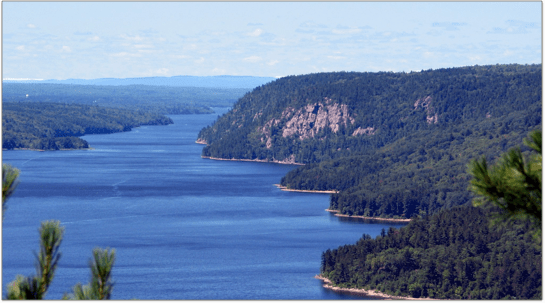
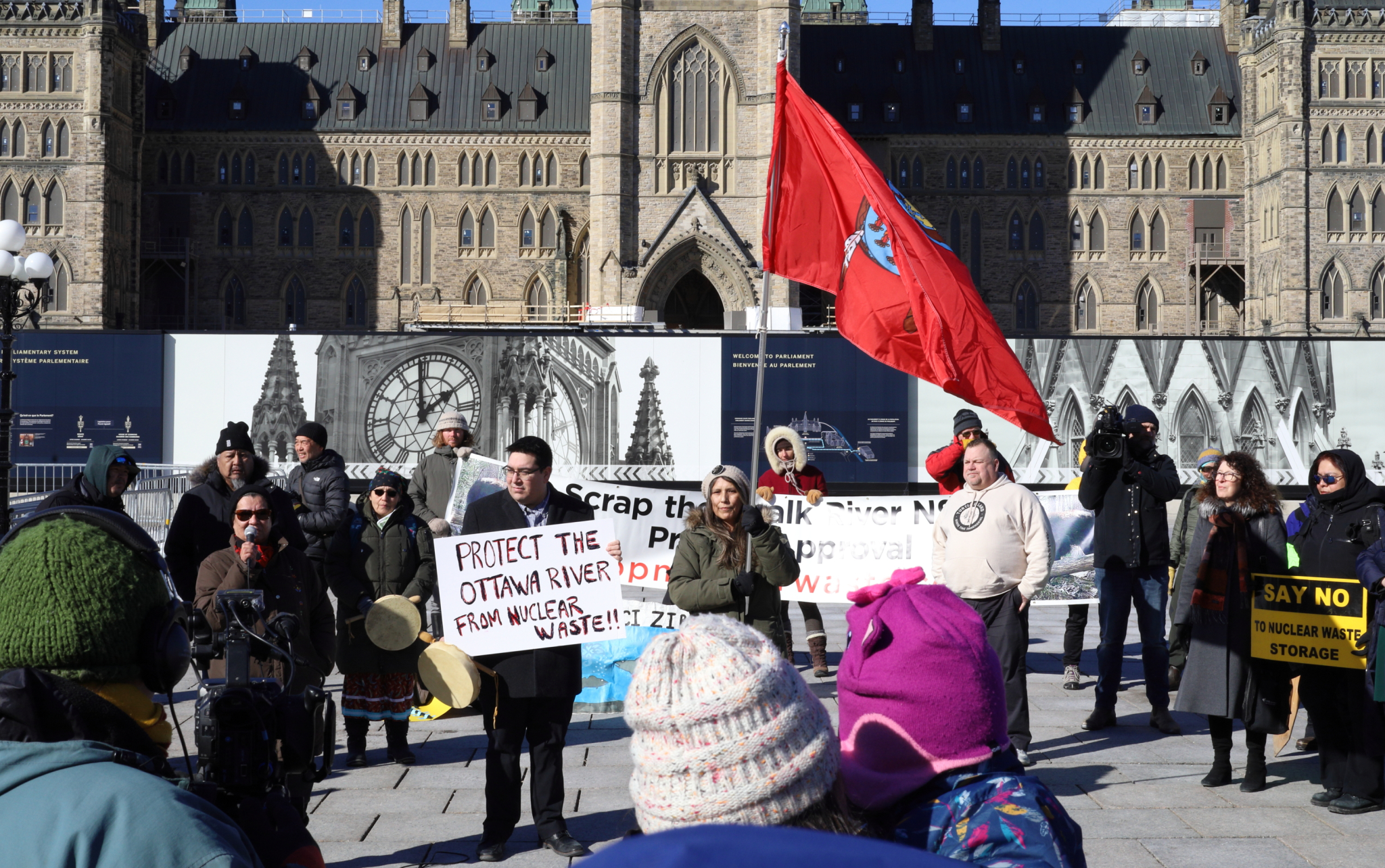
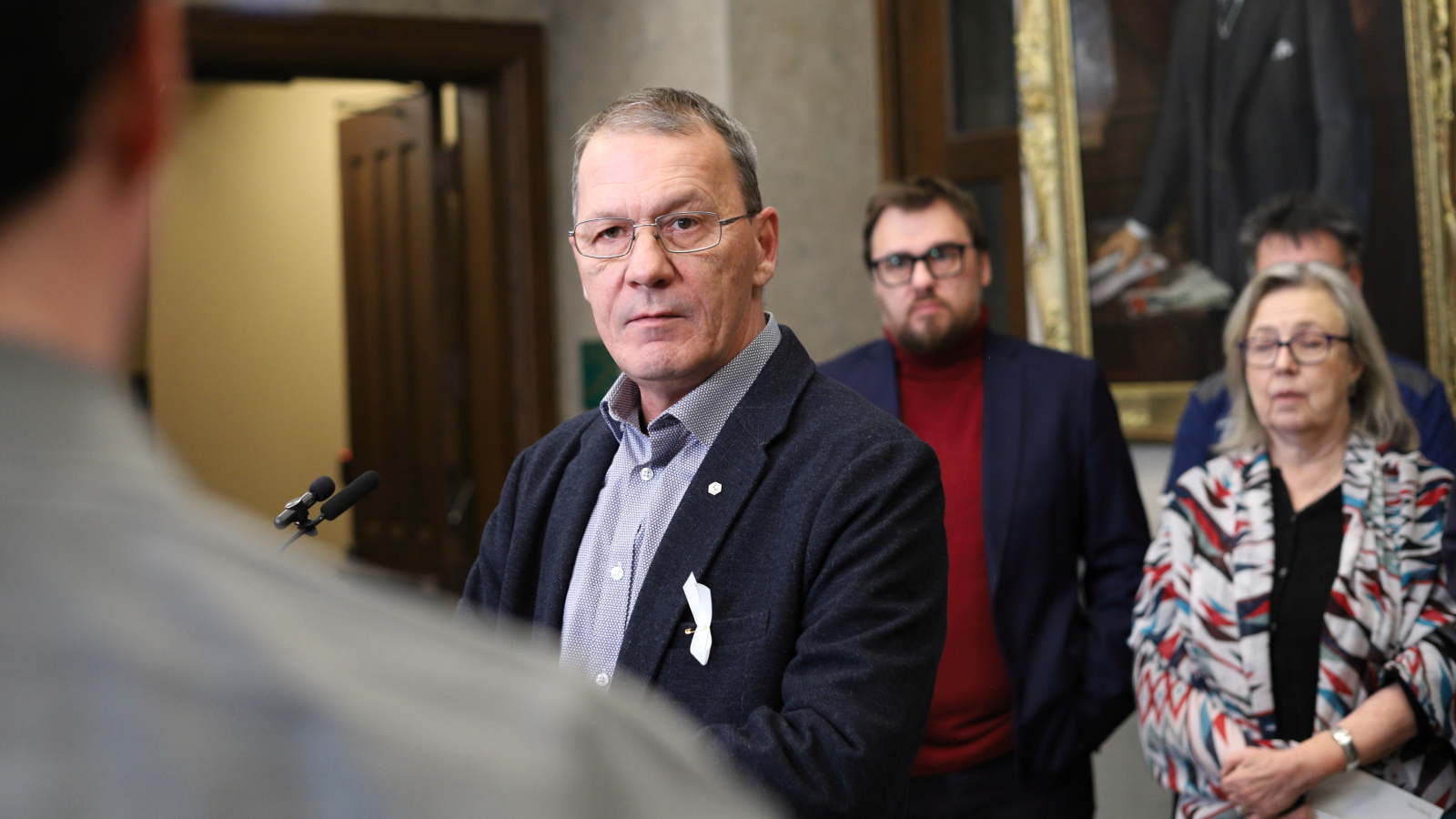
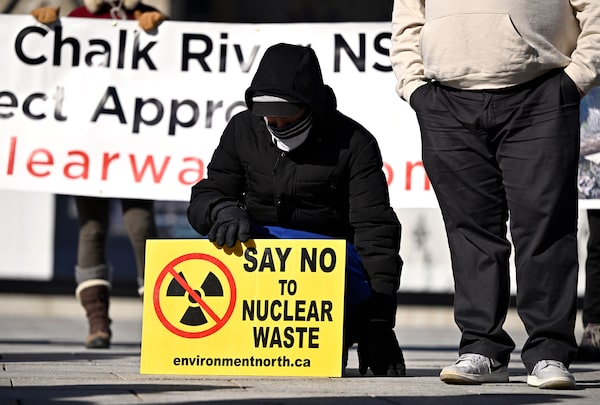
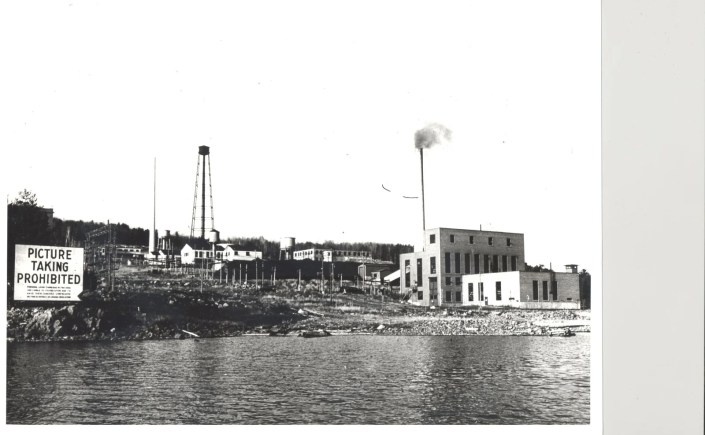

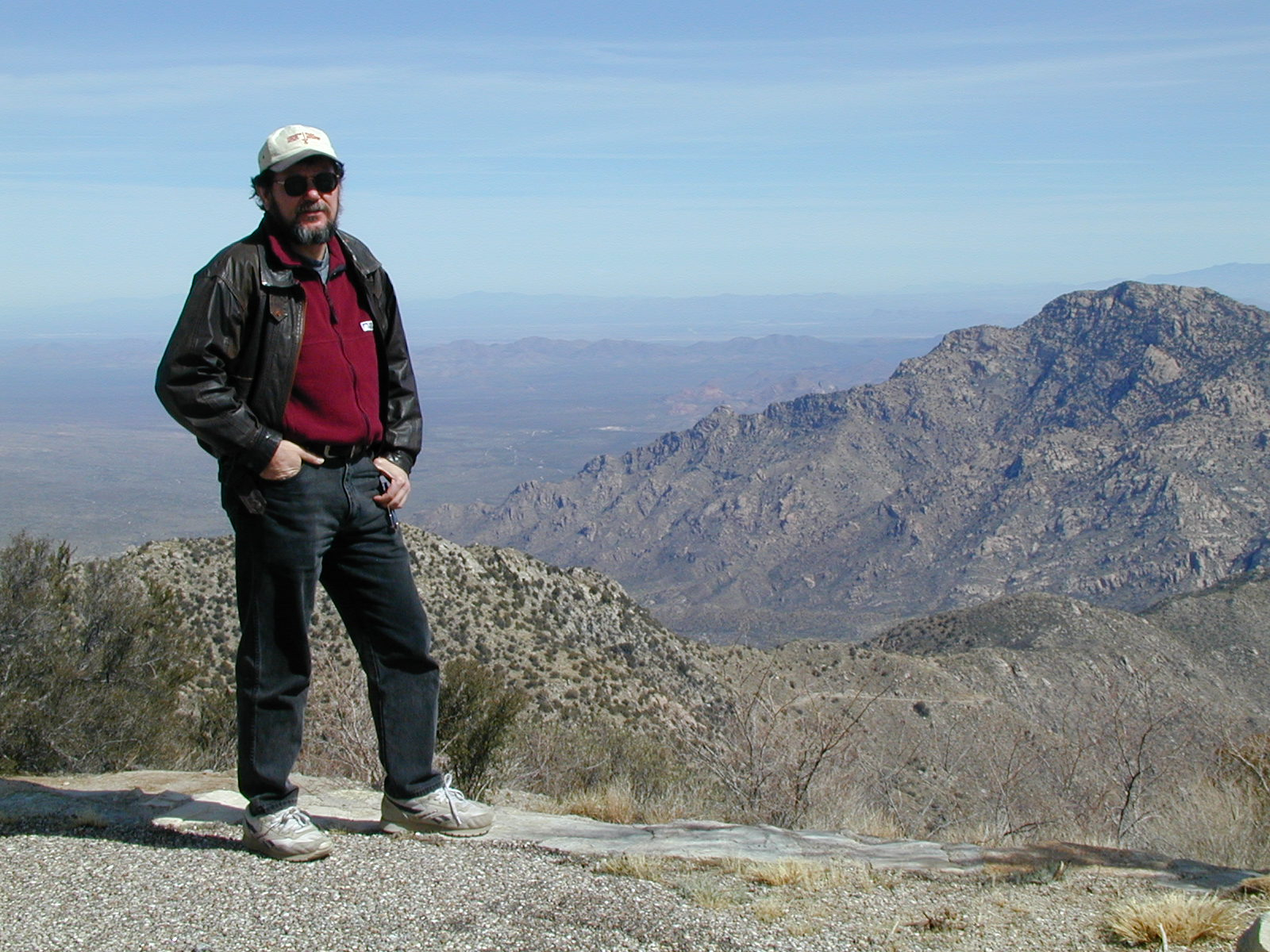
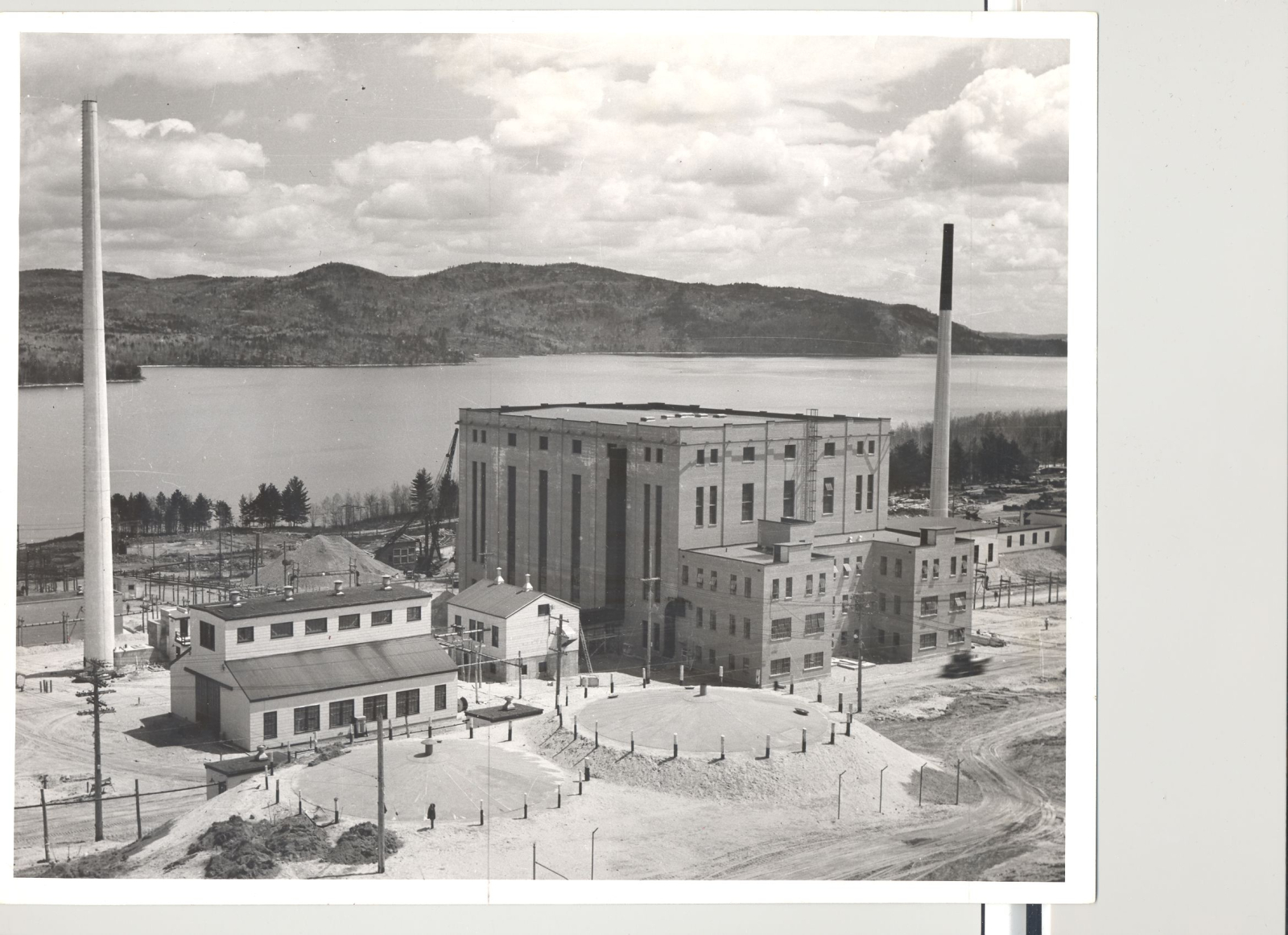
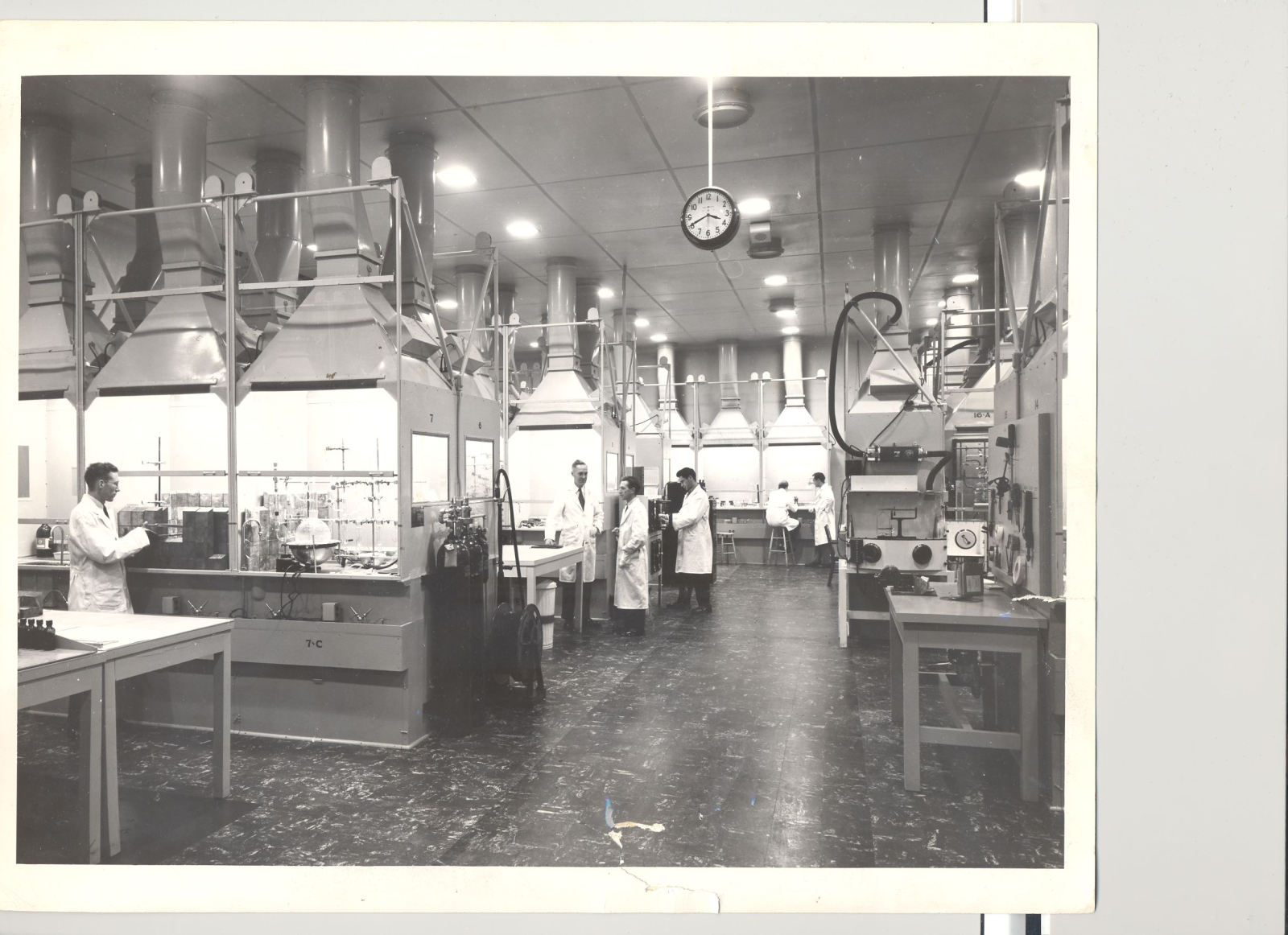
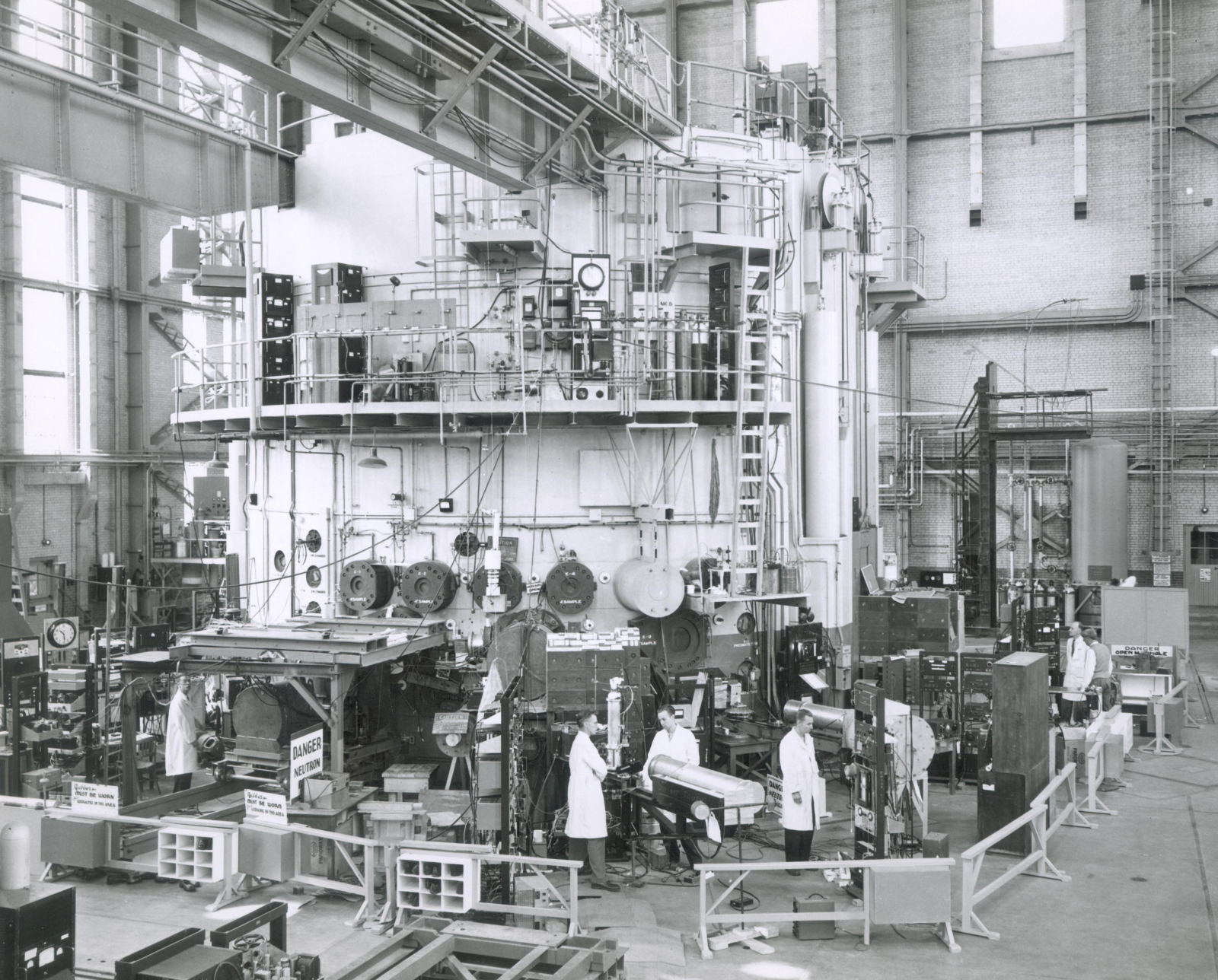
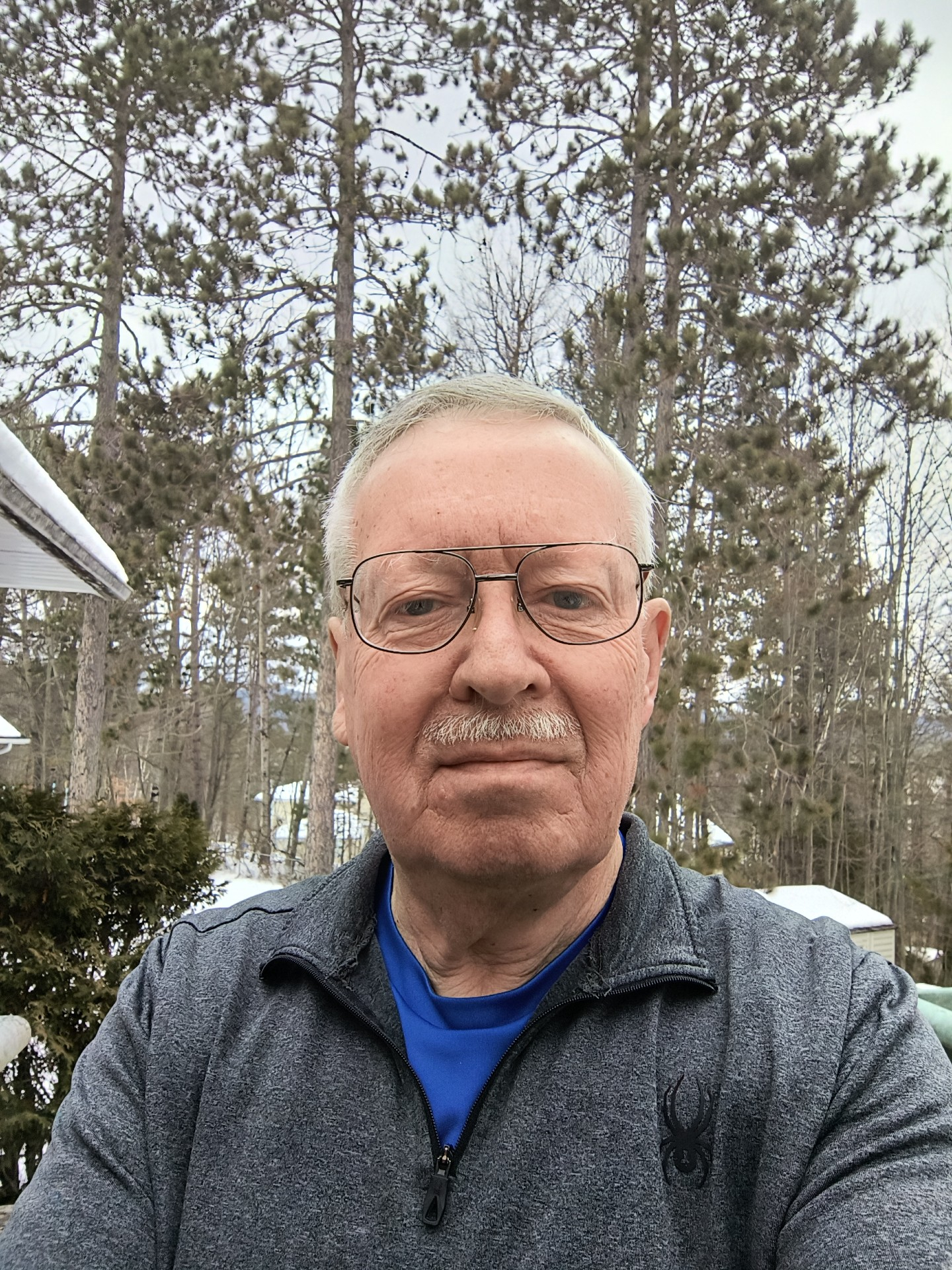
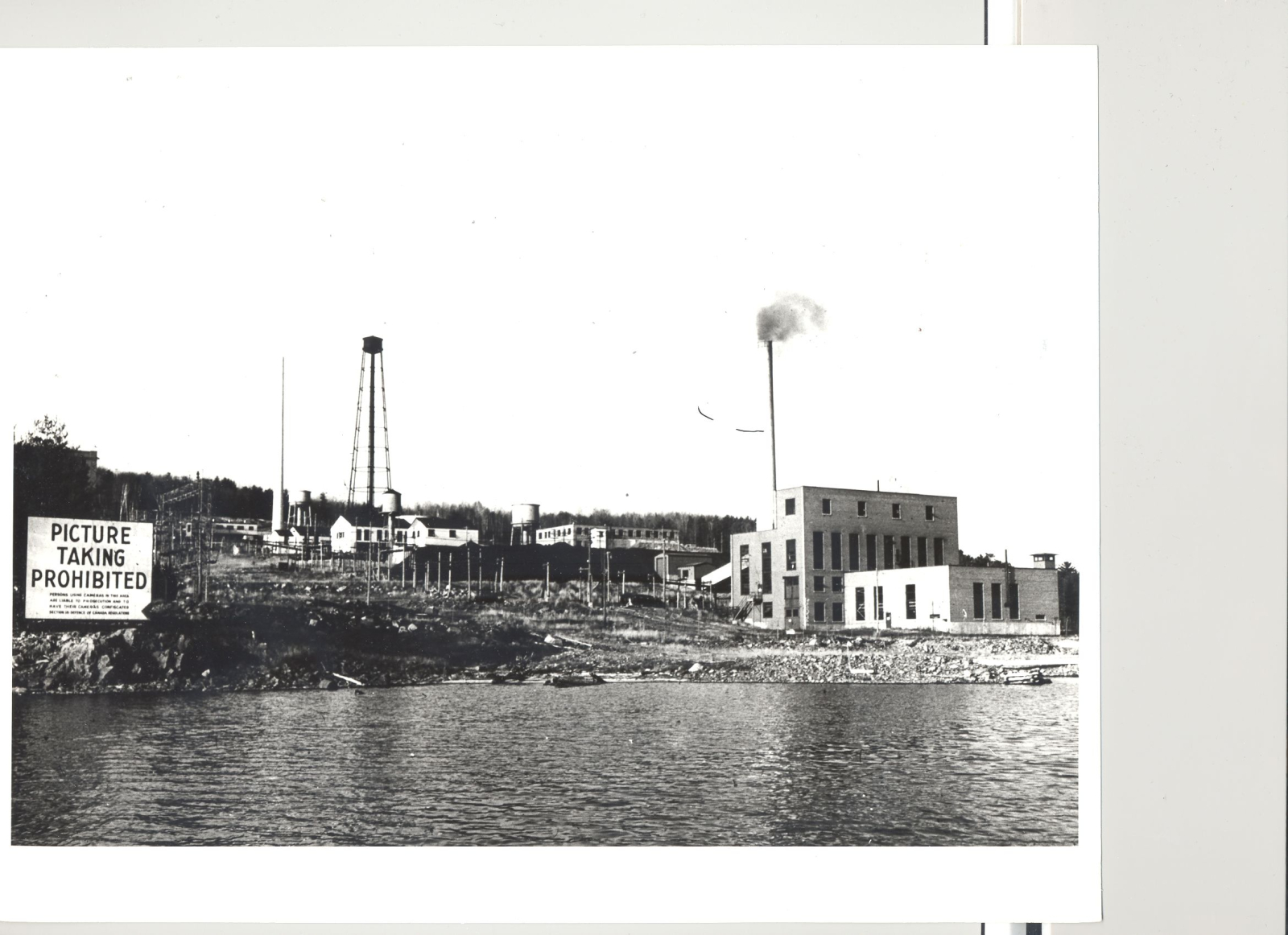


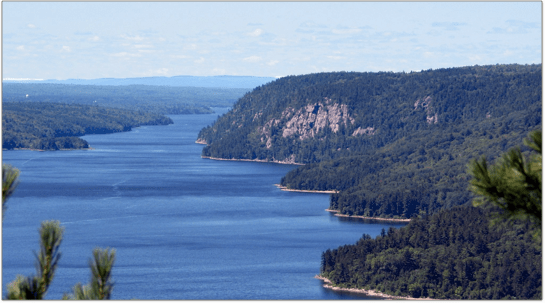

 Concerned Citizens of Renfrew County and Area