Will CNL put nuclear reactor components in the NSDF?
The lack of clarity about the nature of the waste intended for disposal in the NSDF has been a concern since the NSDF project description was published in March 2016. In our group’s comments on the project description, submitted in June 2016, we stated
For the public to have adequate information about the nature of the radioactive waste proposed for inclusion in the NSDF, the environmental assessment must provide much more detail than simply stating that the waste “will be required to meet waste acceptance criteria.”
CNL has prepared a document, NSDF Waste Acceptance Criteria (WAC) that CNL says “will ensure the short- and long-term protection of the public, the environment and workers.” But is this true? And do the NSDF Waste Acceptance Criteriaallow CNL to place reactor components in the NSDF?
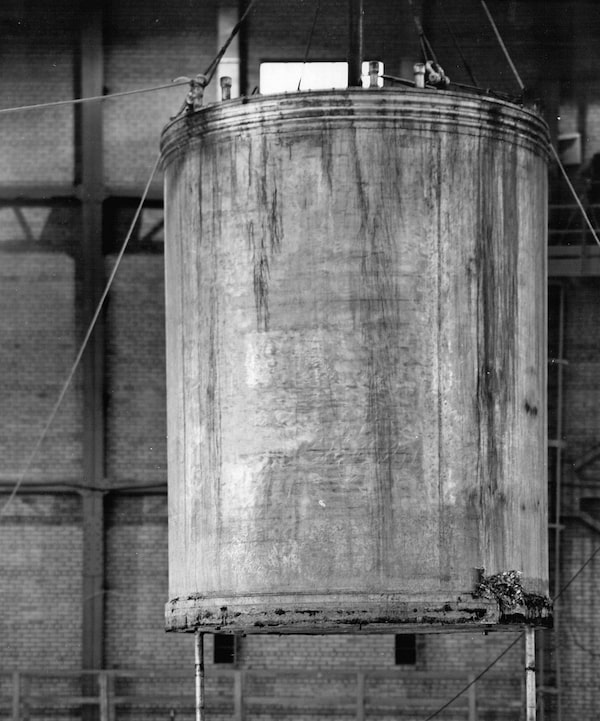
The calandria from the NRX reactor accident in December 1952 and two calandria from the NRU reactor are buried at shallow depths in the waste management areas of Chalk River Laboratories. This is stated in the Overview Decommissioning and Cleanup Plan for Chalk River Laboratories:
“Several special burials (NRU and NRX calandrias) were also made in concrete containers or directly in the trenches.”
“Oversized debris, including waste that does not fall within the definition of waste types 1 to 5, primarily due to its size or shape. The process applicable to infrequently performed activities (section 6.4) is used to approve the placement of type 6 waste.”
The Infrequently Performed Operations override clause in section 6.4 states:
“The eligibility of wastes that do not meet all the requirements set forth in the WAC (including Type 6, Oversized Waste) may be evaluated on a case-by-case basis.”
Reactor calandrias would almost certainly exceed the “Dose Rate Limits and Means of Handling and Transferring ” in Table 7 of the WAC. However, the Waste Acceptance Criteria allow these dose limits to be exceeded if waste packages are shielded:
“Shielded Waste Packages could be used to ensure waste complies with the dose rate limit in Table 7.”
CNL has made a presentation to the Chalk River Laboratories Environmental Stewardship Council about its work to uncover the NRX calandria, currently buried at shallow depth in Waste Management Area A. The notes from Council meeting number 53 on Thursday, March 21, 2024, state that a council member asked for an update on this work:
Has anything else been happening with the NRX Calandra [sic] with the Calandra [sic] in Waste Area A?
The first emplacement of radioactive waste at the CRL site took place in 1946 into what is now referred to as Waste Management Area A. These emplacements took the form of direct disposal of solids and liquids into excavated sand trenches. The scale of operations was modest and unrecorded until 1952, when the cleanup from the NRX accident generated large quantities of radioactive waste (which included the reactor’s calandria) that had to be managed quickly and safely. At that time, approximately 4,500 m3 of aqueous waste, containing 330 TBq (9,000 Ci) of mixed fission products, was poured into excavated trenches. This action was followed by smaller dispersals (6.3 TBq and 34 TBq of mixed fission products) in 1954 and 1955, respectively. Waste is no longer accepted for emplacement in Waste Management Area A.
The 2023 Overview Decommissioning and Cleanup Plan for Chalk River Laboratories indicates CNL’s intention to transfer all the contents of WMA A to the NSDF: “the preliminary scenario presented is the removal of wastes from WMA A and its disposal in the NSDF.”
CNL’s lack of transparency regarding the waste destined for the NSDF, despite the requirements of the General Nuclear Safety and Control Regulations (GNSCR), is one of the main points of one of the legal challenges to the CNSC’s decision to authorize construction of the facility.
The Memorandum of Fact and Law for the federal court case (Court File No. T-226-24) between Concerned Citizens of Renfrew County and Area, the Canadian Coalition for Nuclear Responsibility and le Ralliement contre la pollution radioactive (Applicants) and Canadian Nuclear Laboratories (Respondent) says the following:
The Commission’s failure to require the specific and comprehensive information set out in GNSCR s. 3(1)(c) and (j) has an enormous impact on the integrity of the Decision as a whole. This failure undermines the Decision’s main conclusion that the NSDF will not produce significant adverse environmental and health effects. All CNL’s calculations estimating the amount of radioactive material that the NSDF would release into the environment and would expose a member of the public to were based on the Waste Acceptance Criteria being followed. Since materials can be placed in the NSDF even if they do not meet the Waste Acceptance Criteria, all the calculations and estimations are a fiction. There is no guarantee that the amount and type of substances that end up in the NSDF will be the same amount and type as that upon which the calculations for the safety assessments were made.
~~~~~~~~
Photos from Globe and Mail article (19 March 2023) “Jimmy Carter, Chalk River and the dawn of Canada’s nuclear age”
The NRX calandria is lowered into a protective bag and driven away to a disposal site in May 1953.CANADIAN NUCLEAR LABORATORIES
Now, 70 years after the cleanup, the largest artefact from the accident is about to see the light of day once again.
The burial mound of the NRX calandria, as seen earlier this month. Later this spring, a project team will resume work on excavating and then cutting up the calandria for longer term storage.CANADIAN NUCLEAR LABORATORIES/SUPPLIED
Nous écrivons pour alerter les lecteurs du Hill Times sur ce que nous considérons comme une crise de mauvaise gestion des déchets radioactifs dans le bassin versant de la rivière des Outaouais. Les éléments de cette crise sont les suivants:
· Une proposition visant à enterrer « in situ » un réacteur nucléaire défunt à moins de 400 mètres de la rivière des Outaouais, à Rolphton, en Ontario. La proposition bafoue les normes de sécurité internationales qui stipulent que l’enfouissement ne devrait être utilisé qu’en cas d’urgence.
· Un consortium multinational du secteur privé transporte tous les déchets radioactifs fédéraux, y compris les déchets de combustible irradié de haute activité, vers Chalk River. Ces importations ont lieu malgré la demande explicite de la ville d’Ottawa, en 2021, de cesser les importations de déchets radioactifs dans la vallée de l’Outaouais, qui est sismiquement active et constitue un mauvais emplacement pour le stockage à long terme des déchets radioactifs.
· Tout ce qui précède se produit malgré l’opposition du peuple algonquin, sur le territoire non cédé duquel se trouvent les laboratoires de Chalk River et le défunt réacteur de Rolphton. Cela contrevient à la Loi sur la Déclaration des Nations Unies sur les droits des peuples autochtones du Canada.
Malgré les résolutions répétées de l’Assemblée des Premières Nations et de plus de 140 municipalités situées en aval, dont Ottawa, Gatineau et Montréal, le gouvernement actuel ne semble pas vouloir ou pouvoir prendre des mesures significatives pour résoudre cette crise. Nous faisons donc appel à l’Agence internationale de l’énergie atomique et demandons une réunion avec son équipe d’examen par les pairs qui doit se rendre au Canada le mois prochain.
Chef Lance Haymond, Première Nation Kebaowek
Gordon Edwards, Ph.D., Regroupement pour la surveillance du nucléaire
We are writing to alert Hill Times readers to what we see as a crisis of radioactive waste mismanagement in the Ottawa River watershed. Components of the crisis include:
A giant, above-ground landfill for one million tonnes of radioactive waste at Chalk River Laboratories, less than one kilometre from the Ottawa River. According to the licensed inventory for the facility, more than half of the radionuclides are long-lived with half-lives exceeding the design life of the facility by thousands of years. Experts say the waste is “intermediate level,” and should be stored underground. There are concerns the facility will leak radioactive contaminants during operation, and break down due to erosion after a few hundred years.
There is a proposal to entomb “in situ” a defunct nuclear reactor less than 400 meters from the Ottawa River at Rolphton, Ont. In our view, the proposal flouts international safety standards that say entombment should not be used except in emergencies.
A multinational private-sector consortium is transporting all federal radioactive wastes, including high-level irradiated fuel waste, to Chalk River. These imports are occurring, despite an explicit request by the City of Ottawa in 2021 for cessation of radioactive waste imports to the Ottawa Valley which is seismically-active, and a poor location for long-term storage of radioactive waste.
All of the above is taking place despite the opposition of the Algonquin People on whose unceded territory the Chalk River Laboratories and defunct Rolphton reactor are located. This contravenes Canada’s United Nations Declaration on the Rights of Indigenous Peoples Act.
In our view, this crisis is a direct result of Canada’s inadequate nuclear governance regime under which almost all aspects of nuclear governance are entrusted to one agency, the Canadian Nuclear Safety Commission, which is widely perceived to be captured by the nuclear industry, and to promote the projects it is supposed to regulate. Other concerns include conflicts of interest, lack of checks and balances, and an inadequate nuclear waste policy.
Despite repeated resolutions of concern by the Assembly of First Nations and more than 140 downstream municipalities—including Ottawa, Gatineau, and Montreal—the current government appears unwilling or unable to take meaningful action to address this crisis. We are therefore appealing to the International Atomic Energy Agency and requesting a meeting with its peer review team that is scheduled to visit Canada next month.
Chief Lance Haymond, Kebaowek First Nation
Gordon Edwards, PhD, Canadian Coalition for Nuclear Responsibility
House of Commons e-Petition 4676 requesting an IAEA ARTEMIS review of precedent-setting nuclear waste disposal projects in Canada received more than 3000 signatures between December 11, 2023 and January 10, 2024. Unfortunately, the Government of Canada’s response did not provide any clear reasons why it would not request an IAEA ARTEMIS review. Rather, the response reads like a promotional message from the Canadian Nuclear Safety Commission, replete with platitudes, inaccuracies and unwarranted assurances.
For the record, Ralliement contre la pollution radioactive and Concerned Citizens of Renfrew County and Area have prepared the following rebuttal to the response to share with Ministerial staff in hopes that they will reconsider the request for an ARTEMIS review in order to ensure that federal radioactive waste is properly managed for the good of current and future generations of Canadians.
House of Commons e-Petition 4676 including the Government’s response is here.
BLACK TEXT is the Government Response.
RED TEXT is the Ralliement and CCRCA response to the Government’s response
“The Government of Canada is committed to the safe, effective, and environmentally sound management of radioactive waste. Advancing reconciliation and protecting the health and safety of Canadians and the environment is the government’s top priority when it comes to nuclear energy and radioactive waste.”
If this is the case, why is the Government allowing a multinational consortium to promote radioactive waste projects like the Near Surface Disposal Facility (“NSDF”) project that fail to meet International Safety Standards?
CNL has not specified all substances to be disposed of in the NSDF. The Waste Acceptance Criteria, Reference Inventory Report, Safety Case, Safety Analysis Report, and Post-Closure Safety Assessment documents only provide partial lists.
The Waste Acceptance Criteria document has a section entitled “Infrequently Performed Operations” that allows waste that does not meet the acceptance criteria to be placed in the NSDF. This effectively nullifies any guarantees about what may be placed in the NSDF.
After institutional control ends, the public would be exposed to radiation doses that exceed the limit of 10 µSv/y prescribed by Canadian regulations and international standards;
There was no assessment of the cumulative effects of all related nuclear projects, since CNL did not provide information about many of them.
Disused, highly radioactive (9.06×10E+16 Bq) commercial cobalt-60 sources would be placed in the NSDF even though International Atomic Energy Agency (IAEA) standards specify that cobalt-60 sources can go into near surface disposal only if they are below a certain concentration of radioactivity. This restriction was ignored by CNL. The Waste Acceptance Criteria document was never revised accordingly despite public requests.
“In addition, the Government of Canada recognizes the unique status and rights of Indigenous Peoples in Canada and is committed to upholding these rights and implementing the United Nations Declaration on the Rights of Indigenous Peoples (the UN Declaration) in consultation and cooperation with Indigenous Peoples, with regard to radioactive waste management and decommissioning.”
Why then, is the Government of Canada allowing the NSDF to be licensed when 10 of 11 Algonquin First Nations, on whose unceded territory the facility would be built, say they do not consent.
“The development, production, and use of nuclear energy and materials are regulated by the Canadian Nuclear Safety Commission, Canada’s independent nuclear regulator, which comprises the Commission and CNSC staff.”
CNSC is not an independent nuclear regulator. It was noted by the Expert Panel on Environmental Assessment in 2017 that the CNSC is widely viewed to be a captured regulator that promotes the projects it is supposed to regulate.
“All nuclear projects, including the Near Surface Disposal Facility (NSDF) proposed by Canadian Nuclear Laboratories (CNL) and other proposed legacy radioactive waste projects, require the Commission’s authorization, under the Nuclear Safety and Control Act (NSCA), and they may also require an environmental assessment or an impact assessment.”
If it is not known what nuclear waste would be accepted in the NSDF, how is it possible to do an environmental assessment? Even during the final hearing for the NSDF license, the Waste Acceptance Criteria document was not finalized.
The failure to address the inability of an above-ground mound to contain “long-lived radionuclides” for the duration of their hazard is a critical omission. The mound is designed to last only 550 years before eroding and releasing its contents to the environment.
“Pursuant to its mandate and responsibilities set out in the NSCA, the Commission is as an independent quasi-judicial tribunal that makes science and evidence-based decisions and solicits information from interested Canadians and Indigenous Peoples through public engagement and hearings.”
Civil society groups identified many critical flaws, errors and omissions in the CNSC’s Environmental Assessment Report for the NSDF, and noted that it contained no references whatsoever, making it a very un-scientific document.
“Federal departments, such as Environment and Climate Change Canada, Health Canada, Fisheries and Oceans Canada, and Natural Resources Canada, as well as other levels of government, participate in and contribute to environmental assessments, where applicable, for proposed major nuclear projects based on their expertise and knowledge. Along with public participation and input, including from Indigenous Peoples, this ensures an open, balanced process that strengthens the quality and credibility of a project’s review.”
The CNSC ignored serious concerns about destruction of habitat for species at risk, noted by ECCC reviewers of the NSDF Environmental Impact Statement. Inputs from Indigenous Peoples and members of the public have been downplayed or ignored by the CNSC and its Commission throughout the environmental assessment and licensing processes.
“The Commission approves projects under the NSCA if it concludes that they will be safe for the public and the environment, both now and into the future, that Canadians have been engaged, and that Indigenous Peoples have been sufficiently and appropriately consulted.”
The NSDF is expected to leak radioactive contaminants such as plutonium into the Ottawa River as documented in the Environmental Impact Statement. There is no safe level of exposure to these releases of radioactive substances into the environment. The CNSC allows such releases based on the premise that there is some benefit to society that justifies exposing people to these substances. So no, they do not conclude these projects are safe, only that the risks are “reasonable”.
If the Commission concluded that Indigenous Peoples had been sufficiently and appropriately consulted with respect to the NSDF, it was badly mistaken. The Algonquin People strongly disagree.
“The Minister of Energy and Natural Resources has no role in the Commission’s independent licensing decisions under the NSCA and did not participate in the environmental assessment decision of the NSDF project under the Canadian Environmental Assessment Act, 2012 (CEAA, 2012).
The Commission ensures that all decisions it carries out under federal legislation uphold the honour of the Crown and that consultations with Indigenous Peoples and groups are undertaken whenever the Commission’s decisions or conduct may have a potential impact on Aboriginal or treaty rights protected under section 35 of the Constitution Act, 1982. As Canada’s nuclear regulator, the CNSC is committed to long-term relationship building and to enabling meaningful participation of Indigenous Peoples and groups in Commission proceedings and CNSC regulatory processes.”
Again, the Algonquin First Nations, on whose unceded ancestral homeland the NSDF would be built, say they do not consent and have not been adequately consulted.
“On June 21, 2021, the United Nations Declaration on the Rights of Indigenous Peoples Act (UN Declaration Act) received Royal Assent and came into force. This Act requires the Government of Canada, in consultation and cooperation with Indigenous Peoples to: take all measures necessary to ensure that the laws (including regulations) of Canada are consistent with the Declaration (section 5); prepare and implement an action plan to achieve the Declaration’s objectives (section 6); and, table an annual report on progress to align the laws of Canada with the UN Declaration Act and on the action plan (section 7). The Action Plan was released in June 2023 and provides a roadmap of actions Canada needs to take in partnership with Indigenous peoples to implement the principles and rights set out in the UN Declaration and to further advance reconciliation in a tangible way.”
Decisions on Nuclear waste projects in the Ottawa Valley are a perfect starting point for the Government of Canada to implement the principles set out in the UN Declaration.
“Canada’s nuclear regulatory framework, including for radioactive waste management and decommissioning, is aligned with International Atomic Energy Agency (IAEA) standards that are internationally well-regarded, as confirmed by peer reviews of international nuclear experts.”
“In 2019, an IAEA Integrated Regulatory Review Services (IRRS) Mission to Canada was requested by the Government of Canada. The purpose of the 2019 IRRS Mission was to perform a peer review of Canada’s regulatory framework for nuclear and radiation safety against IAEA Safety Standards, with a focus on radioactive waste management and decommissioning. The scope was more comprehensive than an IAEA Integrated Review Service for Radioactive Waste and Spent Fuel Management, Decommissioning and Remediation (ARTEMIS) review.”
The IAEA offers various types of international peer reviews to member states. IRRS reviews are general and focus on the nuclear regulatory infrastructure. ARTEMIS reviews are specific to radioactive waste and include technical experts who assess the suitability of waste management proposals. ARTEMIS is the review that is relevant to the case of the three radioactive radioactive waste projects referred to in the petition.
“The Mission concluded that Canada has a comprehensive and robust regulatory framework for nuclear and radiation safety covering current facilities and activities.”
The IRRS Mission found numerous deficiencies in Canada’s nuclear safety framework, as noted above and summarized here. For example, the Mission noted that a systematic evaluation of justification for the various practices involving radiation sources in the licensing process was lacking in Canada’s framework, and recommended that a process be established for this. The Government of Canada’s response to the IRRS recommendations notes that this recommendation was “not accepted.” (module 1 IAEA suggestion 1)
“It also recommended that the Government should enhance the existing policy and establish the associated strategy to give effect to the principles stated in Canada’s former Radioactive Waste Policy Framework (1996). “
“A follow-up IRRS Mission will occur in June 2024, to review Canada’s progress on meeting the recommendations of the 2019 Mission. In 2022, the Commissioner of the Environment and Sustainable Development (CESD) found that Canada does a good job of managing low- and intermediate-level radioactive waste.”
“In 2023, the Government of Canada released a modernized Policy for Radioactive Waste Management and Decommissioning and accepted the Integrated Strategy for Radioactive Waste developed by the Nuclear Waste Management Organization and associated partners. Both reflect international best practices and enhance Canada’s framework so that radioactive waste management and disposal are carried out in a safe, environmentally sound, comprehensive, and integrated manner, now and for generations to come.”
The Government of Canada’s “modernization” process for its radioactive waste policy, prompted by the 2019 IRRS mission received a failing grade from the Canadian Environmental Law Association and many other NGOs in Canada.
The Government of Canada has been widely criticized for entrusting the development of radioactive waste strategy to a nuclear industry group, the NWMO. This is contrary to IAEA guidance and the way things are done in many other countries with more robust nuclear governance regimes that include independent waste management agencies. Waste from “Small Nuclear Reactors” was not addressed in the strategy. Reactor decommissioning was not addressed. This is not acceptable.
“Canada’s commitment to nuclear safety is further reinforced through participation and leadership in the Joint Convention on the Safety of Spent Fuel Management and on the Safety of Radioactive Waste Management (the Joint Convention). The Joint Convention is the first legally binding international treaty governing all aspects of spent fuel and radioactive waste management.”
Article 11 of the Joint Convention states that parties shall “ensure that the generation of radioactive waste is kept to the minimum practicable.”This reflects the fact that radioactive waste is dangerous, poses risks to all living things and must be kept out of the biosphere for as long as it poses a radioactive hazard. Many people are unaware that Canada’s vaunted “CANDU” nuclear reactors produce five to ten times more radioactive waste per unit of electricity than other reactors. Also, Canada seemingly makes no effort to minimize the generation of radioactive waste. Provincial and federal governments are currently seeking to expand nuclear electricity generation, even though conservation and renewable energy could meet the same needs without creating radioactive waste.
“Under the Joint Convention, delegates, including from Canada, participate in review meetings every three years to review the work of their peers to fulfill their obligations under the Convention.”
Question 31: In Canada, there is no difference of management practice for low level radioactive waste (LLW) and the management practice for intermediate level radioactive waste (ILW).
Question 32: Is there a dose rate criteria to distinguish between HLW and ILW?
(In fact in Canada management of ILW has been neglected. There is no permanent disposal site for ILW. The classification of HLW and ILW is very vague on purpose. By a malicious change of the definition of these wastes, at Chalk River, the inventory of ILW has decreased dramatically while LLW has increased.)
United Kingdom, Radioactive waste inventory: In tables D.3 and D.5, the volumes of ILW and LLW at Chalk River Laboratories are provided but there is no indication of the activity associated with these wastes… 1. Does Canada know the activity associated with this waste? 2. If not, does Canada have any plans to determine it?
China: In last report, it is mentioned that the near surface disposal facility (NSDF) would be built by 2020, but the date has been changed into 2024 in this report. What is the main reason for the delay?
“The Government is confident that the CNSC will continue to follow international standards and best practices in its licensing decisions and as needed, conduct international peer reviews as part of its commitment to continuous improvement in the management of radioactive waste and decommissioning.”
The Government’s confidence is misplaced. The CNSC flouts international standards repeatedly. For example, the 2019 IRRS mission called to attention the fact that entombing defunct reactors is permissible only in cases of emergency. Yet, after the visit and receipt of the recommendation, the CNSC inserted language into its REGDOC-2.11.2, Decommissioningthat enables in situ decommissioning (i.e., entombment) of future reactors where removal is not “possible and practicable.” This language contradicts IAEA safety standards and recommendations from the IRRS review team.
The IRRS mission called on CNSC to revise its Radiation Protection Regulations to reduce the allowable radiation dose to a pregnant nuclear energy worker from 4 mSv to 1 mSv, and to reduce radiation dose limits for apprentices or students aged 16 to 18. No action has been taken.
CNSC also intervened behind the scenes to exempt “small modular reactors” from impact assessment, an act that would be unthinkable in most other countries. It is impossible to conceive of a technology more dangerous and in need of impact assessment than new experimental nuclear reactors.
The site chosen by Canadian Nuclear Laboratories for its proposed Ottawa River nuclear megadump is next to Perch Lake, a 45-hectare water body. The “NSDF Project” includes a pipeline that would discharge warm water containing radioactive and hazardous contaminants leaching from the dump into the lake, which drains via Perch Creek into the Ottawa River, only 1 kilometer away. Construction of the pipeline and discharge of contaminated water for a 50-year operating period would have highly significant adverse impacts on species living in and around the lake, such as the endangered Blanding’s Turtles, other hibernating turtle species, and the three endangered bat species that feed on insects hatching from the lake and that roost in the trees on the adjacent forested hillside.
The dump’s proximity to the Ottawa River, Perch Lake, and its surrounding wetlands is a main reason why clear-cutting, draining, and blasting the forested hillside would have major impacts on biodiversity and species at risk. Environment and Climate Change Canada nonetheless issued a permit allowing these activities, while referring to only three at-risk species (Blanding’s Turtle, Little Brown Myotis, Northern Myotis).
After the May/June 2022 Canadian Nuclear Safety Commission hearing onthe NSDF Project (which was supposed to be the final opportunity for public input), Kebaowek First Nation insisted on being allowed to conduct its own field work at the site chosen by CNL. Even though much of their work had to be done in the fall and winter, what they found was stunning (see https://kebaowek.ca/Docs/NSDF/IndigenousNSDFAssessmentBooklet.pdf).
Using motion-sensitive cameras, they recorded the presence of three active Black Bear dens, with video footage of bears entering them to hibernate. Ontario provincial regulations prohibit the destruction of bear dens. A 2018 study of Black Bear den-site selection in and around Aspen, Colorado found that slope was the main predictor of where bears make their dens. The likelihood of a site being used increased by 6.15% for each 1° increase in slope. Advantages of denning on steeper slopes relate to safety from disturbance and avoidance of heat loss, with dens on steep slopes having drier and better drained soils that lessen heat loss compared with wetter dens. Many studies report that bears den primarily in forested habitat types. A 2005 study of den selection by Grizzly Bears in British Columbia showed that their dens were primarily in older-aged forest stands.
The NSDF site, with its steep slope; its sandy, well-drained soil that lessens heat loss and is easy for bears to excavate; its healthy, mature forest cover; lack of human disturbance; and distance from road traffic – represents irreplaceable Black Bear denning habitat. Destruction of this habitat would likely have significant negative impacts on the regional Black Bear population in the upper Ottawa Valley.
Kebaowek First Nation documented how rich in biodiversity the NSDFsite is overall. A pack of Eastern (or “Algonquin”) Wolves – a distinct species found only in Canada that is threatened with extinction — was denning nearby and preying on the deer and moose that winter at the NSDF site. As well as the three endangered bat species preferentially use the NSDF site, with its abundance of old trees that are suitable for maternity roosts and are close to ideal foraging habitat, and the endangered Blanding’s Turtles, which make long overland migrations before laying their eggs in spring, many species of at-risk migratory birds (Whip-poor-wills, Golden-winged Warblers, Canada Warblers, etc.) also use the NSDF site.
We should all be grateful to the Kebaowek First Nation for insisting on doing independent field work. In its 2016 NSDF Site Selection report, CNL did not record the presence of Black Bears, nor their dens. Nor was there any mention of the use of the site by Eastern Wolves. CNL’s final environmental impact statement makes no mention of bear dens, and scant mention of the presence of wolves.
The “uplisting” of the Eastern Wolf from “special concern” to “threatened” status, recommended by COSEWIC in 2015 because of genetic evidence that it is a distinct species, is likely to occur thissummer. It appears that the wolves previously had a den on the 37-hasite, have an active den nearby on the Chalk River property, feed on deer and moose that winter under an old spruce plantation on the site, and use the Perch Creek corridor as the shortest route between their two major populations in Algonquin Park in Ontario and Mont Tremblant park in Quebec. A “threatened” listing may require issuance of another permit under the Species at Risk Act that would address the protection of wolf dens, wintering and feeding areas.
Some of the federally listed at-risk species known to live in the 37-ha NSDF “footprint” and the surrounding “Local Study Area” (including Perch Lake) are:
Canada Warbler Golden-winged Warbler Eastern Whip-poor-will Eastern Wood Pewee Wood Thrush Chimney Swift Little Brown Myotis Northern Myotis Tri-colored Bat Blanding’s Turtle Eastern Musk Turtle Northern Map Turtle Snapping Turtle Eastern Milksnake Monarch Eastern (“Algonquin”) Wolf Black Ash
The iconic Canada Warbler, one of many endangered species that depend on the forested hillside on CRL property that is slated for clear cutting, blasting, and removal to build the NSDF.
Kebaowek First Nation, Concerned Citizens of Renfrew County and Area, the Canadian Coalition for Nuclear Responsibility and the Sierra Club Canada Foundation have applied for a judicial review of the decision by the Minister of Environment and Climate Change Canada to grant a permit to destroy species at risk in order to build the NSDF. The Notice of Application is available here.
Most of this funding goes to the multinational consortium under the GoCo contract, but it is difficult to determine exactly how much. AECL itself is a small organization; privatization by the Harper government in 2015 reduced its staff complement from several thousand to just 57 employees. According to a recent financial statement from AECL the organization’s annual operating costs are under $100 million therefore it seems reasonable to conclude that the multinational consortium’s contract with the Government of Canada is now worth in excess of $1.5 billion annually, up from about $400 million in 2016.
The most recent publicly reported value for the GoCo contract was in this Globe and Mail article which reported that the GoCo contract to operate Canadian Nuclear Laboratories is worth about $1.2 billion annually.
Another year, another record level of funding for Atomic Energy of Canada Ltd.
AECL will receive almost $1.6 billion in funding next year, to support both decommissioning and development at the Chalk River Laboratories, according to the federal government’s main spending estimates, published last week.
Total funding for AECL will be $1.591 billion for the fiscal year 2024-25, which begins April 1.
The funding is broken down into two components: $1.196 billion for “nuclear decommissioning and radioactive waste management” and $394.8 million for “nuclear laboratories.”
The money allocated to the laboratories includes $235.8 million in operating funding and $159 million for capital projects.
This is the ninth year in a row that funding for AECL, CNL and Chalk River has remained at unprecedented levels.
Federal funding for AECL was approved at $1.541 billion this year, up from $1.326 billion in 2022-23.
Meanwhile, funding beyond this year seems less certain.
The company’s latest five-year corporate plan notes that current rates of funding are only approved until the end of the current GoCo (government owned, contractor operated) contract for CNL in September 2025…
For the full story, pick up a copy of this week’s NRT.
The NRT website offers just a sample of what you’ll find inside each week’s issue. To get the full NRT delivered directly to your mail box or inbox each week, subscribe to our print or digital editions here.
The multi-billion dollar radioactive waste cleanup liability at Chalk River Laboratories was described in an Ottawa Citizen article in 2011, Chalk River’s toxic legacy. The waste at Chalk River was produced during eight decades of operation of one of the world’s first nuclear laboratories that was originally set up to produce plutonium for US nuclear weapons. The cleanup cost is estimated at between $8 billion and $16 billion and is expected to take many decades to be completed.
In September 2015, the outgoing Conservative government contracted a multinational private sector consortium comprised of SNC-Lavalin and two US-based multinationals to reduce the radioactive waste cleanup liability quickly and cheaply. The consortium’s proposal, that won it the contract, was to create a giant above-ground landfill for one million tons of radioactive and other hazardous wastes.This giant mound is known as the “Near Surface” Disposal Facility (NSDF) even though it is expected to rise seven stories above the ground. The consortium’s plan includes bringing federal radioactive wastes to Chalk River from Manitoba, Quebec and other sites in Ontario for disposal in the mound. The NSDF received a licesne from Canada’s “nuclear industry captured regulator,” the Canadian Nuclear Safety Commission in January 2024.
The proposed facility is not appropriate for the types of waste that would go into it. The waste is heavily contaminated with post fission nuclear reactor waste and includes many radioactive materials such as plutonium that will remain hazardous and radioactive for thousands of years. Nuclear industry veterans who were in charge of managing the waste before privatization say the facility does not meet international safety standards and that the waste should be stored underground. An International Atomic Energy Agency (IAEA) safety standard says “waste produced by research facilities generally belongs to the ILW [intermediate-level waste] class and even, in some circumstances, to the HLW [high-level waste] class.” (Details)
For the purposes of this article, we are comparing the impacts of the NSDF on the status quo of leaving the wastes where they are at the present time, until state-of-the-art facilities that meet international safety standards can be designed and sited appropriately, well away from the Ottawa River. While awaiting design and siting of proper disposal facilities, existing groundwater treatment facilities at Chalk River Laboratories could be upgraded to fully capture the existing plumes from the leaking waste areas.
Here are ten ways the NSDF will make the radioactive waste cleanup problem at Chalk River worse rather than better:
1. Increasing contamination of the Ottawa River with radioactive and other hazardous substances
Most of the radioactive liquid effluent discharges from Chalk River Laboratories go directly into the Ottawa River. Discharge points include the Process Outfall, the Sanitary Outfall, storm water outfalls, and the groundwater contaminant plumes from the NRX and NRU reactor facilities. Radioactivity is also released to the Ottawa River from Perch Creek, which receives tritium, carbon-14, strontium-90, chlorinated solvents, mercury, and other toxic substances from the Liquid Dispersal Area and Waste Management Areas A and B.
The NSDF location could not have been more poorly chosen.
Much of the public concern about the project site revolves around its proximity to the Kichi Sibi, the Ottawa River. Algonquin peoples have lived on the Kichi Sibi and used it as a source of food and water and a means of transport since time immemorial. Building a permanent radioactive waste disposal site a kilometer from a drinking water source for millions of Canadians makes no sense whatever. Spills or accidents during operation of the NSDF would risk its permanent contamination.
The Ottawa River occupies an active fault line. The NSDF site is underlain by fractured rock, allowing rapid groundwater movement. After closure of the NSDF, its artificial engineered barriers such as the plastic cover and the plastic bottom liner would disintegrate. The mound would erode and release its contents to the environment. Migration of contaminants into the Ottawa River would be inevitable.
The IAEA safety standard for disposal says that “A host geological formation and/or environment and site has to be identified that provide favourable conditions for the isolation of the waste from the accessible biosphere and the preservation of the engineered barriers (e.g. low groundwater flow rates and a favourable geochemical environment over the long term).”
If one disregards international safety standards and environmental considerations (as CNL and CNSC appear to have done), one might argue that the NSDF “makes things better” for the current management at the Chalk River Laboratories. The NSDF would “beautify the campus” — a place to dump the radioactive debris from demolition of over a hundred unused structures at Chalk River, and additional debris shipped from Whiteshell. Canadian nuclear companies could continue to get rid of their waste cheaply.
But – even if the NSDF were to perform perfectly during its 50-year operational phase – building it so close to the Ottawa River would impose undue burdens on future generations.
This represents a morally unacceptable approach, and one that is inconsistent with Canada’s international obligations.
2. Burdening future generations with a major remediation challenge
CNL claims that “only low-level waste” would go in the NSDF. This claim is not backed by evidence.
Nuclear industry veterans – those who were in charge of waste management before the 2015 privatization of CNL — say the proposed NSDF does not meet international safety standards and that long-lived waste (25 of the 30 radionuclides in the NSDF inventory) must be stored underground. They say, “The waste acceptance criteria are insufficiently protective for the material… to qualify as low level waste — the radionuclides do not decay to an acceptable level during the time that institutional controls can be relied upon.”
Putting long-lived radioactive waste in a giant mound would make it much more difficult to remediate in the future. This is not responsible “environmental remediation.”
Responsible management would involve carefully characterizing, packaging and labelling the waste and storing it in a place where it can be monitored and containers can be repaired as necessary.
3. Discharging waste directly into Perch Lake which drains into the Ottawa River
The IAEA safety standard for disposal emphasizes that the “fundamental safety objective in respect of the disposal of radioactive waste is to contain the waste and to isolate it from the accessible biosphere.” It’s hard to imagine any design for a disposal facility that would conform less to this objective than the NSDF.
Parts of the NSDF mound would remain uncovered for 50 years, exposing the waste to precipitation and melting snow and ice. The resulting leachate would need to be pumped uphill to a water treatment plant to remove a portion of its radioactive and hazardous contaminants.
The initial plan was to send leachate from the treatment plant back downhill through an “exfiltration gallery” into one of the adjacent wetlands. CNL argued that this would “promote the exfiltration of treated water into the local groundwater regime” and compensate for water lost from nearby wetlands when drains were installed under the NSDF itself.
CNL estimated it would take roughly ten years for contaminants to move through the wetlands into Perch Lake and Perch Creek, and that this would provide some time for shorter-lived radioactive substances such as cobalt-60 and tritium to undergo radioactive decay before emerging in these surface water bodies.
Later, however, CNL decided that if only an exfiltration gallery were used, at certain times of the year there would be “insufficient infiltration capacity at the exfiltration gallery which could result in overland flow of treated effluent.” This would cause erosion and rapid contaminant movement. Therefore, a late addition to the NSDF project was a pipeline that could discharge contaminants directly into Perch Lake (a pipeline to the Ottawa River was also considered).
Water treatment cannot remove tritium, the substance that would contain the second highest amount of radioactivity in the NSDF at closure. CNL assigned a limit of 360,000 Becquerels per liter (Bq/L) for the allowable tritium concentration at the point of discharge of the pipeline,18,000 times the 20 Bq/L standard recommended by the Ontario Drinking Water Advisory Council (but never acted upon because of nuclear industry pressure).
CNL maintains that these high levels of tritium are not a problem, because Perch Lake is a big lake (45 hectares). If the tritium were diluted evenly throughout the lake, it would approach the current 7,000 Bq/L Ontario drinking water standard, roughly tripling the concentration in Perch Lake, Perch Creek, and the Ottawa River at the point of discharge of Perch Creek. For the animals that live in and around Perch Lake, the NSDF would make things worse. For people living downstream who swim and fish in the Ottawa River and drink its water, the NSDF would be a source of ongoing anxiety.
4. Blasting away a forested hillside to create the NSDF site will change hydrology and is likely to mobilize contaminants in adjacent wetlands
Construction at the NSDF site would require “slope depressurization”. The water table is only five centimeters below the surface at the lowest point on the NSDF site. Horizontal drains would be drilled in the rock mass to lower the water table prior to rock blasting.
This would greatly alter local hydrology.
The NSDF site is adjacent to wetlands contaminated by past dumping practices. The possibility that lowering the water table would increase movement of the plumes of radioactive and hazardous substances discharging from the Liquid Dispersal Area and Waste Management Areas A and B was ignored in the CNSC’s Record of Decision.
Drying out of these wetlands would damage their vegetation cover and speed oxidation of their organic soils, which contain radioactive tritium, carbon-14, and strontium-90.
Subsequent blasting away of the forested hillside to create a more level surface for the NSDF would further alter local hydrology and promote erosion. Higher runoff from the deforested area – including from the access roads to the NSDF — would disturb downslope wetlands and cause an additional increase in the flow of contaminated groundwater into Perch Lake, Perch Creek, and the Ottawa River.
5. Airborne spreading of radioactive dust
Negative impacts of the NSDF would not be limited to nearby portions of the Perch Creek basin. As much as 370,000 cubic meters of contaminated soil found in other parts of the 3,700-hectare Chalk River Laboratories property could be put in the NSDF. At present, vegetation growth covers the plumes from other leaking waste management areas. This vegetation cover limits wind and water erosion, dust production, and surface runoff.
Digging up and exposing this material would subject it to precipitation, winds, and the drying forces of elevated temperatures. This would create additional contaminant migration. Higher wind speeds, such as those associated with tornadoes, are increasingly common in the Ottawa Valley.
Loading the contaminated soil in trucks, transporting it to the mound, dumping it, rolling over it with heavy equipment, and leaving it uncovered on the surface of the mound – all these activities would generate dust and allow the spread of radioactive and hazardous substances.
There is also potential for contaminant spread during the decommissioning, demolition, and transport of parts of unused structures on the Chalk River “campus”, such as the Plutonium Tower and the Plutonium Recovery Laboratory.
Wind speeds at a mound cleared of all vegetation would likely be elevated compared to surrounding areas.
Well-planned remediation activities are needed at Chalk River. However, a geological waste management facility in which waste would be put underground would represent a safer alternative to a mound for containment and isolation of remediation waste. This alternative would largely eliminate the problem of dust generation at the disposal facility itself.
6. Exposing workers to Inhalation of radioactive particulates
Worker inhalation of radioactive particulates – especially those containing alpha-emitting radionuclides – would be a major new radiation exposure pathway associated with the NSDF. The proposed mitigation measures in a “dust management plan” would only partially alleviate this problem, such as “Postponing work activities likely to cause dust if sustained wind speeds are predicted to exceed 40 km/hr, unless it can be shown that the work site is sufficiently protected that wind will not generate unacceptable amounts of dust.” Adding water to reduce dust generation at the NSDF site could turn contaminated soil into a muddy mess and create a major equipment cleaning problem.
Questions include: “What are acceptable amounts of dust?” “How effective would the dust management measures be?” “Why do CNL’s models assume near-zero radiation doses to workers from inhalation of radioactive particulate matter and dust?” The CNSC’s Record of Decision does not address these questions.
7. Concealing the intermediate-level radioactive waste problem
CNL claims that there is an urgent need to build the NSDF, and it is the “right solution”. But the Government of Canada — when asked at an IAEA meeting about the impact of delay in building the NSDF, and whether current storage facilities have sufficient capacity for low-level waste — replied that CNL has “plans that would allow it to continue to operate to approximately 2030 without building new storage facilities.”
Focusing on the NSDF as an urgently needed “solution” for so-called “low-level” waste – and falsely characterizing this waste as mops, gloves, shoe covers and overalls — are distractions from the large quantities of intermediate- and high-level waste in shallow burial at Chalk River. The older Chalk River waste areas contain highly varied, dangerous, long-lived, wastes that are “source terms” for plumes of radioactive and hazardous substances that are discharging into wetlands and streams draining into the Ottawa River. CNL claims that it will eventually remediate the waste areas and hints that it will transfer their contents to the NSDF, but it seems to be in no hurry to get started – or even to make a proper assessment of their contents to determine if they would conform to the NSDF “waste acceptance criteria”.
Waste Management Area B, one of the oldest areas at Chalk River, remains an active site for waste “storage”, even though the concrete bunkers in the southern portion used for storage of intermediate level solid wastes are sources of contaminant plumes discharging into Perch Creek and the Ottawa River. The GoCo contract under which the consortium of private companies operate Chalk River requires them to develop a plan for dealing with intermediate-level waste, but there is no publicly available evidence that they have made such a plan. The IAEA says that intermediate-level waste must be put at least a few tens of meters underground.
This delay in developing an approach for the more dangerous waste at Chalk River allows the continuing spread of the plumes of hazardous and long-lived radioactive waste emanating from Waste Management Area B and other waste sites.
CNL’s only strategy for dealing with intermediate-level waste (ILW) appears to be to reclassify it as low-level waste (LLW) so it can go in the NSDF. Fully 95% of the volume of the federal government’s ILW in past Canadian government reports to the IAEA is now shown as LLW. CNL initially stated that “all of the waste” from decommissioning and remediation “is intended to be disposed” in the NSDF.
CNL no longer claims that the NSDF is a solution for “all of the waste”, but it declines to estimate how much of the federal nuclear liability could be safely disposed of, either in terms of volume or radioactivity, in the NSDF. This raises suspicions that CNL has no intent of properly characterizing the waste it intends to put in the NSDF.
The focus on the NSDF as a “solution” for Canada’s nuclear legacy waste diverts attention from the need for a robust plan that encompasses all the federal radioactive waste – a plan that would deal in a more responsible manner with long-lived radionuclides than dumping them in an above-ground mound.
8. Accelerating the import of radioactive waste from other locations
The Chalk River Laboratories on the shore of the Ottawa River north-west of Ottawa is a poor location for storage of radioactive waste because the area is seismically active. The risk of a major earthquake in the Ottawa Valley is high relative to many other places in Canada. (details here)
Many of the initial municipal resolutions opposing the NSDF focused on waste imports. CNL estimates that 5% of waste to put in the NSDF would come from federal nuclear sites other than Chalk River, and 5% from industry, universities, and hospitals.
Over 99% of the initial radiation in the NSDF would be in cobalt-60, found in “sealed sources”: devices such as gamma irradiators. After cobalt-60 decays to the point where these devices no longer kill bacteria or cancer cells, companies such as Nordion and Best Theratronics import the “disused sources” from around the world and ship them to Chalk River for storage. Waste cobalt-60 devices still emit highly dangerous levels of radiation and must be shielded.
Not all these waste devices were made in Canada. Companies are not required to track their origins before importing them.
Another Canadian company, SRB Technologies, imports waste devices such as exit signs that contain tritium. Most exit signs are imported from the U.S., which prohibits their disposal in municipal landfills (Canada allows this). Tritium would represent the second highest initial amount of radiation in the NSDF inventory.
Chalk River is Canada’s only licensed commercial waste storage facility. The NSDF would represent a convenient way for industry to get rid of its waste, at taxpayers’ expense.
Imports from other federal sites are also a concern. CNL’s 2019 submission to the CNSC for renewal of the operating licence for the Whiteshell Laboratories in Manitoba anticipates that “a total of approximately 1500 shipments of Low-Level Waste, 500 shipments of Intermediate-Level Wastes and 46 shipments of High-Level Waste (the baskets of irradiated reactor fuel from the Concrete Canister Storage Facility) will be transferred to Chalk River during the completion of the Whiteshell Labs Closure Project.”
Bringing waste to Chalk River from other locations means higher worker and public radiation exposures during waste transport, increased risks of accidents and spills, increased emissions to air and water, and more pollution for future generations to deal with. Many Ottawa Valley residents are willing to look after the waste already at Chalk River, having benefited from the good jobs there, but don’t want to be the dumping ground for all of Canada’s (or the world’s) radioactive waste.
The City of Ottawa specifically asked for cessation of radioactive waste imports to the Ottawa Valley in April 2021.
9. Destruction of irreplaceable wildlife habitat
After the May/June 2022 CNSC hearing on the NSDF Project , Kebaowek First Nation insisted on being allowed to conduct its own field work at the site chosen by CNL..
Even though much of their work had to be done in the fall and winter, what they found was stunning.
Using motion-sensitive cameras, they recorded the presence of three active Black Bear dens, with video footage of bears entering them to hibernate. Ontario provincial regulations prohibit the destruction of bear dens.
Why would the NSDF site provide such good Black Bear habitat? A 2018 study found that slope is the main predictor of where bears make their dens. In that study, the likelihood of a site being used increased 6.15% for each 1° increase in slope. Advantages of denning on steeper slopes relate to safety from disturbance and avoidance of heat loss, with dens on steep slopes having drier and better drained soils that lessen heat loss compared with wetter dens. Many studies report that bears den primarily in forested habitat types. A 2005 study of den selection by Grizzly Bears in British Columbia showed that their dens were primarily in mature forest stands.
The NSDF site, with its steep slope; its sandy, well-drained soil that lessens heat loss and is easy for bears to excavate; its healthy, mature forest cover; its lack of human disturbance; and its distance from road traffic – represents irreplaceable Black Bear denning habitat. Destruction of this habitat would likely have significant negative impacts on the regional Black Bear population in the upper Ottawa Valley.
Kebaowek First Nation documented how rich in biodiversity the NSDF site is overall. A pack of Eastern (or “Algonquin”) Wolves – a distinct species found only in Canada that is threatened with extinction — was denning nearby and preying on the deer and moose that winter at the NSDF site. Three endangered bat species preferentially use the NSDF site, with its abundance of old trees that are suitable for maternity roosts and are close to ideal foraging habitat (Perch Lake and surrounding wetlands). Endangered Blanding’s Turtles, which make long overland migrations before laying their eggs in spring, also use the NSDF site, as do many species of at-risk migratory birds, including Whip-poor-wills, Golden-winged Warblers, and Canada Warblers.
We should all be grateful to the Kebaowek First Nation for doing independent field work. In its 2016 NSDF Site Selection report, CNL did not record the presence of Black Bears, nor their dens. Nor was there any mention of the use of the site by Eastern Wolves. CNL’s final environmental impact statement makes no mention of bear dens, and scant mention of the presence of wolves.
10.Squandering billions of dollars that would be better spent on a state-of-the-art facility that meets international safety standards.
Hundreds of millions of dollars have already been spent on the ill-conceived NSDF and millions more would be spent to build and operate it. This money would be much better spent on designing and siting a state-of-the-art facility, well away from the Ottawa River, that is compliant with IAEA safety standards.
In the short term, waste in leaking sites at Chalk River could be dug up and stored above ground in concrete structures while awaiting a plan for a carefully sited facility well away from the Ottawa River.