The NSDF site is exceptionally rich in biodiversity; granting a Species at Risk permit for the site is not supportable based on evidence

November 2025

See also this post: The Ottawa River nuclear waste megadump would destroy irreplaceable wildlife habitat

In March 2024, Canadian Nuclear Laboratories (CNL) was granted a Species at Risk permit by Environment and Climate Change Canada. The permit would allow CNL to harm, harass and kill destroy endangered species and destroy their residences during construction of the “NSDF,” a giant radioactive waste dump alongside the Ottawa River, upstream of Ottawa and Montreal.

Kebaowek First Nation, Concerned Citizens of Renfrew County and Area, the Canadian Coalition for Nuclear Responsibility and Sierra Club Canada Foundation applied for a judicial review of the decision to award the permit. During the judicial review, we reviewed evidence produced during the environmental assessment and 4,000 pages provided to us as applicants for judicial review. We concluded that there is considerable evidence that CNL did not meet the requirements of the Species at Risk Act and should not have been given a permit.

In his ruling issued on March 14, 2025, Justice Russel Zinn said the environment minister’s issuing of the species-at-risk permit was “unreasonable due to fatal flaws” in interpreting and applying the federal Species at Risk Act, adding that the issuing of the permit must be reconsidered. 

The ruling by Justice Zinn was appealed by Canadian Nuclear Laboratories. A hearing in the Federal Court of Appeal took place on November 12, 2025.

We feel strongly that the mature ecosystem and rich biodiversity present on the NSDF site are highly valuable and irreplaceable. Much as we may wish to be able to do so, humans cannot recreate a rich, biodiverse mature forest on the side of a southwest-facing slope surrounded by wetlands. Only Nature can create such an ecosystem that supports hundreds to thousands of species in a thriving matrix of interrelated life.

Background and context:

The federally owned Chalk River Laboratories site is heavily contaminated with radioactive and other hazardous waste accumulated over eight decades of operation including three decades of plutonium production for US nuclear weapons. The contamination was described by Ottawa Citizen journalist Ian McLeod in 2011: Chalk River’s toxic legacy. The legacy wastes at Chalk River are “poorly documented and misunderstood” according to NRCan (Ottawa Citizen) and are likely to require underground disposal according to the International Atomic Energy Agency. The cost to clean up the site has been estimated at $16 billion, more than the combined total cost of cleaning up all other federal environmental liabilities across Canada.

The federal government initiated the Nuclear Legacy Liabilities Program (NLLP) in 2006, a long-term strategy to clean up Chalk River Laboratories and other federal nuclear sites in Ontario, Quebec and Manitoba. As part of the program, a Comprehensive Preliminary Decommissioning Plan was produced. The cleanup was to take place over eighty-five years. One of the first steps was a “Very Low Level” (VLLW) waste facility to dispose of 160,000 cubic meters of waste. A “Low Level” waste facility was not planned until later because waste characterization was in progress and would take considerable time. It is important to note that the “Low Level” radioactive waste at Chalk River is much more dangerous than the “Very Low Level” waste and will remain hazardous and radioactive for many thousands of years.

However, the federal government’s long-term NLLP strategy was abandoned prematurely in September 2015 when Atomic Energy of Canada Ltd. was re-structured and privatized. The contract to manage the nuclear laboratories was awarded to a multinational consortium, the “Canadian National Energy Alliance”, of which SNC-Lavalin was a key player. The contract between the Government of Canada and the new contractor-operated entity, Canadian Nuclear Laboratories (CNL), required CNL to seek the “fastest, most cost-effective ways” of disposing of all waste and required that a “Low Level” Waste facility be built within six years of commencement of the contract (by September 2021). 

Only a few months later, in February 2016, CNL issued a project description for the NSDF (Near Surface Disposal Facility), a giant above-ground mound for one million tons/cubic metres of radioactive and hazardous waste that experts say clearly contravenes international safety standards. The proposed NSDF would be six times larger than the proposed VLLW facility and would use the same basic design, similar to a municipal landfill. Studies show the mound would leak during operation and break down due to erosion after a few hundred years, releasing its contents to the environment, even though much of the inventory will remain radioactive for many millennia. 

The NSDF project was supposed to be completed in September 2021 but met with strong opposition from Indigenous communities, more than 140 downstream municipalities, civil society groups and many individual Canadians. It became caught up for almost eight years in protracted closed-door negotiations between the consortium and the regulator, the Canadian Nuclear Safety Commission (CNSC), as a deeply-flawed environmental assessment was carried out. The project was approved in January 2024 by the CNSC, a body widely viewed to be a captured regulator that promotes the projects it is supposed to regulate.

Inadequate siting process for the NSDF

A proper siting process for “all” the legacy federal radioactive waste would have taken several years and would have seriously considered federal lands farther away from the Ottawa River, such as the extensive sand barrens at Garrison Petawawa adjacent to Chalk River Laboratories. That was not to be the case. Within five months of assuming responsibility for federal nuclear wastes, CNL was defending a site for its NSDF on CRL property, less than one kilometer from the Ottawa River. CNL’s February 2016 project description described two prospective sites but declared that one, the “EMR site”, was preferred. Reasons for the preference did not mention biodiversity or species at risk. Instead they emphasized proximity to the wastes slated for disposal in the facility.

A site selection report for the NSDF was released in February 2016 at about the same time as the hastily prepared project description. It relied heavily on the previous study to find a site for the Very Low Level Waste Facility. The report ruled out locations off the CRL site on economic (not biodiversity) grounds. The study also relaxed the exclusion criteria to allow steep slopes, rock outcrops and proximity to critical habitat for endangered species. This enabled CNL to insert its new “preferred” site (the East Mattawa Road or “EMR site”) into the process even though it consisted of a densely forested hillside rising 140 feet above five named wetlands at its base. To create a flat surface area for the facility, clear cutting and extensive blasting would convert 28 hectares of mature forest into 170,000 cubic metres of rock, with unknown but likely adverse effects on the surrounding wetlands that drain into the nearby Ottawa River. 

Later in 2016, CNL issued a report entitled “Biodiversity review for the NSDF project” (attached). This study was not provided to ECCC during the SARA permit application process. The report concluded that the preferred “EMR site” would have the least impact on biodiversity even though data presented in the report showed the opposite – greater biodiversity at the chosen EMR site than at the Alternate site. For example, 11 species at risk were documented at the EMR site versus 8 at the Alternate site. One hundred and twelve species of animals and plants were present at the EMR site versus 46 species at the Alternate site. The study failed to document the presence of species such as Black Bears and Eastern Wolves in the EMR/NSDF local study area. This flawed study was used to support selection of the EMR site for the NSDF, a clearly unsupportable choice if lesser impact on biodiversity was truly the objective.

Exceptionally rich biodiversity at the NSDF site

The Chalk River Laboratories site is uniquely rich in biodiversity. As a restricted area for 80 years, there has been very little human access to most of the 3,700-hectare site. Some forests, such as those at the EMR site, have acquired old growth characteristics from lack of disturbance. The site is dotted with lakes and wetlands that, combined with proximity to the Ottawa River, provide habitats and feeding grounds for many species at risk and large mammals. According to the Biodiversity review for the NSDF project, fifty species at risk have the potential to be present on the CRL site and 26 have been confirmed to be present.  According to the Environmental Impact Statement for the NSDF, 123 migratory bird species are present or likely to be present on the CRL property.

The NSDF/EMR site is even richer in biodiversity than the CRL site as a whole. As depicted on the map below of the CRL site, the NSDF/EMR site and vicinity include key components that combine to support exceptionally rich biodiversity: a densely forested south-west facing slope, surrounded at the base by wetlands. Riparian zones abound in this area, including as it does five named wetlands in addition to Perch Creek, Perch Lake and the Ottawa River shoreline less than one kilometer away. It is not surprising that the Biodiversity Review noted 112 plant and animal species present here compared to only 46 at the Alternate site. 

Compared to all other forest stands within the Chalk River Laboratories property, the NSDF site’s forested hillside, proposed for blasting and leveling, has relatively old stands of mature trees, which provide important habitat for species at risk (Appendix 5.6-4 in the final EIS). The forest stands in the NSDF/EMR site have by far the greatest number of bat roost trees of any forest stands on the entire Chalk River Laboratories property. The EIS reports 6,485 bat roost trees in the NSDF/EMR site, compared to approximately 1,567 in the Alternate site. This is shown graphically in the appended bat habitat suitability maps that show the great concentration of suitable bat nesting habitat in the local study area for the NSDF site, which is closer to ideal foraging habitat above Perch Lake and surrounding wetlands. The bat habitat suitability maps were were produced by Trent University and provided to ECCC by Annie Morin of CNL in a memo dated October 24, 2023.

The EMR site’s southwest-facing hillside with sandy soil provides preferred conditions for bear dens, of which three active ones have been observed recently. Bears are very important to the Algonquin Anishinaabe people on whose unceded territory the CRL property is located. It is surprising therefore that Black Bears were not considered as a valued component, or even listed as a mammal species observed in the local study area for the NSDF. It was Indigenous-led research by Kebaowek First Nation that documented the three active bear dens in winter 2023. KFN also documented the presence of Eastern Wolves, another species of great cultural and spiritual importance to Algonquin Anishinaabe people, in the NSDF local study area. 

The southwest-facing slope of old growth forest stands – in close proximity to abundant insect breeding grounds in adjacent wetlands – also provides preferred nesting conditions for many migratory songbirds. According to Appendix 5.6-3 of the Environmental Impact Statement, 111 migratory bird species are likely or confirmed in the local study area for the NSDF site, a high density of species in a relatively small area. 

The Biodiversity Review noted that Perch Lake contains 17 fish species, all of which were under consideration as valued components but ruled out on the basis that the lake water would be unaffected by the project. However, a pipeline to Perch Lake from the NSDF, added to the plan in 2020, is expected to discharge very high levels of radioactive tritium and smaller quantities of many other radioactive and hazardous substances directly into Perch Lake. CNL would allow the concentration of tritium in Perch Lake to rise as high as 360,000 Bq/l, fifty times higher than the very permissive Canadian drinking water standard for tritium. This would have adverse effects on the 17 fish species mentioned above and many other aquatic species. Tritium is readily incorporated into genetic material and causes genetic damage, cancer and birth defects. It readily bioaccumulates in the food chain and has the potential to affect all animals feeding in the Perch Lake basin. It is our understanding that the Department of Fisheries and Oceans should review this plan, but we have not seen any evidence that they have yet done so. 

It cannot be said that CNL chose the location and site expected to have the least impact on species at risk

CNL chose the EMR site for the NDSF even though it contains more habitat for species at risk and is richer in biodiversity than the Alternate site. It cannot be reasonably said that CNL chose the location and site expected to have the least impact on species at risk or chose the best solution to reduce the impact on species at risk. Given that the entire CRL property is rich in biodiversity, failing to seriously consider off-site alternatives is another way in which CNL did not choose the site and location expected to have the least impact on species at risk.

CNL’s actions with respect to the Eastern Wolf suggest that biodiversity conservation was considered an impediment rather than a goal

According to the Canada Gazette (page 25), CNL raised concerns about uplisting of the Eastern Wolf in 2017 stating they could incur costs of up to $160 million from uplifting. CNL did not mention Eastern Wolves in its application for a SARA permit in 2017 despite the fact that, according to a letter from George Dolinar of CNL to ECCC in March 2024, Eastern Wolf pups had been observed within the CRL boundary in 2012. The Eastern Wolf was also not mentioned in George Dolinar’s letter to ECCC in April 2020 providing additional information in support of the SARA permit application. These actions suggest that CNL considered protection of Eastern Wolves to be something to be avoided. In George Dolinar’s letter of March 2024, “Protecting the Eastern Wolf in Preparation to the Near Surface Disposal Facility Construction,” Mr Dolinar does not mention Indigenous-led research by Kebaowek First Nation in 2023 that documented the presence of Eastern wolves and pups on the CRL site with extensive use of trail cameras and “ground truthing.” The failure to mention the role of Kebaowek First Nation and its findings is deeply concerning. Kebaowek First Nation presented detailed results of its research to the Canadian Nuclear Safety Commission in a submission dated May 1, 2023.

Attachment: Bat Habitat suitability maps

Hill Times ~ Deluge underlines the importance of final hearing for nuclear waste dump beside the Ottawa River

Published in the Hill Times Monday August 21, 2023

On August 10, 2023, the Canadian Nuclear Safety Commission held a precedent-setting final licensing hearing for a giant above-ground radioactive waste dump beside the Ottawa River upstream of Ottawa-Gatineau and Montreal at Chalk River, Ontario.

Delegations from three Algonquin First Nations – Kebaowek, Kitigan Zibi and Barriere Lake – gathered at 50 Sussex Drive to make their final presentations in-person to community members, non-Indigenous allies and a handful of elected officials, in defiance of a Canadian Nuclear Safety Commission (CNSC) decree that the hearing would be virtual only. The CNSC presided over the hearing by Zoom.

While the hearing was taking place, an unprecedented storm hit the venue with huge amounts of rain, thunder, hail and wind that blew over the chairs on the outdoor covered terrace where the overflow crowd was watching the proceedings. Despite the ferocious storm, Algonquin Elders kept a ceremonial sacred fire burning throughout.

If approved, the giant dump, called a “near-surface disposal facility” (NSDF) by the proponent, would hold one million tonnes of radioactive and hazardous waste in an above-ground mound on the property of Chalk River Laboratories, a heavily contaminated federal nuclear facility established on stolen Algonquin land in 1944 to produce plutonium  for US nuclear weapons. Chalk River Laboratories is a huge environmental liability for the Government of Canada, with an estimated cleanup cost in the billions of dollars.

The dump proponent is a multinational consortium comprised of SNC-Lavalin, and two Texas-based multinationals, Fluor and Jacobs. The consortium was contracted by the Harper government in 2015 to quickly and cheaply reduce the enormous federal legacy nuclear waste liability. Perversely, costs to Canadian taxpayers for managing Canada’s federal legacy radioactive wastes ballooned to more than 1 billion dollars per year after privatization.

The August 10 hearing was precedent-setting in two ways.  If approved, the NSDF would be the first ever facility for permanent disposal of nuclear reactor waste in Canada. Secondly, the decision whether or not to license the facility is an important test of Canada’s commitment to the United Nations Declaration on the Rights of Indigenous Peoples, which forbids storage of radioactive waste on the land of Indigenous Peoples without their free, prior and informed consent. Ten of the eleven Algonquin First Nations whose people have lived in the Ottawa Valley since time immemorial say they  do not consent to the NSDF on their unceded territory.

Many of the wastes proposed for disposal in the NSDF will be hazardous and radioactive for thousands to millions of years, according to Canada’s foremost expert on the federal legacy radioactive wastes and how best to manage them, Dr. JR Walker.  Dr. Walker has clearly stated that wastes proposed for the NSDF do not qualify as low level waste but are in fact “intermediate level” radioactive waste that should be disposed of tens to hundreds of meters below the ground surface. He also notes that the proposal is non-compliant with International Safety Standards.

The site for the proposed “NSDF” is on the side of a hill surrounded by wetlands that drain into the Ottawa River – less than one kilometre away. The proponent’s environmental impact statement documents many ways the dump could leak during operation and after closure. Three isotopes of plutonium are included in the long list of radionuclides that would be discharged into the Ottawa River in “treated effluent” from the dump. The mound is expected to degrade and erode and eventually disintegrate due to “natural evolution.”  

Most people believe it is wrong to deliberately discharge radioactive materials into a major drinking water source such as the Ottawa River, since there is no safe level of exposure to these man-made poisons. Every accidental and deliberate discharge increases risks of cancer, birth defects and genetic damage in the populations exposed.

The Assembly of First Nations and more than 140 downstream municipalities – including Ottawa, Gatineau and Montreal – have passed resolutions of concern about the NSDF proposal. 

Despite the many serious shortcomings and strong opposition, the Canadian Nuclear Safety Commission staff have never wavered in their support for the dump. It appears they never “got the memo” back in 2000, when the organization’s mandate changed under new legislation from a role that included promotion of the nuclear industry, to a mandate strictly focused on protecting Canadians and the environment.

The August 10 hearing was presided over by only one Commissioner – along with the CNSC President. Both of their CVs tout long service and allegiance to the nuclear industry. The two officials askednot one single question of the First Nation intervenor teams, who were clearly shocked by the lack of interest in the information they had gone to such great lengths to gather and share. A member of the team asked, “Well, can we ask you some questions?” to which the President curtly replied, “That’s not our process.”

Canada’s seriously deficient nuclear governance regime has been described previously in the Hill Times here and here.  Nuclear governance in Canada relies heavily on the Canadian Nuclear Safety Commission for almost all aspects of nuclear industry oversight. The CNSC is widely perceived to be a “captured regulator”  that promotes the projects it is supposed to regulate.

It is clear that our seriously deficient nuclear governance regime has enabled the NSDF — a grotesque mockery of a responsible radioactive waste management facility—  to be proposed and taken seriously in Canada. A CNSC decision to approve the license for the NSDF is expected soon.

The powerful storm that pounded 50 Sussex Drive while testimony was being heard in the Algonquin language about greed and heedless destruction of the environment, underlined the serious decision being contemplated. There is no question that a record-breaking storm like that one, hitting the NSDF during its 50-year long filling stage – while wastes are exposed to the elements, could readily cause large spills of radioactive poisons and other hazardous materials into the Ottawa River.

It’s long past time that the government woke up and dealt with this environmental catastrophe in the making, a serious problem that will only grow steadily worse the longer it is ignored.

Lynn Jones is a retired public health program manager now with Concerned Citizens of Renfrew County and Area, a non-governmental organization that has been working for the clean-up and prevention of radioactive pollution from the nuclear industry in the Ottawa Valley for over 40 years. She is based in Ottawa.

Image below is a simulation of the bathtub effect from the Decouverte documentary “Chalk River Heritage.”

Analysis of Canada’s Policy for Radioactive Waste Management and Decommissioning

by Ole Hendrickson, Ph.D. CCRCA researcher

April 20, 2023

Canada’s Policy for Radioactive Waste Management and Decommissioning 

Background: In 2017, civil society groups were trying to understand how three irresponsible radioactive waste projects (the giant Chalk River mound and two legacy reactor entombments), could be undergoing environmental assessment in Canada. The lack of a substantive federal radioactive waste policy was noted as a serious problem that had allowed the projects to proceed. The policy vacuum was brought to the attention of the IAEA, the Prime Minister, the Auditor General and many other Canadian officials. In September 2019, an international peer review team from IAEA flagged Canada’s lack of a radioactive waste policy as a serious problem. In response, Natural Resources Canada began a review process which took place from 2020 to 2023. The review included extensive involvement from civil society groups and concerned individuals across Canada. The new policy, released in March 2023, is a huge disappointment to many people who, in good faith, worked hard to provide many valuable suggestions only to find their input virtually ignored by the captured bodies (CNSC and NRCan) that developed the policy. In the words of our Quebec colleagues at Ralliement contre la pollution radioactive, the policy is “a fiasco and a slap in the face to democracy.” What follows is a detailed analysis of the many serious failings of Canada’s new “modernized” radioactive waste policy.

***

Natural Resources Canada (NRCan) uses “ensure” in its various forms 28 times in the final version of its new radioactive waste policy, up from 14 times in the draft.  

Use of “ensure” in a policy context represents an empty promise – a promise that is not associated with any specific action and that lacks a verifiable, measurable, time-bound target.  Reliance on such language indicates an intent to avoid further discussion.

For example, NRCan’s claim that Canada could “ensure nuclear non-proliferation” if plutonium reprocessing were to be allowed (and plutonium-fueled reactors were to be exported to other countries) demonstrates the policy’s superficial and specious nature.

The closest thing to a target in the policy is found in one of the “vision” statements:

By 2050, key elements of Canada’s radioactive waste disposal infrastructure are in place, and planning is well under way for the remaining facilities necessary to accommodate all of Canada’s current and future radioactive wastes.

This begs the questions, “What are those “key elements?” and “What are the remaining facilities?” To achieve this rather weak and vague vision: 

The federal government accordingly ensures… that responsibility for maintaining institutional controls over the long term, including the preservation of records and knowledge management of radioactive wastes, is assigned, in an open and transparent manner, to an appropriate entity.

It appears that the federal government is unprepared to accept responsibility at this time for managing radioactive waste, even the waste that it has generated.  The federal government created the nuclear industry and generated a massive (~ $16 billion) waste liability through R&D work carried out by the crown corporation Atomic Energy of Canada Limited (AECL) over the past 75 years.  AECL continues to receive annual appropriations exceeding a billion dollars.  

The policy only promises that at some indefinite time in the future the government will “ensure” that an “appropriate entity” is created to maintain institutional controls over the long term. This side-steps the key issue of governance.  A public entity to oversee radioactive waste management is urgently needed.  Hundreds of submissions on the draft policy called for the government to establish an independent oversight body now.

Although the policy gives the nuclear industry free rein in managing its waste, with no oversight, it assigns no real responsibility to the industry, either.  It calls upon the industry to develop “conceptual approaches” and to submit an “Integrated Strategy for Canada’s radioactive waste to the federal government for review and consideration.”

An International Atomic Energy Agency (IAEA) report prompted the government to undertake a radioactive waste policy review.  The IAEA specifically recommended that the government “enhance” the principles contained in its previous Radioactive Waste Policy Framework.  The most important principle was “polluter pays”:

The waste producers and owners are responsible, in accordance with the principle of “polluter pays”, for the funding, organization, management and operation of disposal and other facilities required for their wastes. 

Rather than being enhanced, this principle was deleted from the new policy.  This opens the door to subsidies from the federal government for management of radioactive wastes produced by non-federal entities.

The policy lacks acceptable language regarding assessment of radioactive waste management facilities.  NRCan rejected the following civil society proposal:

Amend the Physical Activities Regulations under the Impact Assessment Act to include construction and operation of new nuclear reactors, decommissioning of nuclear reactors, and all phases in the development, operation and closure of long-term waste management facilities.

Instead, NRCan said:

The Policy recognizes and is aligned with federal legislation, particularly the Nuclear Safety and Control Act, the Impact Assessment Act and the Nuclear Fuel Waste Act, as well as other legislation, associated regulations, and other policy tools that further support radioactive waste management,

adding that

These policy tools are regularly reviewed and updated by the federal government, as required, to ensure they remain relevant and effective.  

This is a dubious claim, given that the government had not reviewed or updated the previous waste policy “framework” for 27 years, and has not reviewed or updated the Nuclear Safety and Control Act for 26 years.

Stating that the new policy “is aligned with” the Impact Assessment Act fails to mention that the Physical Activities Regulations under this Act exempt decommissioning of reactors and other nuclear facilities, new radioactive waste storage facilities, fuel waste reprocessing facilities with an annual production capacity of less than 100 tonnes of plutonium per year, and construction and operation of small modular reactors (and management of their wastes).  

Hence, nearly all major nuclear activities are exempted from assessment.  

Most current nuclear decommissioning activities are occurring on federal lands owned by AECL.  In theory, impact assessment is required for all projects occurring on federal lands under section 82 of the Impact Assessment Act.  

AECL, despite being a federal authority under the Act, ignores decommissioning projects, and delegates the determination of the significance of other waste-related activities (such as a new intermediate-level waste storage facility) to its private contractor, Canadian Nuclear Laboratories.  This is not allowed under the Act.

With regard to health, safety and environmental aspects of radioactive waste management, NRCan rejected the following civil society suggestions on the policy draft:

Radioactive waste will be contained and monitored to ensure it remains isolated from the accessible biosphere for the time frame relevant to the category of waste;” and “Prioritize the health, safety and security of people and the environment by requiring that radioactive wastes are kept contained and isolated from the biosphere.”

These suggestions were based on the International Atomic Energy Agency (IAEA) safety standard for radioactive waste disposal. The IAEA says: 

The specific aims of disposal are:

(a) To contain the waste;

(b) To isolate the waste from the accessible biosphere and to reduce substantially the likelihood of, and all possible consequences of, inadvertent human intrusion into the waste;

(c) To inhibit, reduce and delay the migration of radionuclides at any time from the waste to the accessible biosphere;

(d) To ensure that the amounts of radionuclides reaching the accessible biosphere due to any migration from the disposal facility are such that possible radiological consequences are acceptably low at all times.

The new policy does not contain the words “biosphere”, “isolation”, “migration” or “intrusion”, instead substituting vague phrases such as “ensure protection of the environment”.  The policy’s failure to commit to isolating waste from the biosphere allows the nuclear industry to use the environment – particularly water bodies – as a way of diluting and disposing of its radioactive waste.  

The policy’s failure to commit to isolating waste from the biosphere allows the nuclear industry to use the environment – particularly water bodies – as a way of diluting and disposing of its radioactive waste.  

Dilution is the strategy employed by the “NSDF project”, announced by a consortium of multinational companies immediately after the Harper government contracted them to deal with the 75-year accumulation of radioactive waste at AECL’s nuclear sites across Canada.  The NSDF would be Canada’s first permanent disposal facility for radioactive waste from nuclear reactors – a million-cubic-meter mound of waste next to the Ottawa River, including a pipeline that would discharge partially-treated leachate from the mound into a lake that drains into the river.  It would set a terrible precedent for future facilities. 

First Nations have expressed serious concerns about the NSDF project and two other permanent disposal projects that involve entombing AECL prototype reactors in concrete and grout and abandoning them next to the Ottawa and Winnipeg Rivers.  

After the public comment period on the draft policy, a new section was added entitled “Canada’s commitment towards building partnerships and advancing reconciliation with Indigenous peoples.” It calls for “early, continuous and meaningful engagement” in future radioactive waste projects. However, the policy is silent on the question of whether the current disposal projects – announced without that early engagement – could be approved without the free, prior and informed consent of First Nations.  Nor does the new policy commit to First Nations “consent” for future projects.

Another new section, entitled “Scope of the Policy,” adds confusion about reprocessing and fails to address Canada’s experimental work with plutonium fuels. The language on reprocessing says: 

Reprocessing, the purpose of which would be to extract fissile material from nuclear fuel waste for further use, is not presently employed in Canada, and so is outside the scope of this Policy. 

However, the federally-owned Recycle Fuel Fabrication Laboratories have been conducting plutonium fuel research for many years.  Furthermore the government has given a private company $50.5 million to develop a commercial reprocessing facility under the guise of waste “recycling”.  

Despite thousands of letters requesting a ban on plutonium reprocessing in the policy and noting the dangers of this technology for nuclear weapons proliferation, the word “plutonium” appears nowhere. Claiming that reprocessing is “outside the scope” of a radioactive waste policy is irresponsible.  Furthermore, a new phrase in section 1.7 of the final policy encourages “recycling and reuse of materials.” This could be read as promoting “recycling” of used fuel to extract plutonium.

Also highly problematic is the following phrase in the new policy:

The government of Canada remains deeply committed to the 1970 Treaty on the Non-Proliferation of Nuclear Weapons (NPT), which remains the only legally binding global treaty promoting nuclear non-proliferation and disarmament.

The Treaty on the Prohibition of Nuclear Weapons (TPNW) entered into force on 22 January 2021.  State Parties to this treaty “undertake never under any circumstances to… Develop, test, produce, manufacture, otherwise acquire, possess or stockpile nuclear weapons or other nuclear explosive devices.”  

While Canada may refuse to acknowledge the existence of the TPNW, this does not alter the fact that the international community has acted to ban nuclear weapons.   


The section on “Scope of the Policy” also contains contradictory and confusing wording on naturally occurring radioactive material (NORM).  The IAEA says NORM is “Radioactive material containing no significant amounts of radionuclides other than naturally occurring radionuclides.” The IAEA definition explicitly includes “Material in which the activity concentrations of the naturally occurring radionuclides have been changed by a process.”  

In contrast, the new policy defines NORM as “material found in the environment that contains radioactive elements of natural origin.” This would appear to exclude from the policy the waste that is created when NORM is extracted from the environment and then processed. 

The CNSC regulates many facilities that process NORM (using the internationally agreed definition): uranium mines, Cameco’s processing facilities in Blind River and Port Hope, fuel fabrication facilities, etc.  The new policy also says:


“this Policy does not address NORM other than those associated with the development, production or use of nuclear energy or technologies and those associated with the transport and import/export of nuclear substances.”

This statement is both grammatically incorrect (NORM refers to “material”, not “materials”) and does not adequately address the contradiction inherent in defining NORM in a manner that excludes the many processing activities occurring in Canada, and the wastes they generate.  

The terms “process” and “processing” appear nowhere in the policy. Even the word “uranium” is absent from the policy, further illustrating the superficial nature of the new policy.


Also problematic is the reference to “an independent nuclear regulator that makes decisions using inclusive, open, and transparent public hearings.”  Self-serving promotion of the Canadian Nuclear Safety Commission does not belong in a radioactive waste policy.  Claims of transparency and openness do not match reality.  The real issue is that the CNSC invariably dismisses public input in making its decisions.

Public input has also been dismissed in this new policy. It reads as if it was written by the CNSC, which may be true. The CNSC is widely considered to be completely “captured” by the nuclear industry, with a revolving door between CNSC, the nuclear industry, and Natural Resources Canada.


The policy rejects the demand by civil society organizations for a ban on imports of radioactive waste from other countries.  It says that the federal government:

is committed to the principle that radioactive waste generated in other countries are [sic] not to be disposed of in Canada and radioactive waste generated in Canada will be disposed of in Canada, with the exception of certain radioactive wastes subject to return arrangements.

The policy lists as exceptions the “repatriation of disused sources to Canada.” It adds that “radioactive sources that were not from Canada may be brought to Canada.” 


This is a clear admission that Canada is importing radioactive waste from other countries and intends to continue doing so.  The ownership of this waste is eventually transferred to the Government of Canada, and the waste is stored at the federally owned Chalk River Laboratories of AECL.  

The financial arrangements involved in these waste transfers are completely non-transparent.  In this way, the waste imports could be adding to the liabilities recorded in the Public Accounts of Canada.  Canadian taxpayers may be subsidizing not only Canada’s own nuclear industry, but the nuclear industry of foreign nations as well.


A call for World-class Cleanup at Chalk River Laboratories

April 2022

Canada’s $16 billion nuclear waste legacy is in danger of being abandoned in substandard facilities and allowed to leak into our rivers and drinking water. Instead, let’s use our expertise  to turn Canada into a world leader in the cleanup and safe storage of  radioactive waste.  

WORLD-CLASS NUCLEAR WASTE CLEANUP would protect  health, drinking water, property values and peace of mind.    

What do experts say is needed?  

The International Atomic Energy Agency says that radioactive waste  facilities must be carefully sited and waste placed below ground to keep  radioactive materials out of air and water and protect current and future  generations. The IAEA says that siting is a fundamentally important activity in the disposal of radioactive waste. Location of a disposal facility in a “stable geological formation” provides protection from processes such as erosion and glaciation.  It says that  nuclear reactor entombment should only be used in the case of a “severe accident”, such as a meltdown.

Retired AECL scientists say that IAEA guidance must be followed, that  Canada has an obligation to follow the guidelines as a signatory to the  Joint Convention on the Safety of Radioactive Waste Management.  

First Nations, in a Joint Declaration, endorsed by resolution at the  Assembly of First Nations, say that nuclear waste should be managed  according to five principles: 1) no abandonment, 2) monitored and  retrievable storage 3) better containment, more packaging, 2) away from  drinking water and major water bodies and 5) no unnecessary transport  (exports and imports) 

The Canadian Coalition for Nuclear Responsibility says radioactive  waste should be carefully managed in monitored and retrievable condition  so that repairs to packaging can be made as needed, to keep the contents  out of the biosphere, our air, soil and drinking water. The CCNR suggests  that a “rolling stewardship” strategy whereby each generation teaches  each subsequent generation how to look after the wastes and keep them  out of the biosphere.

Some countries such as Finland have made good progress building  facilities to keep radioactive waste out of the biosphere. Finland puts  low- and intermediate-level radioactive wastes produced by its four nuclear reactors in bedrock  geological facilities 100 meters deep. It has over 25 years of experience  with these facilities. They will also house the radioactive remains of the  reactors when they are shut down and dismantled. 

WORLD-CLASS NUCLEAR WASTE CLEANUP would bring  money into the Ottawa Valley economy and support good  careers for generations of valley residents.  

WORLD-CLASS NUCLEAR WASTE CLEANUP would involve: 

Thoroughly characterizing all wastes

Establishing an impeccable record-keeping system for use by current and future generations.

Careful packaging and labelling of the wastes. Repairing packages  when they fail and improving them if safer packaging materials become  available. 

Regional mapping to locate a site with stable bedrock 

Construction and operation of an in ground or underground storage facility. Materials that will be radioactive and  hazardous for thousands of years cannot be safely stored on the surface.

While waiting for all of the above steps to be completed, wastes should  be stored in above ground monitored and reinforced (and shielded if  necessary) concrete warehouses; such facilities were pioneered by  Atomic Energy of Canada Limited in the 1990s.  

WORLD-CLASS NUCLEAR WASTE STORAGE FACILITIES  would protect the Ottawa River and future generations.  

Inadequate siting process for the NSDF

April 14, 2022 (Updated May 13, 2022, and November 1, 2023)

The site for the proposed Chalk River NSDF is on the side of a steep forested hill, the base of which is surrounded by wetlands that drain into the Ottawa River less than one kilometer away. This proposed location is of deep concern for many critics of the proposal, including Algonquin First Nations, 150+ Quebec and Ontario municipalities, and many citizens’ groups and NGOs.

The choice of such an unsuitable site for the NSDF can be traced back to an inadequate siting process that failed to meet international safety standards and recommendations produced by the International Atomic Energy Agency, of which Canada is a member state.

IAEA Safety Guide SSG-29, Appendix 1, Siting of Near Surface Disposal Facilities, says siting is a “fundamentally important activity in the disposal of radioactive waste.” (Ref: https://www-pub.iaea.org/MTCD/publications/PDF/Pub1637_web.pdf, p. 83)

SSG-29 says the first two stages in the siting process are a “conceptual and planning stage,” during which “projected waste volumes and activities should be quantified,” and an “area survey stage,” involving “regional mapping or investigation.”   

The NSDF facility type and site were selected without quantifying volumes and activities of federal wastes awaiting disposal, and without a regional investigation, thus skipping the first two stages identified in the IAEA Safety Guide.

Proximity to contaminated structures being demolished at the Chalk River Laboratories — not safety or environmental protection — appears to have been the priority is choosing the site of the NSDF. No serious consideration was given to sites other than those on AECL’s 3700-ha Chalk River property,

Proximity to contaminated structures being demolished at the Chalk River Laboratories — not safety or environmental protection — appears to have been the priority is choosing the site of the NSDF.

Alternative sites should be sought to avoid rapid discharge of radioactive and hazardous substances to a major water body and to avoid placing wastes in an area with a high water table (Ref: CMD 22-H7, Section 3.2, Design Options Evaluation). 

Flat, sandy portions of the 30,770-ha Department of National Defence Garrison Petawawa property, adjacent to the Chalk River Laboratories, would accommodate a larger, less expensive, and safer in-ground concrete vault facility.  Vegetation was removed from extensive portions of this property to create a parachute training zone for the Canadian Airborne Regiment, which was disbanded in 1995.

A regional investigation of crown land for geological formations suitable for a shallow rock cavern facility should also be conducted.

IAEA Safety Requirement SSR-5, Disposal of Radioactive Waste, indicates that an in-ground concrete vault or a shallow rock cavern could contain a wider range of waste types than an above ground, landfill-type facility such as the NSDF. (Ref: https://www-pub.iaea.org/MTCD/Publications/PDF/Pub1449_web.pdf)

The southern portion of the site chosen for the NSDF is underlain by a feature categorized in 1994 as a ““high-probability” fracture zone,” ten meters wide and over a kilometer long – a potential groundwater flow pathway with “permeability values several orders of magnitude greater than bulk rock mass.” (Ref: https://www.iaac-aeic.gc.ca/050/evaluations/document/139596, p.5-109).This feature should have eliminated the proposed site from further consideration.

Original site selection criteria announced by the proponent would have excluded any site with more than a 10% slope. This criterion was changed to 25% to allow CNL’s desired site (Ref: Near Surface Disposal Facility Site Selection Report 232-10300-TN-001 Revision 2. Oct. 2016).  In fact, the proposed NSDF site was rejected as a site for VERY LOW LEVEL RADIOACTIVE WASTE due to its slope and exposed bedrock, back in the days before privatization of the the Chalk River Laboratories.

Site selection criteria were also supposed to exclude known or proposed critical habitats for species listed under the Federal Species at Risk Act (SARA) or by the Committee on the Status of Endangered Wildlife in Canada (COSEWIC).”  However, construction of the NSDF would destroy 30 hectares of mature and semi-mature forest (including endangered Black Ash trees) that provides high-quality maternity roosting habitat for three endangered bat species (Little Brown Myotis, Northern Myotis and Tri-colored Bat) and nesting habitat for five at-risk bird species (Canada Warbler, Golden-winged Warbler, Wood Thrush, Eastern Wood Pewee, Whip-poor-will).  It would also have adverse impacts on the at-risk Eastern (Algonquin) Wolf, a keystone species because of its predation on moose and deer, and on at-risk aquatic species such as the Blanding’s Turtle.

The proposed NSDF site is on a hillside, over fractured rock, with a high water table, surrounded on three sides by wetlands that drain into Perch Lake 50 metres from the base of the hill. Perch Creek flows from Perch Lake into the Ottawa River, one kilometre away.  The entire Chalk River Laboratories property — with its proximity to the Ottawa River, high groundwater table, uneven terrain, and fractured bedrock — is a very poor location for permanent radioactive waste disposal. 

Chalk River Laboratories

Plus sécuritaire de manger des déchets radioactifs que des roches ?

21 février 2022

La Commission canadienne de sûreté nucléaire (CCSN) a commis une erreur massive dans un document qu’elle a préparé pour une audience du 22 février pour autoriser un monticule géant de déchets radioactifs près de la rivière des Outaouais, à 180 km en amont de la capitale du Canada.

La présentation de la CCSN (diapositive 23) montre la radioactivité du monticule tombant sous la radioactivité des roches environnantes entre 10 et 100 ans après la fermeture de l’installation fédérale de gestion des déchets.

Mais la bande grise montrant la radioactivité des roches de la région est fausse – environ 1 000 fois trop élevée.

« C’est très inquiétant, car la Commission est le seul organisme au Canada à superviser l’industrie nucléaire et à contrôler la sécurité de ses activités », a déclaré Ole Hendrickson, PhD, scientifique et chercheur pour Concerned Citizens of Renfrew County and Area. “Les colis dans le monticule seront plus radioactifs que la grande majorité des échantillons de minerai, même dans 10 000 ans.”

La CCSN utilise la « gamme de radioactivité dans les roches » erronée pour conclure que le dépotoir de déchets radioactifs ne poserait pas de risque important à long terme pour la santé du public et recommande d’autoriser sa construction.

L’organisme de réglementation nucléaire du Canada a passé quatre ans à évaluer la proposition pour une « installation de gestion des déchets près de la surface (IGDPS)» des Laboratoires Nucléaires Canadiens (LNC), mais n’a pas réussi à détecter l’erreur de plusieurs ordres de grandeur.

Le monticule comprendra des déchets emballés à vie longue avec jusqu’à 10 000 000 de Becquerels par kilogramme de radioactivité. Cela signifie que 10 millions d’atomes se désintègrent – émettant une rafale de rayonnement – chaque seconde par kilo. Le dépotoir contiendrait plus d’un million de tonnes de déchets.

Dans sa proposition, les LNC ont également calculé une « dose d’ingestion » et ont conclu qu’il serait plus sécuritaire de manger des déchets dans le monticule que de manger du minerai d’uranium local, environ dix ans après la fermeture du dépotoir.

La diapositive de la CCSN fait référence à un rapport de 1981 de la Commission géologique de l’Ontario. Même l’échantillon le plus radioactif du rapport serait beaucoup moins radioactif que la bande grise prétendant montrer une « gamme de radioactivité dans les roches » dans la région de Pembroke-Renfrew. Cet échantillon aberrant (avec 1100 ppm d’uranium) a été trouvé près du lac Merchands, à 100 km de Chalk River.

Le rapport a analysé 74 échantillons et en a trouvé 67 avec de faibles niveaux, de 1 à 100 parties par million, d’uranium.

L’erreur apparaît d’abord dans le dossier de sureté préparé par le promoteur du monticule. Les Laboratoires Nucléaires Canadiens (LNC) sont une société privée engagée par le gouvernement fédéral en 2015 pour exploiter des installations nucléaires appartenant à la société d’État fédérale Énergie atomique du Canada limitée (EACL). Le dossier de sûreté est le principal document utilisé par la CCSN pour prendre une décision de permis.

Hendrickson a ajouté : « La répétition de l’erreur massive des LNC soulève des doutes majeurs quant à la crédibilité de l’évaluation par la CCSN des risques du projet. »

Small Modular Reactors and Proliferation /Tolerance of Nuclear Weapons

Gordon Edwards, January 12, 2021

Uranium enrichment is indeed a proliferation-sensitive technology as is clearly demonstrated by the Iranian situation. Even though, under the terms of the NPT and all other international accords, Iran has the right to enrich uranium to any degree that might be desired, for civilian purposes only, in practical terms the western powers do not at all trust Iran to exercise that right. So they are prohibited from doing so, even to the 20% (minus epsilon) level, which is what many of the proposed SMNR designs require.


Right up until the final shutdown of the NRU reactor at Chalk River, Canada was using weapons-grade uranium (>93%) targets for the production of technetium-99m generators for use in hospitals around the world, and I was told by an Iranian scientist in Salzburg that Iran wanted weapons-grade uranium for exactly the same reason – medical isotopes. All of this ignoring the fact that weapons-grade uranium is NOT needed for this purpose, whether in Canada or anywhere else, and in actual fact technetium-99m generators can be produced in a cost-effective manner without the use of a nuclear reactor of any kind, or even using uranium of any kind.


But – in the interests of a nuclear weapons free world – Canada should indeed be encouraging the international / multinational control (or oversight) of ALL enrichment facilities.

But that is small potatoes. Canada claims the NPT is the backbone of its non-proliferation commitment, but India has not signed the NPT and has already developed a nuclear weapons capability beginning in 1974 with plutonium produced in a Canadian reactor (the CIRUS, a clone of the NRX). Whereupon Canada insisted there would be no more nuclear cooperation between Canada and India – but all the time, India remained a member of COG (the CANDU Owners Group) and went on to build more than a dozen CANDU “clones” without direct Canadian help (other than the fact that we sold them under very generous terms the original CANDUS that were the cookie-cutter models for all the others.  And then, under Stephen Harper, we resumed sales of uranium to India without any requirement that they get rid of their nuclear arsenal or even stop expanding it, and without signing the NPT. Which makes all the other countries who signed the NPT to have access to Canadian uranium and/or technology look like fools, because India got all the goodies without accepting the NPT responsibilities. Canada should stop selling uranium to India if the NPT is really so important.

But even that is small potatoes. Article VI of the NPT says that the “ official  nuclear weapons states USA, UK, France, Russia and China, must negotiate in good faith not only to eliminate nuclear weapons but to achieve general and complete disarmament (i.e. elimination of armies and an end to war).  Clearly, none of these nuclear superpowers are embarked on such a path, and until they do, Canada should refuse to sell uranium to any of them. Or at least should put constant pressure on the, to comply with Article VI. The fact that these things are not done indicates that Canada is only paying lip-service when it says that NPT is the basis for its non-proliferation policies.

PET told the UN General Assembly that if we want a world free of nuclear weapons, we must end the arms race – and we must begin with a strategy of suffocation, to choke off the vital oxygen on which it feeds, meaning the production of the two “strategic nuclear materials” which serve as primary nuclear explosives, i.e. weapons-grade uranium and weapons-grade plutonium.

These same considerations should apply when it comes to the extraction of plutonium from irradiated nuclear fuel.  At the very least, there should be a requirement for such facilities (reprocessing plants) to be under international control just as enrichment plants should be under international control. Of course, better yet would be the abolition of reprocessing and uranium enrichment altogether, taking Pierre Elliott Trudeau’s 1978 “strategy of suffocation” to its ultimate limit. PET told the UN General Assembly that if we want a world free of nuclear weapons, we must end the arms race – and we must begin with a strategy of suffocation, to choke off the vital oxygen on which it feeds, meaning the production of the two “strategic nuclear materials” which serve as primary nuclear explosives, i.e. weapons-grade uranium and weapons-grade plutonium. However we now know that, for weapons purposes, ALL plutonium is “good” plutonium, so the division of plutonium into weapons-grade and non-weapons-grade is illusory. Ultimately, then, the strategy of suffocation means no nuclear reactors whatsoever.

See www.ccnr.org/plute_sandia.html

Trinity (nuclear test) - Wikipedia
Trinity test of a plutonium bomb (Wikipedia)

The gigantic Chalk River Mound (the so-called ‘NSDF’) would not reduce Canada’s radioactive waste liabilities and could in fact increase them

The NSDF “Licensed Inventory” (Table 13 in the NSDF Waste Acceptance Criteria), if followed by the proponent, would only allow disposal of a tiny fraction of the Government of Canada’s legacy nuclear waste.  The NSDF would yield virtually no reduction in the federal nuclear legacy liability despite the expenditure of hundreds of millions of tax dollars. 


Liabilities could also increase, because a giant pile of leaking radioactive waste would be difficult to remediate, and remediation costs could exceed those of managing the wastes had they not been put in the mound.

For a detailed analysis see this post: https://concernedcitizens.net/2020/10/06/the-government-of-canadas-radioactive-wastes-costs-and-liabilities-growing-under-public-private-partnership/

Civilian nuclear and military nuclear members of a “mutual admiration society” ~ Dr. Gordon Edwards

by Dr. Gordon Edwards, President of the Canadian Coalition for Nuclear Responsibility

December 19, 2020

Civilian nuclear and military nuclear have always been friendly room-mates, members of a “mutual admiration” society. In today’s announcement of an SMR Action Plan, Natural Resources Minister Seamus O’Regan said that nuclear power in Canada is a “home-grown” technology and referred to C. D. Howe’s role in this connection.  In fact C.D. Howe arranged for all Canadian uranium extracted from Canadian mines to be sold to the US military for use in tens of thousands of nuclear weapons from 1945 to 1965. C D Howe was also on the Committee that met in Washington DC in 1944 to approve the first nuclear reactors to be built in Canada (at Chalk River) as part of the ongoing effort to produce plutonium for use as a nuclear explosive. Mr. Howe approved of the policy of selling plutonium produced at Chalk River to the US military for weapons use, a practice that continued until 1975 and beyond. Plutonium from Chalk River was sent to Britain (it was the first sample of plutonium that Britain had ever obtained) just a few months before Britain detonated its first A-Bomb in the Monte Bello Islands off Australia. 


To the best of my knowledge, no civilian nuclear power agency – not the Canadian Nuclear Association, nor the Canadian Nuclear Society, nor the Canadian Nuclear Safety Commission, nor Atomic Energy of Canada Limited, nor Canadian Nuclear Laboratories, NOBODY – has ever issued a clear statement denouncing nuclear weapons or even calling for a nuclear weapons free world. Most nuclear scientists and engineers feel a strong kinship and camaraderie with those who are in the nuclear weapons business. The same goes for those in the nuclear division of Natural Resources Canada. I remember on one occasion (prior to the exchange of nuclear tests between India and Pakistan) I expressed alarm at the fact that both neighbours are developing a nuclear war-fighting capability and a couple of senior civil servants said “Would that be so bad? Maybe that’s just what the world needs. More deterrence. Creates stability”


Despite regular denials from our puppet masters that civilian nuclear has nothing to do with military nuclear, it is clear that civilian nuclear (including the frankly discriminatory provisions of the NPT) has adopted an appeasement policy that will never succeed in bringing about a nuclear weapons free world. Why does Canada continue to sell uranium to countries that are in the process of investing hundreds of billions to improve and modernize the nuclear arsenals in utter defiance of the NPT, knowing that the vast bulk of Canadian uranium that is rejected from enrichment plants as DU end up as the raw material for producing plutonium for Bombs, and that the lion’s share of the explosive power – and the overwhelming share of the radioactive fallout – of every H-bomb comes from the fissioning of DU atoms that are freely accessed by the military even if they are the leftovers of “peaceful” fuel production for nuclear power plants?

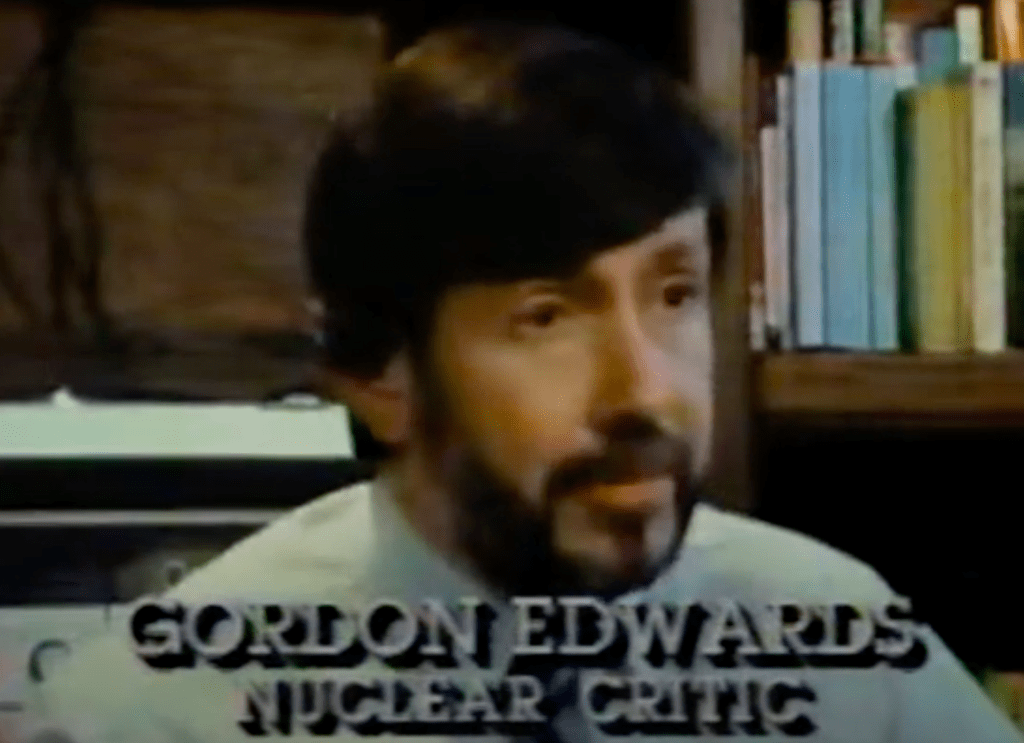
“See ‘The Nuclear Fudge’ at https://www.youtube.com/watch?v=0lK65S5eHRQ&feature=youtu.be“. This 16-minute W5 segment from the Regan era is very informative. The photo below is a screen shot from the video.