Towards a transparent and responsible management of radioactive waste
December 2 2025
Several political parties and civil society organizations are dismayed to learn thatCanadian Nuclear Laboratories (CNL) has decided to consolidate radioactive waste (forwhich the federal government is responsible) at the Chalk River Laboratories site. This decision was made without consultation with First Nations or the public, and without parliamentary debate. Canadian Nuclear Laboratories (CNL) is only a private contractor,not a government agency.
For the population, there is no public accountability and concern is growing. Why concentrate everything at Chalk River? CNL is not intending to permanently store high- or intermediate-level waste at Chalk River. Those wastes will likely be moved again. Chalk River is an unsuitable location for radioactive waste consolidation because it islocated on the Ottawa River and the area is prone to seismic tremors.
Used nuclear fuel has the highest level of radioactivity; it is being transported to ChalkRiver from nuclear reactors in Manitoba, Ontario and Quebec for interim storage pending the construction of a proposed deep geological repository (DGR). CNL intendsto have the same used fuel eventually transported to the DGR. But such a repositorystill does not exist and may never be licensed or approved. Whether the DGR isultimately built or not, issues surrounding the transportation of radioactive waste have to be addressed.
There are increased risks and costs of transporting used fuel twice: first from thenuclear power plants to Chalk River, and then from Chalk River to a second destination.This leads to extra safety risks and a waste of public money. The government is justmoving the waste around at great expense and added risk without solving the problempermanently, as there is still no proven safe solution despite 45 years of effort.
The proposed transportation of intermediate-level waste to Chalk River from thedecommissioning of nuclear reactors is similarly ill-advised.
Public concern was heightened by the news of the secretive transport of tonnes of usednuclear fuel from Bécancour, Quebec, to Chalk River during the summer of 2025, alongpublic roads and bridges, without any explicit authorization or opportunity for publicconsultation or even proper notification.
• We call on the federal government for a moratorium on the shipment of Canadianradioactive waste to Chalk River because of the increasing risk of radioactivecontamination and the lack of an acceptable due process.
• We call on the federal government to ban all imports of radioactive waste from othercountries, including disused medical sources, discarded tritium light sources, or usednuclear fuel.
• We call on the Minister of Environment and Climate Change to conduct a strategicassessment of the transportation of high- and intermediate-level radioactive waste onpublic highways, in accordance with section 95 of the Impact Assessment Act. Theresults of this assessment would contribute to future impact assessments of nuclearfacilities. The goal would be to examine, for example, the cumulative impact at ChalkRiver and to provide a framework for upcoming environmental assessments of nuclearpower plants and reactor decommissioning projects.
Patrick Bonin, M.P.Bloc Québécois critic for the Environment and Climate Change
Elizabeth May, M.P.Green Party of Canada
André BélangerFondation Rivières
Alain BranchaudSNAP Québec
Ginette Charbonneau Physicist and spokesperson for le Ralliement contre la pollution radioactive
A hearing this Wednesday November 12 in the Federal Court of Appeal, before a panel of three judges, will be a test of Canada’s commitment to protect threatened and endangered species and may determine whether the giant Ottawa River nuclear waste dump can be built or not.You can watch the hearing on Zoom by registering at this link, and you are also invited to a rally, “Stand up for Wildlife,” from noon to 2 pm outside the courtroom on Sparks St. in Ottawa.
Background:
Earlier this year we celebrated the successful legal challenge to the granting of a Species-at-Risk permit to Canadian Nuclear Laboratories (CNL) for the construction of the nuclear waste dump known as the “NSDF.” The legal challenge was brought by Kebaowek First Nation, Concerned Citizens of Renfrew County and Area, the Canadian Coalition for Nuclear Responsibility, and Sierra Club Canada Foundation.
You may recall that CNL is owned by a multinational private-sector consortium that operates Canada’s federal nuclear labs under a $1.6 billion per year contract with the Government of Canada. CNL needed a Species-at-risk permit in order to construct its controversial, giant, above-ground nuclear waste dump beside the Ottawa River because the site they chose for the dump is on federal land smack dab in the middle of irreplaceable wildlife habitat that is home to many species at risk. A permit would allow CNL to destroy habitat and residences for threatened and endangered species in order to construct its giant dump.
In order to get a permit, a proponent must prove that it carefully considered all possible alternatives and chose the one with the least impact on endangered species. CNL did not do this. In fact, it is on record as saying it chose the location because it would reduce transportation costs. In his ruling issued on March 14, 2025, Justice Russel Zinn said the environment minister’s issuing of the species-at-risk permit was “unreasonable due to fatal flaws” in interpreting and applying the federal Species at Risk Act, adding that the issuing of the permit must be reconsidered.
Unfortunately for threatened wildlife and for Canadian taxpayers, who foot the bill for everything the multinational consortium does under its contract with the government, the case was appealed by CNL. Hence, the evidence will be reviewed again on November 12, this time in the federal court of appeal, by a panel of three judges.
The legal case here is fairly cut and dried; it will be interesting to see how it plays out. But behind the straightforward legal arguments lies a shocking story of disregard for wildlife that we discovered when we applied for the initial judicial review and received 4,000 pages of material connected with the permit application. Among other things, we learned that CNL knew that the site was very rich in biodiversity, but chose it anyway. The site is located on a south facing densely forested hillside that rises 140 feet above five named wetlands at its base, critical habitat for endangered Blanding’s turtles. The forest stands have old growth characteristics and provide prime habitat for endangered bats and songbirds such as the Canada Warbler, Golden-winged Warbler and Eastern Whip-poor-will. To create a flat surface for the NSDF, clear cutting and extensive blasting would convert 28 hectares of forested hillside into 170,000 cubic metres of rock, with unknown but likely adverse effects on the surrounding wetlands. More than 10,000 mature trees would be cut down, including provincially-endangered Black Ash trees. Kebaowek First Nation found three active bear dens on the site, and evidence of extensive use of the site by threatened Eastern Wolves. Both bears and wolves are species of great cultural importance to Algonquin peoples.
Seethis post on the Concerned Citizens website, for more detail on CNL’s disregard for wildlife in its choice of a site for the NSDF.
The beautiful artwork below is by Destiny Cote of Kitigan Zibi Anishinabeg. Eastern Wolves are one of the threatened species that would be adversely affected by the NSDF.
A March 2025 report by the International Atomic Energy Agency (IAEA) flagged a serious problem in Canada’s nuclear governance regime. Canada has not incorporated the fundamental safety principle of justification into its legal framework, despite being urged to do so by an international peer review team in 2019.
The IAEA principle of justification in nuclear safety requires that any practice involving human exposures to ionizing radiation be justified during the licensing process for a facility. It must be demonstrated that the overall benefits of the project to individuals and society, outweigh the potential health detriments of the radiation exposures it will cause.
Justification is necessary because there is no safe level of exposure to ionizing radiation from nuclear reactors and radioactive waste. Ionizing radiation causes cancers of all kinds, many other chronic diseases and damage to the human gene pool. Human-made nuclear waste will remain hazardous and radioactive for millions of years.
Canada’s failure to justify nuclear projects is a serious deficiency that urgently needs to be addressed given the Government of Canada’s professed interest in funding and expanding nuclear electricity generation in Canada. We need to ask: can we justify creating more and more radioactive waste that future generations will have to deal with even though they will receive zero benefit from the activities that created it.
Other serious deficiencies were flagged by the IAEA experts in 2019. For example, Canada allows pregnant nuclear workers to be exposed to a radiation dose four times larger than is tolerated by IAEA standards. This issue remains unaddressed five years later.
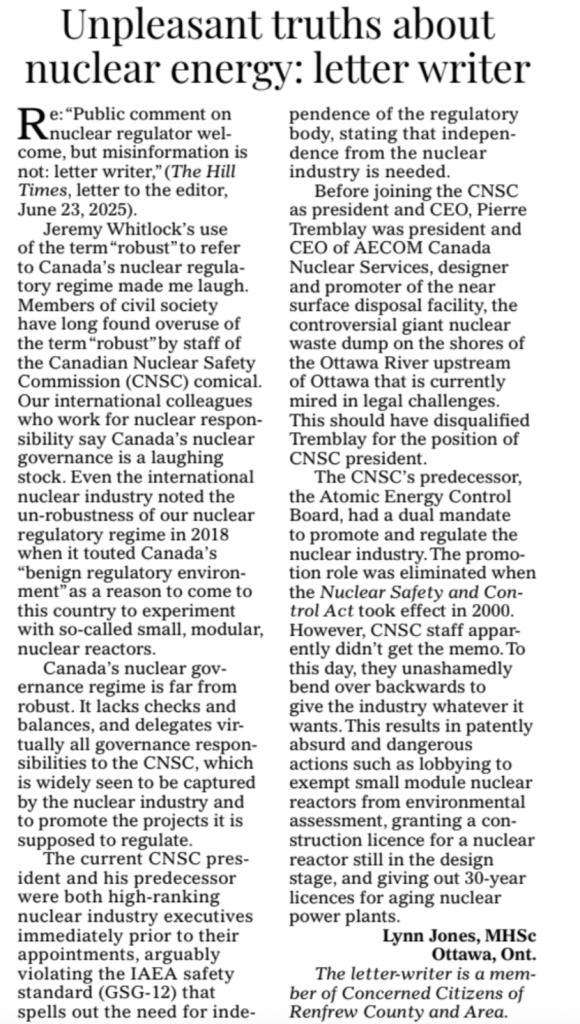
This letter appeared in the July 7 edition of the Hill Times. (subscribe here)
It was in response to a letter by Jeremy Whitlock, indefatigable cheerleader for all things nuclear. His letter, published on June 23, 2025 is here.
Jeremy Whitlock was responding to this letter, published in the Hill Times on June 16, 2025:
Canada is failing to meet a fundamental principle of nuclear safety according to international experts
A March 2025 report by the International Atomic Energy Agency (IAEA) flagged a serious problem in Canada’s nuclear governance regime. Canada has not incorporated the fundamental safety principle of justification into its legal framework, despite being urged to do so by an international peer review team in 2019.
The IAEA principle of justification in nuclear safety requires that any practice involving human exposures to ionizing radiation be justified during the licensing process for a facility. It must be demonstrated that the overall benefits of the project to individuals and society, outweigh the potential health detriments of the radiation exposures it will cause.
Justification is necessary because there is no safe level of exposure to ionizing radiation from nuclear reactors and radioactive waste. Ionizing radiation causes cancers of all kinds, many other chronic diseases and damage to the human gene pool. Human-made nuclear waste will remain hazardous and radioactive for millions of years.
Canada’s failure to justify nuclear projects is a serious deficiency that urgently needs to be addressed given the Government of Canada’s professed interest in funding and expanding nuclear electricity generation in Canada. We need to ask: can we justify creating more and more radioactive waste that future generations will have to deal with even though they will receive zero benefit from the activities that created it.
Other serious deficiencies were flagged by the IAEA experts in 2019. For example, Canada allows pregnant nuclear workers to be exposed to a radiation dose four times larger than is tolerated by IAEA standards. This issue remains unaddressed five years later.
Please subscribe to the National Observer using this link, to support the excellent investigative journalism of Natasha Bulowski on the Chalk River nuclear waste.
Former employee at Atomic Energy of Canada Limited Kerry Burns (centre right, with a beard and spectacles) at AECL’s Whiteshell Laboratories in Manitoba in 1979. Photo submitted by Kerry Burns
Approval of a nuclear waste disposal site near the Ottawa River hinged on a promise that only low-level radioactive waste would be accepted. But former nuclear industry employees and experts warn some waste slated for disposal contains unacceptably high levels of long-lived radioactive material.
The “near-surface disposal facility” at Chalk River Laboratories (CRL) will store up to one million cubic metres of current and future low-level radioactive waste inside a shallow mound about one kilometre from the river, which provides drinking water to millions of people in the region. But former employees who spent decades working at the labs in waste management and analysis say previous waste-handling practices were inadequate, imprecise and not up to modern standards. Different levels of radioactive material were mixed together, making it unacceptable to bury in the mound.
“Anything pre-2000 is anybody’s guess what the hell they have on their hands,” said Gregory Csullog, a retired waste inventory specialist and former longtime employee of Atomic Energy of Canada Limited (AECL), the Crown corporation that ran the federal government’s nuclear facilities before the Harper government privatized it in 2015.
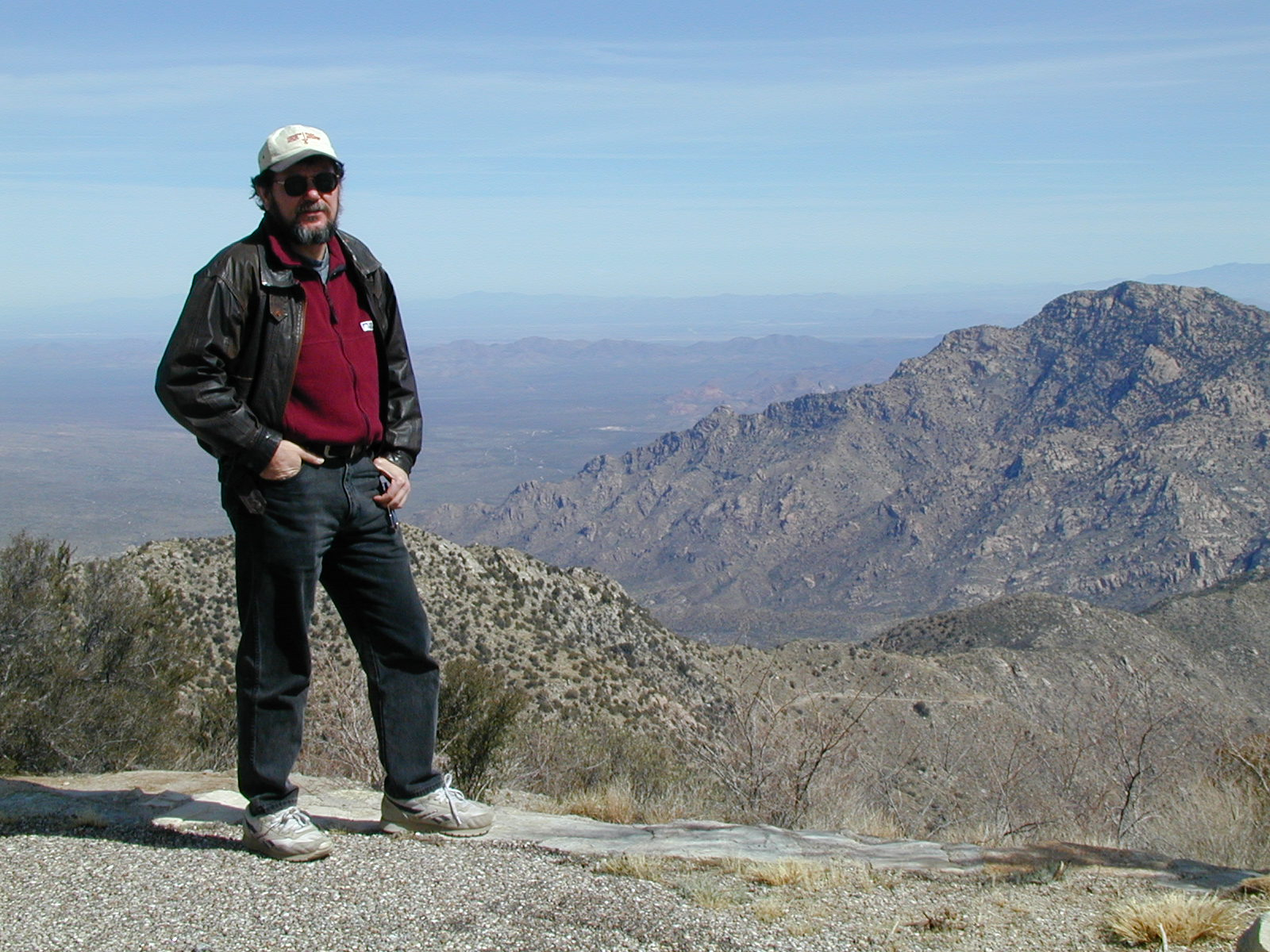
Gregory Csullog pictured at the Yucca Mountain nuclear waste repository in 2001 while employed with the International Atomic Energy Agency. Photo submitted by Gregory Csullog
Csullog described the waste during this earlier time as an unidentifiable “mishmash” of intermediate- and low-level radioactivity because there were inadequate systems to properly label, characterize, store and track what was produced at Chalk River or shipped there from other labs. “Literally, there were no rules,” said Csullog, who was hired in 1982 to develop waste identification and tracking systems.
International safety standards state low-level radioactive waste is suitable for disposal in various facilities, ranging from near the surface to 30 metres underground, depending primarily on how long it remains radioactive. High-level waste, like used fuel rods, must be buried hundreds to thousands of metres underground in stable rock formations and remain there, effectively forever. Intermediate-level waste is somewhere in the middle and should be buried tens to hundreds of metres underground, not in near-surface disposal facilities, according to the International Atomic Energy Agency (IAEA).
Radioactive waste is recognized by many health authorities as cancer-causing and its longevity makes disposal a thorny issue. Even short-lived radioactive waste typically takes hundreds of years to decay to extremely low levels and some radioactive isotopes like tritium found in the waste — a byproduct of nuclear reactors — are especially hard to remove from water.
What people are reading
Canadian Nuclear Laboratories (CNL) originally wanted its near-surface disposal facility to take intermediate- and low-level waste when it first proposed the project in 2016. Backlash was swift and concerned groups, including Deep River town council and multiple experts, argued it would transgress international standards to put intermediate-level waste in that type of facility. In 2017, CNL changed its proposal and promised to only accept low-level waste. The announcement quelled the Deep River town council’s concern, but some citizen groups, scientists, former employees and many Algonquin Nations aren’t buying it.
CNL says its waste acceptance criteria will ensure all the waste will be low-level and comply with international and Canadian standards. Eighty seven per cent of the waste will be loose soil and debris from environmental remediation and decommissioned buildings. The other 13 per cent “will have sufficiently high radionuclide content to require use of packaging” in containers, drums or steel boxes in the disposal facility, according to CNL.
Approval of a nuclear waste disposal site near the Ottawa River hinged on a promise that only low-level radioactive waste would be accepted. #ChalkRiverLabs
However, project opponents note that between 2016 and 2019, about 90 per cent of the intermediate-level waste inventory at federal sites was reclassified as low-level, according to data from AECL and a statement from CNL. The timing of the reclassification raised the alarm for critics, who took it to mean intermediate-level waste was inappropriately categorized as low-level so it could be stored in the Chalk River disposal facility. CNL said the 2016 estimate was based on overly “conservative assumptions” and the waste was reclassified after some legacy waste was retrieved, examined and found to be low-level.
The disposal facility will also accept waste generated over the next two decades and some shipments from hospitals and universities.
The history of Chalk River Laboratories
To fully understand the nuclear waste problem, you first have to know the history of Chalk River Lab’s operations and accidents, according to Mahdi Khelfaoui, professor of the history of energy, science and technology at the University of Quebec at Trois-Rivières and author of multiple articles on the nuclear industry and its history in Canada.
Chalk River Laboratories photographed in 1945. Photo from the National Research Council Canada archives
Chalk River is Canada’s biggest research facility. Built in 1944, it became home to the world’s first recorded nuclear reactor core meltdown in December 1952, followed by another incident in 1958. The 1952 accident was ranked a five on the International Atomic Energy Agency’s scale of one to seven; Chernobyl was a seven.
The partial reactor meltdown spewed radioactive material into the air and environment. During the year-long cleanup, highly radioactive debris and fuel rods were buried in a sandy area near the Ottawa River and millions of litres of contaminated water were dumped into ditches less than two kilometres from the river.
In this day and age, burying wooden boxes of fuel rods in shallow holes would be unthinkable, said Khelfaoui.
“At the time, the radioactive waste issue was almost synonymous with protecting the [commercial] interests of the nuclear industry,” said Khelfaoui. Public involvement in waste management policy was “nonexistent” before the end of the 1990s, he said.
Keeping accurate information on waste over time is a challenge and there have been inventory discrepancies at Chalk River, he added.
For example, the fuel rods buried in a “rudimentary” fashion after the 1952 meltdown were dug up and moved to safer storage in 2007, said Khelfaoui. AECL expected to find 19 fuel rods and cans in the boxes, but there were actually 32.
Over 75 years, Chalk River Laboratories developed CANDU reactors, did nuclear weapons research, supplied the United States’ nuclear weapons program with plutonium and uranium, and at one time was the world’s largest supplier of medical isotopes used to diagnose and treat cancers.
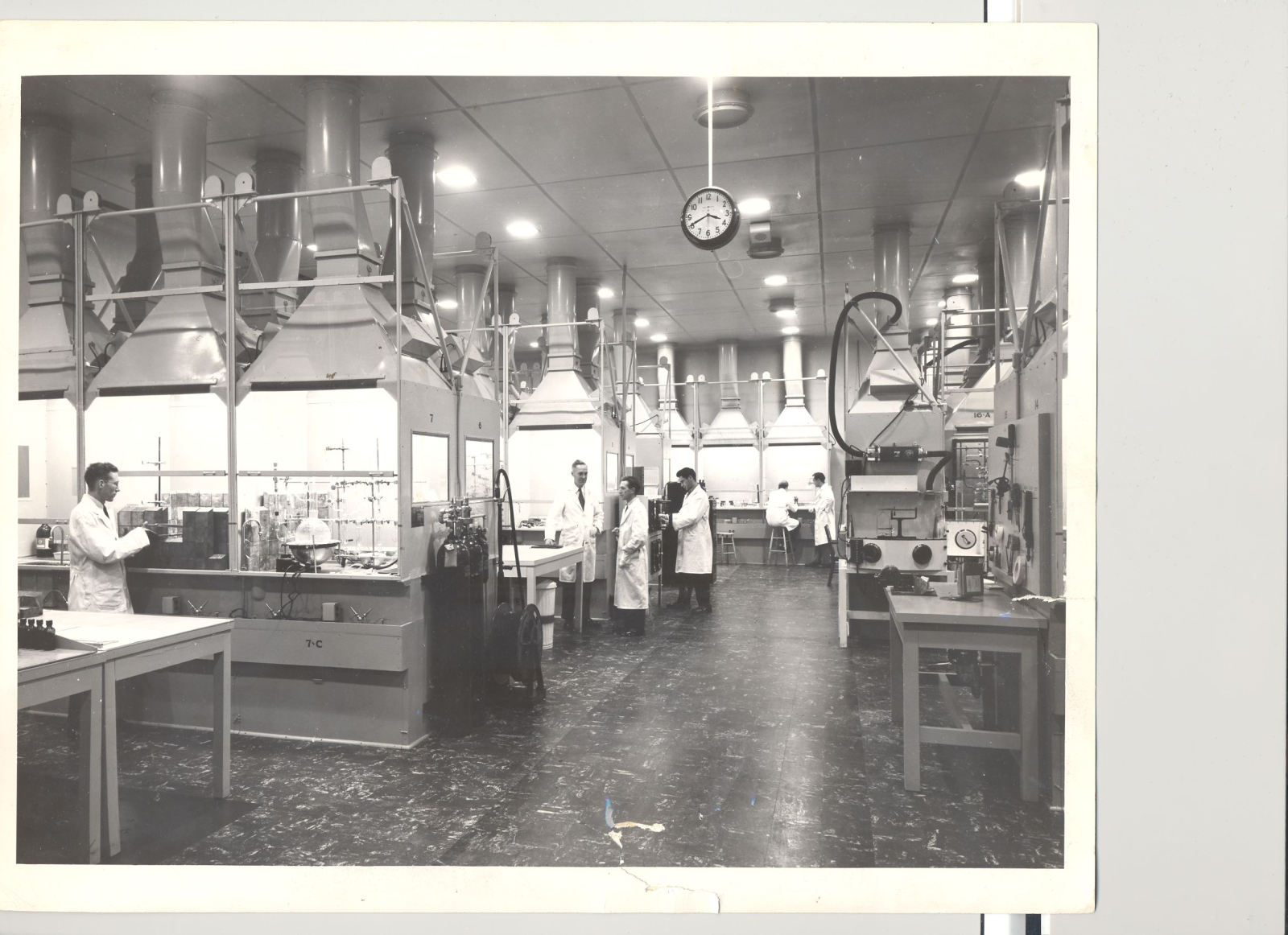
Chalk River Labs’ isotope separation laboratory in 1948. For 60 years, Chalk River Labs produced medical isotopes used to treat and diagnose diseases like cancer. Photo from the National Research Council Canada archives
Inherent inventory issues
Until the mid-1990s, waste wasn’t even categorized as intermediate, low or high-level, said Csullog, who worked at AECL back when the Crown corporation still ran day-to-day operations at Chalk River Laboratories. Much of it was stored together in what he described as a “mishmash of unsegregated, unmarked, uncharacterized mixture of low- and intermediate-level waste.”
“This mixing and lack of identification would make all these wastes unsuitable for the near-surface disposal facility,” said Csullog.
His main concern is the packaged legacy waste, which includes contaminated protective gear, old mops, rags, tools and lab equipment from former operations. For example, some of this equipment was used to clean up highly radioactive water that leaked out of the site’s two nuclear reactors, said Csullog.
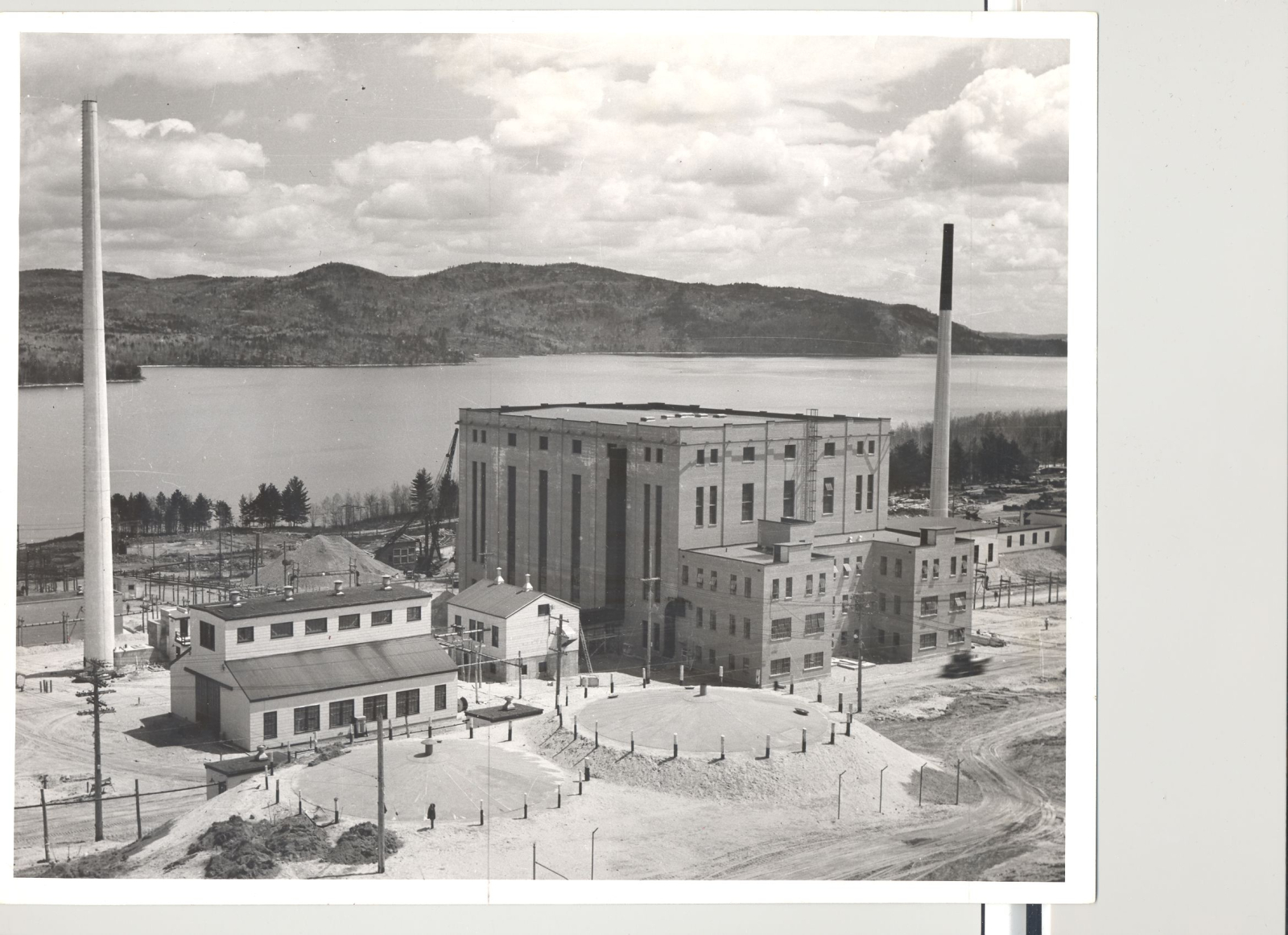
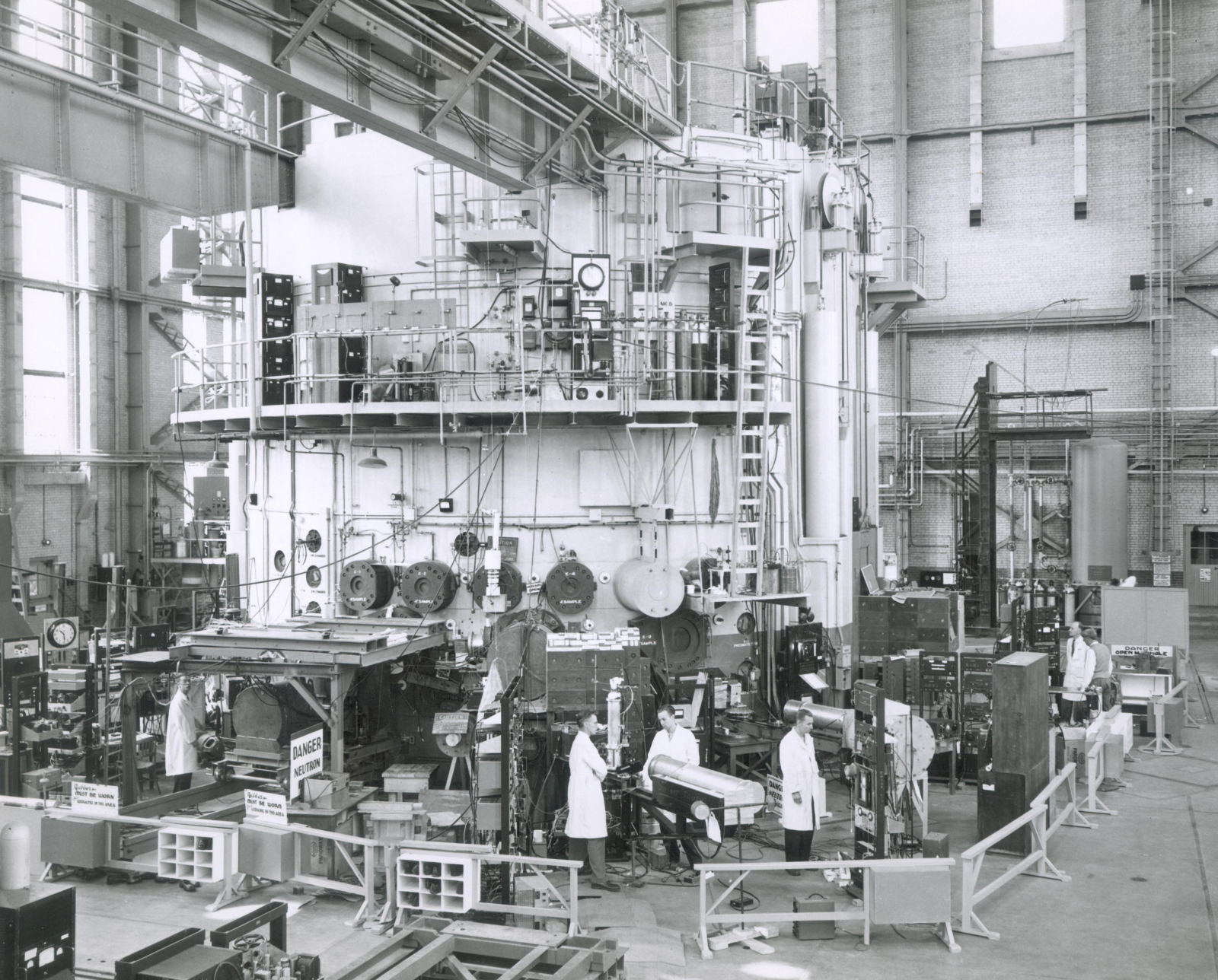
A historic photo of the National Research Experimental Reactor (NRX). NRX began operation in 1947 as Canada’s first large-scale research reactor and played a major role in developing the CANDU reactor. It was used to test fuels and materials and for nuclear physics research in support of the Canadian nuclear power program, according to the Canadian Nuclear Safety Commission. NRX was shut down on Jan. 29, 1992. Photo courtesy of Canadian Nuclear Laboratories
During his 21 years at AECL’s Chalk River Laboratories, Csullog developed programs to label and track all the radioactive waste created or shipped to the site. He later wrote the International Atomic Energy Agency’s guidelines on waste inventory record-keeping systems.
Developing these programs for AECL posed a challenge because many of the logbooks he was given to transcribe at the outset of his work in 1982 had precious little information on where the waste came from, how it was created or its radionuclide content. Csullog described the information in these historical records as “meaningless.” Until the mid-’90s, there weren’t even waste package labels to link waste to the correct paperwork, which also hindered his work, said Csullog.
“We didn’t track it. You can’t throw it all together and say, ‘We’ll use historical information.’ It’s irrelevant,” said Csullog.
In an email statement to Canada’s National Observer, CNL said the radioactivity of the legacy waste packages is based on records from its waste database. “CNL recognizes there are gaps” in this data and said no waste will be placed in the facility based only on historic information. Data on older legacy waste data will be reassessed and “modern analysis techniques” used to ensure there is “enough information on the waste” to make certain it meets the acceptance criteria.
The majority of packaged waste now in storage was generated pre-1995 and there is enough information to classify it as low-level waste “within a reasonable certainty,” a CNL representative told the Canadian Nuclear Safety Commission (CNSC) during the licensing process. All waste generators have to submit documents detailing the properties of the waste and then it’s up to CNL to verify the waste matches the documentation before it goes into the disposal facility.
Even after Csullog’s waste identification and tracking program was implemented in the mid-’90s, some waste with higher radioactivity was still compacted with really low-level material when it should have been kept separate, said Csullog.This was done so the radiation emitted by each bale was limited enough for people to handle and move them but in hindsight, was a mistake, he said. At this period in time, the industry was on a learning curve when it came to waste management, said Csullog.
It takes a “very, very small amount of a contaminant that’s long-lived” to make low-level waste transition to intermediate, Csullog emphasized.
By the time Csullog left the Crown corporation in 1999, his final iteration of a waste inventory database was being used for package labelling, validation, inspection and compliance monitoring. While it was a vast improvement on past practices, the program still relied on estimates of waste characteristics and only helped keep tabs on newly created wastes — not the pre-2000’s waste Csullog says is unacceptable for the facility. Estimates are not a substitute for the more involved process of characterization,a process to verify the specific type and concentrations of radionuclides,said Csullog, but it helps identify which waste should be a priority and make a plan to verify its characteristics. Radionuclides are radioactive atoms.
To safely manage, dispose and store waste, it must first be characterized so you know how long the radionuclides take to decay and can then accurately classify waste as low or intermediate level based on their disposal requirements, said Kerry Burns, an expert on radioactive waste characterization methods who worked at AECL for 25 years and the IAEA for eight years.
In either case, Csullog said when he returned to AECL in 2006 after a stint working for the IAEA, his program that estimated waste characteristics and tracked them had been “abandoned.” The outstanding question in Csullog’s mind is what has been done to take its place.
In a detailed submission to the CNSC, Csullog outlined the many problems with waste identification and inventory systems during his time at AECL and the persistent lack of data to verify the radionuclide content of this older waste.
Csullog emphasized he is not against the disposal facility as a whole. He is against CNL putting this particular legacy waste into it. Instead, CNL should put this legacy waste into a deeper facility designed for intermediate-level waste since it will have to dispose of other intermediate-level waste anyway, he said.
A majority of the waste planned for disposal in the near-surface facility is soil and debris from decommissioned buildings. Most of the buildings decommissioned so far were administrative and likely had little contamination and CNL could feasibly have enough information on the radioactive properties, said Csullog. But the site’s wide range of research and development activities exposed lab equipment and some buildings to many different radioactive materials. For example, some labs separated plutonium for the U.S. weapons program, said Burns.
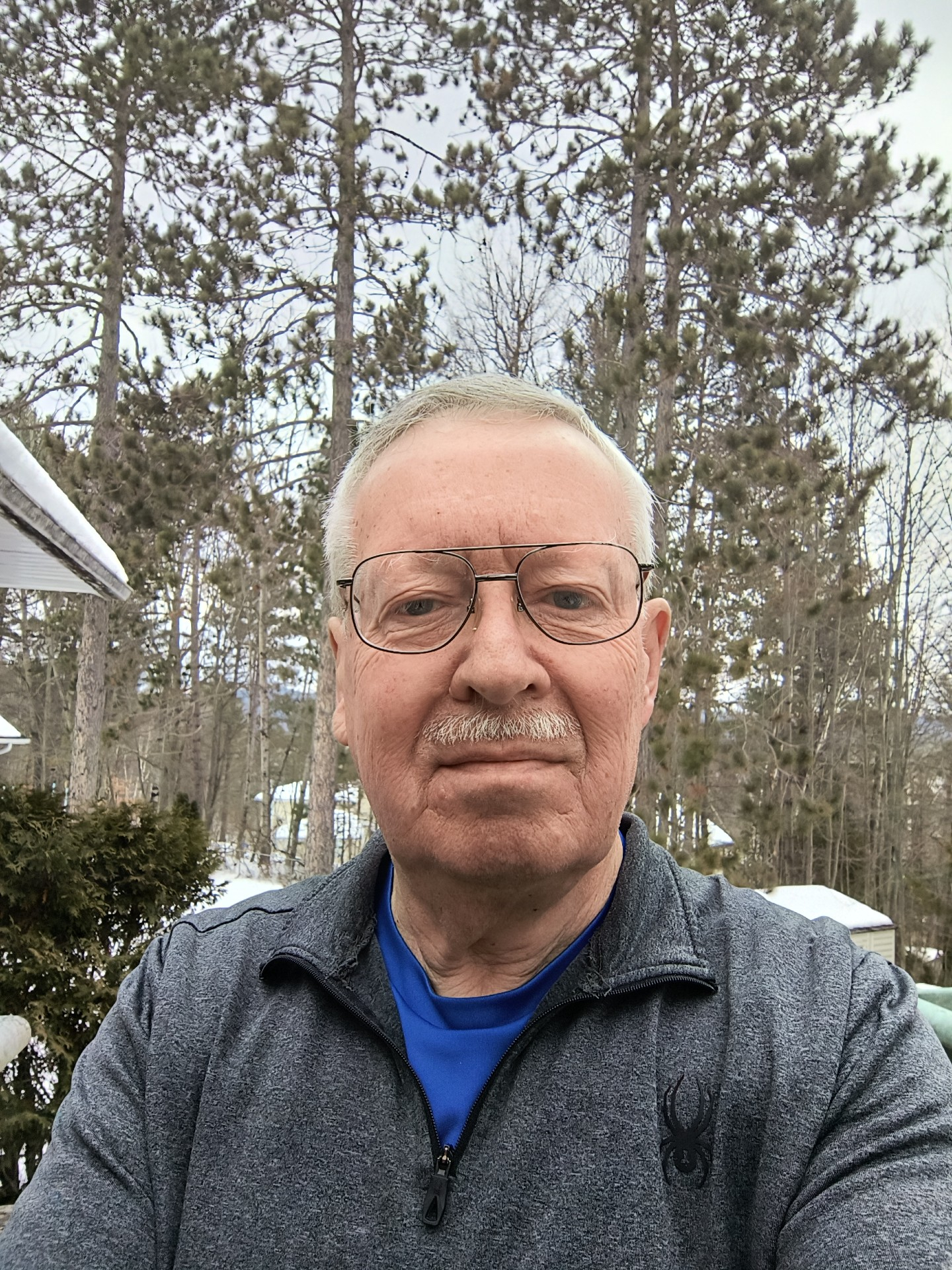
Kerry Burns, longtime AECL employee and radioactive waste characterization expert, outside his home in 2024. Photo submitted by Kerry Burns
Because of the site’s wide-ranging activities, it is unknown exactly what concentrations of radionuclides are in the legacy waste, said Burns.
The radionuclides typically encountered at Chalk River Labs have half-lives ranging from seconds to tens of thousands of years and can give off three different types of radiation. Low-level waste should decay to extremely low levels within roughly 300 years. As radionuclides decay, some of them turn into other radionuclides with different properties, which is vital to know when you’re planning how to store waste, said Burns.
Some controlled activities — like operating a nuclear power plant — produce waste with fairly predictable types and amounts of radionuclides. As long as these predictable waste streams are kept separate, you can often measure, sample and analyze it, said Burns, who spent years at AECL developing radiochemical analysis methods to determine exact properties of waste, and authored multiple articles on these methods.
But these methods only work if the waste is consistent, monitored carefully over time and kept separate from other waste streams, said Burns.
“I am afraid that the legacy and decommissioning wastes at CNL fall into the category of a dog’s breakfast,” said Burns. To know exactly how dangerous and long-lived the materials going into the facility truly are, a detailed analysis of each package and container would be required, said Burns.
According to CNL’s waste acceptance criteria, radiochemical analysis is not part of its minimum verification requirements, though it may be done as an additional verification measure.
Canada’s National Observer asked CNL which waste streams, if any, have had their radionuclide content confirmed using radiochemical analysis.
CNL said radiochemical analysis and background information are used to create “fingerprints” for waste streams based on what background information and past data exist on the waste.
“Some fingerprints have been established, while others are still in development,” said CNL. The company gave no specifics on which waste streams were examined using radiochemical analysis.
All waste will have “sufficient characterization data” to confirm it can be placed in the near-surface disposal facility, according to CNL.
Radiochemical analysis is “prohibitively expensive” and “extremely time-consuming” but is the only way to determine the inventory of long-lived, hard-to-detect radionuclides in thiswaste, said Burns. This chemical analysis becomes even more challenging when waste from different operations is mixed together, as Csullog and Burns said was the case for a great deal of waste pre-2000. If a sample isn’t representative of the whole waste stream, the results won’t reflect everything in it, said Burns.
Canada’s National Observer asked CNL if it has a budget or cost estimate for radiochemical analysis and which wastes will require this analysis. CNL declined to answer.
CNL is responsible for ensuring waste meets its acceptance criteria.CNL is owned by a consortium of private companies (including AtkinsRealis, formerly SNC-Lavalin). AECL receives federal funding and contracts CNL to manage and run the federal sites, including Chalk River.
Minimum requirements for verification include inspecting waste package labels and providing documents on the waste profile and management plan. CNL’s waste acceptance criteria doesn’t specify how often verification takes place. CNL declined to explain how frequently it would verify waste.
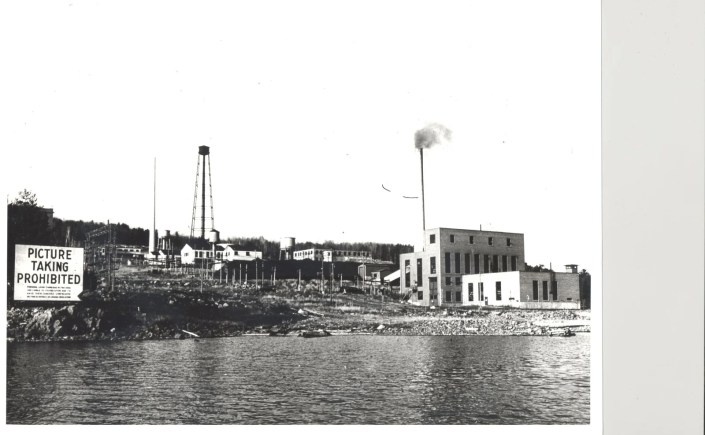
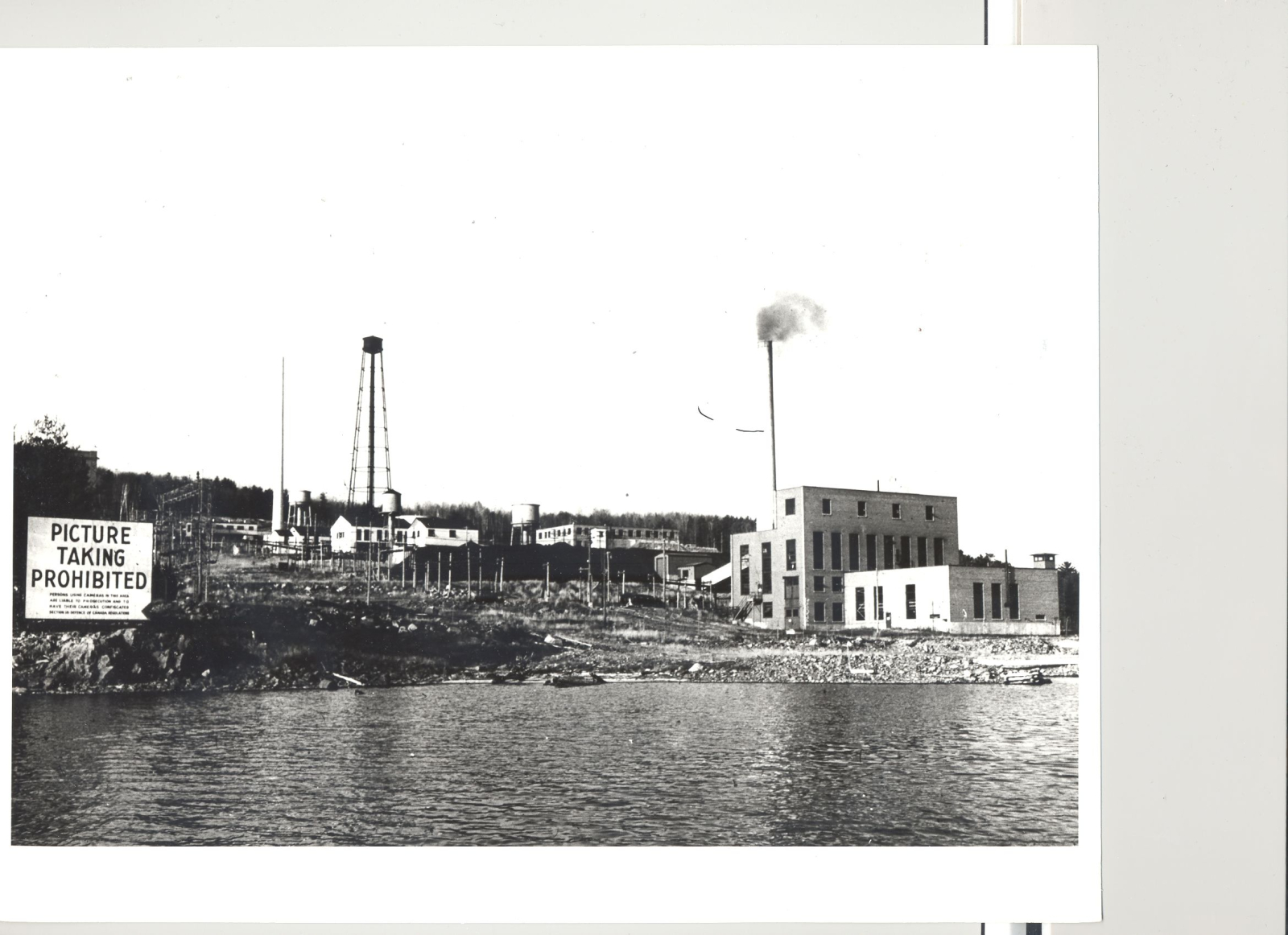
Chalk River Laboratories photographed from the Ottawa River in 1945. It was constructed in 1944. Photo from the National Research Council Canada archives
Csullog and Burns can only speak to the waste management practices from their time at Chalk River. Burns’ team at AECL used radiochemical analysis paired with another group’s measurements to characterize the mixed waste that was compacted into bales. These bales are on the lower end of radioactivity compared to other operations waste and the characterization data showed even those are unsuitable for the disposal facility, said Csullog.
CNL could have adequate systems and practices in place to characterize and track waste being generated today, they say, though neither is convinced based on the company’s submissions to the CNSC. But proper waste management today doesn’t change the fact that the Chalk River site is dealing with waste from an era when far less was known about the importance of handling radioactive waste, said Csullog.
“It was a good place to work … but when it came to waste management, it was always sort of the lowest priority,” said Burns, referring to AECL back in his day. “You’re dealing with a research site where people get rewarded for publishing papers, for doing innovative research, not for handling wastes and putting it in storage.”
Natasha Bulowski / Local Journalism Initiative / Canada’s National Observer
NUCLEAR WASTE AT CHALK RIVER: KEBAOWEK FIRST NATION CONDEMNS CNSC DECISION AND CALLS ON THE CANADIAN GOVERNMENT
KEBAOWEK, January 9, 2024 – Despite concerns expressed by First Nations and increased support from over 140 municipalities across Canada, the Canadian Nuclear Safety Commission (CNSC) has granted the license for the Near Surface Disposal Facility (NSDF) project at Chalk River. In response, the Kebaowek First Nation strongly condemns this decision and calls on the federal government to intervene to stop this environmentally high-risk project.
“The Commission’s decision is unacceptable, notably because it goes against the rights of Indigenous peoples and environmental protection. The Canadian government must act promptly and immediately assert the suspension of the project. The Commission’s final decision is totally wrong when it states that the NSDF project will not cause significant environmental effects. While the decision states that CNL will take appropriate measures to safeguard the environment, the health, safety of individuals, and national security and to comply with national obligations, it is undeniable that the safety and health of people and the environment will be profoundly impacted for generations to come through this project, ” reacted Chief Lance Haymond of Kebaowek.
It is worth noting that the NSDF would release radioactive and hazardous materials into a nearby wetland and the Ottawa River during its operation and after its closure. The mound is expected to degrade through a process of “normal evolution”. The NSDF could also contaminate the river following earthquakes, wildfires, floods, and other extreme weather events. Not only is the Kichi Sibi sacred to the Algonquin Peoples, but the Chalk River site is also close to the sacred Algonquin sites of Oiseau Rock and Baptism Point.
In 2017, the Assembly of First Nations adopted a resolution stating that the CNSC and the Canadian government had not fulfilled their constitutional obligation to consult and accommodate First Nations regarding the NSDF. The Anishinabek Nation and the Iroquois caucus issued a joint statement on radioactive waste, asserting that “we must protect the land, water, and all living beings for future generations” and calling for no abandonment of radioactive waste, moving it away from major waterways, and eliminating the practice of importing or exporting radioactive waste.
In addition to the opposition of Algonquin First Nations to the project, over 140 municipalities in Quebec and Ontario, including Gatineau and Montreal, as well as several civil society organizations, have expressed their opposition to the NSDF plan. In 2021, the City of Ottawa adopted a resolution expressing its concern.
The Kebaowek First Nation, committed to defending the rights of Indigenous peoples and environmental preservation, expresses its eagerness to collaborate with the government and other stakeholders to ensure a careful consideration of Indigenous concerns and compliance with the obligations of the United Nations Declaration on the Rights of Indigenous Peoples (UNDRIP) in the context of this project. The First Nation maintains its categorical opposition to the establishment of a permanent NSDF on unceded Anishinabe territory, emphasizing the crucial importance of protecting Indigenous rights, the environment, and cultural heritage. Faced with a lack of trust in the CNSC and its persistent failure to uphold UNDRIP, the First Nation calls on the federal government, including the Minister of Environment and Natural Resources, to intervene and end the project.
“I want to be very clear: the Algonquin Peoples did not consent to the construction of this radioactive waste dump on our unceded territory. We believe the consultation was inadequate, to say the least, and that our Indigenous rights are threatened by this proposal. We demand the cancellation of the NSDF project. The focus should instead be on a real and successful cleanup of the site to permanently eliminate old radioactive waste,” explains Chief Haymond.
Kebaowek First Nation Chief Lance Haymond speaking at a press conference in Ottawa in June 2023
Chalk River nuclear waste site project “The place is wrong and the method is wrong”.
A proposed nuclear waste disposal site near the Ottawa River should be rejected because of the environmental risks it poses and because the authorization procedure is tainted by a conflict of interest, argue various aboriginal nations.
Jean-Thomas Léveillé – La Presse
Published Nov. 24, 2023
The development of a “near-surface waste management facility” (NSWMF) – a nuclear waste burial site – at Chalk River Laboratories, on the Ontario side of the river, has been the subject of an application for authorization studied since 2016 by the Canadian Nuclear Safety Commission (CNSC). A decision is expected in the coming weeks.
The proposed landfill would receive low-level radioactive waste for at least 50 years in the municipality of Deep River, near Chalk River, Ontario, one kilometer from the Ottawa River, close to a wetland.
It would consist of a man-made mound, equivalent in height to a five-storey building, made up of different storage cells and equipped with leachate collection, leak detection and environmental monitoring systems.
This design is “essentially the same” as that of any domestic hazardous waste landfill in Canada, whereas radioactive waste requires a “much stricter” level of protection, astonishes lawyer Theresa A. McClenaghan, Executive Director of the Canadian Environmental Law Association.
“You would never, ever, ever put a landfill in a wetland, and never this close to a major river […]. […] It’s absolutely appalling, we can’t believe it.”
Theresa A. McClenaghan, Executive Director, Canadian Environmental Law Association
In the event of a leak, radioactive material could enter the wetland and reach the Ottawa River, says Ms. McClenaghan, warning that the consequences could be multiplied tenfold in the event of an extreme weather event.
In this artificial mound, “there would be room for a million tonnes of radioactive waste”, which would remain there for centuries, says Justin Roy, band council member and economic development advisor for the Kebaowek First Nation in Quebec, one of a dozen Algonquin communities opposing the project.
The Ottawa River, which the First Nations call Kichi Sibi, is of great spiritual and cultural importance to them, not least because of the presence of sacred sites.
The cities of Gatineau and the Communauté métropolitaine de Montréal are also opposed to the project, pointing out that the Ottawa River and the St. Lawrence River, into which it flows, are the source of drinking water for millions of people downstream of the Chalk River site.
Potential impacts “not trivial at all”
The health impacts of a potential leak “are not trivial at all”, worries Dr. Éric Notebaert, vice-president of the Association québécoise des médecins pour l’environnement and professor at the Université de Montréal’s Faculty of Medicine.
“Any exposure to ionizing radiation, no matter how small, carries risks, especially if it’s chronic,” he explains. He is also concerned about the tritiated water, “radioactive water”, generated at Chalk River.
Its rapid penetration into DNA, demonstrated by animal studies, “can induce cancers, birth defects, deaths in utero,” says Dr. Notebaert, whose organization also opposes the project.
“The location is wrong and the containment method is wrong. Sooner or later, there will be runoff into the river. That’s very worrying.”
The Canadian Nuclear Laboratories, for their part, maintain that their project will enable safe storage of waste thanks to a one-and-a-half-meter-thick bottom liner, a two-meter-thick cover, site monitoring and the possibility of carrying out repairs if necessary.
Apparent conflict of interest
One of the two commissioners responsible for reviewing the project application, Marcel Lacroix, previously worked at Chalk River Laboratories, according to his biography on the CNSC website. He holds a doctorate in nuclear engineering, is a professor at the Université de Sherbrooke and is an engineering consultant. The second commissioner has completed her term.
The Kebaowek and Kitigan Zibi First Nations see this as “a big problem”, says Justin Roy. He hopes the Commission will study the project objectively.
“The CNSC has never said no to a project, not once. Every time a project has been submitted, the CNSC has approved it.”
Justin Roy, Kebaowek First Nation
The CNSC “is very close to the industry it regulates,” says lawyer Theresa A. McClenaghan.
“You have to wonder whether the regulator is sufficiently independent when there are too many people from the regulated industry,” she says, arguing that this fuels the perception of bias or lack of independence on the part of the Commission.
For its part, the Commission assures us that the evaluation process is impartial.
“There is no conflict of interest. The Commissioners are appointed by the Governor in Council, that is, the Governor General, on the advice of Cabinet,” responded a spokesman for the organization, Braeson Holland, by e-mail, after declining La Presse’s request for an interview.
“Commissioners are committed to the highest ethical standards and guidelines regarding conflict of interest,” he added, noting Marcel Lacroix’s extensive expertise.
Contacted for this article, Marcel Lacroix did not return La Presse’s calls.
Rights denied
The First Nations deplore the fact that the project was able to go ahead without their free, prior and informed consent, a notion enshrined in Canadian legislation, and accuse the CNSC of failing to consult them properly.
The chiefs of three Algonquin communities were heard at the Commission’s final hearing in August, but were not allowed to ask the project proponent any questions, deplores Justin Roy.
The First Nations have not ruled out taking their case to court to challenge the Commission’s eventual authorization of the project.
They have also launched a petition, sponsored by the Bloc Québécois, calling on the federal government to submit nuclear reactor decommissioning and permanent waste disposal projects, such as Chalk River, to the International Atomic Energy Agency for review, and for the Commission to stay its decision on the matter until their rights have been respected.
READ MORE
1945
Chalk River Laboratories begin operations, leading to the development of the CANDU nuclear reactor.
SOURCE: CANADIAN NUCLEAR SAFETY COMMISSION
1952
Chalk River Laboratories are the scene of the world’s first nuclear accident, on December 12. A second accident occurred in 1958.




 Concerned Citizens of Renfrew County and Area